1869: He Faked His Own Death to Escape His First Wife, Then Murdered His Second at Beechworth

James Smith, born Peter Higgins, solved an unhappy marriage in colonial Sydney by faking his own death, having a letter sent to his wife's family claiming he had fallen down a mine shaft and drowned. She rebuilt her life believing herself a widow, remarried, and prospered, while Higgins resurfaced years later under a new name, tracked her down and asked her to take him back. She refused.

He returned to his second wife, Elizabeth, at a mail station near Beechworth, where their marriage was marked by constant drunken violence and her threats to expose his bigamy. That July, Elizabeth was found dead in their bedroom, her body covered in fresh wounds and broken ribs. Smith was tried and convicted of her murder, and hanged inside Beechworth Gaol on this day in 1869.

At his trial he insisted his wife's injuries had come from being trampled by a loose horse, an explanation the court found impossible to credit; he went to the gallows without ever admitting his guilt.
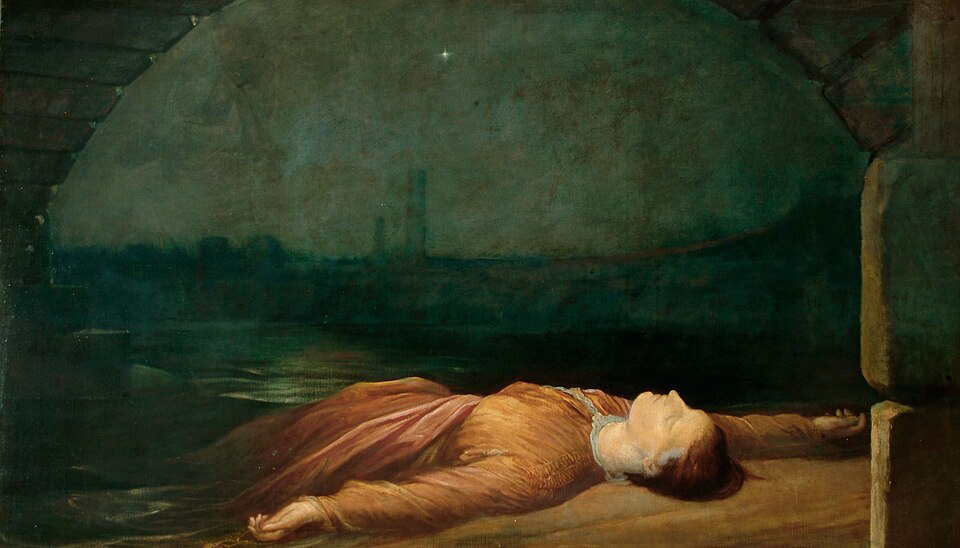

Found Drowned, 1867, by George Frederic Watts. James Smith faked his drowning before facing the scaffold for murder.

⬅ See all events from 11 November

Spread the word on your favourite platform!

1880: Such Is Life: Ned Kelly Hanged in Melbourne for the Murder of Constable Lonigan

Ned Kelly led Australia's most notorious bushranging gang, becoming a wanted man after the killing of three police officers at Stringybark Creek in October 1878. Among the dead was Constable Thomas Lonigan, whose murder would ultimately send Kelly to the gallows.

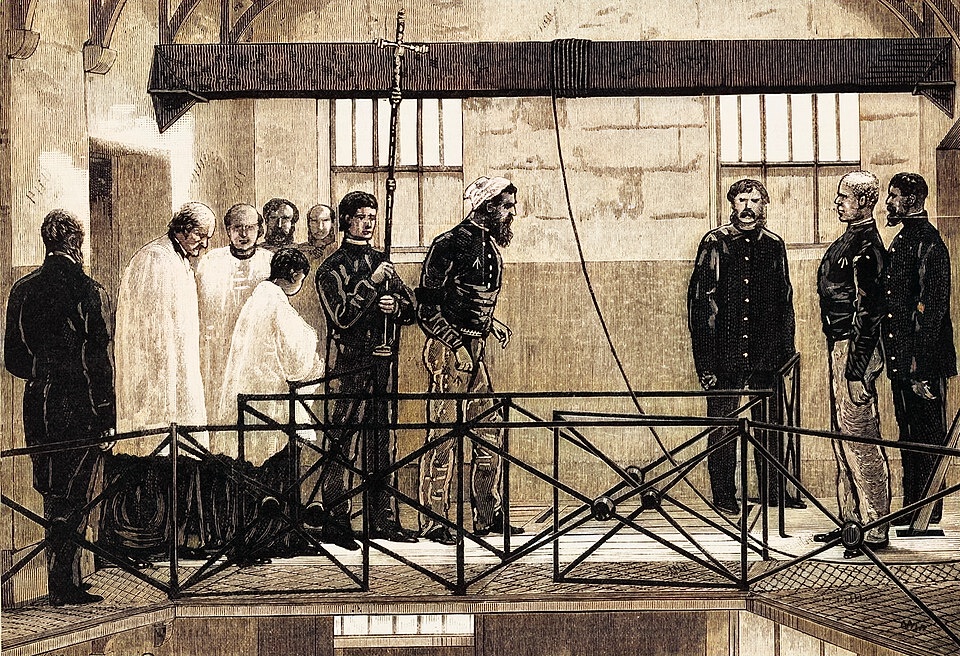
Captured after the dramatic siege at Glenrowan in June 1880, Kelly was tried and convicted of Lonigan's murder. He was hanged at the Old Melbourne Gaol in Melbourne on 11 November 1880, bringing one of Australia's most infamous outlaw sagas to an end.

As he stood on the scaffold, Kelly is remembered for words that, whether spoken exactly or paraphrased, have echoed through Australian folklore ever since: "Such is life." The calm acceptance of fate captured in those three simple words has resonated with generations of Australians.

Ned Kelly on the gallows: Such is Life

⬅ See all events from 11 November

Spread the word on your favourite platform!

1831: Nat Turner Hanged for Leading Americas Deadliest Slave Uprising

Nat Turner was an enslaved preacher who believed he had been chosen for a divine mission when he led an uprising that August in Southampton County, Virginia, killing dozens of people in the slaveholding community and sparking the bloodiest slave revolt in American history.

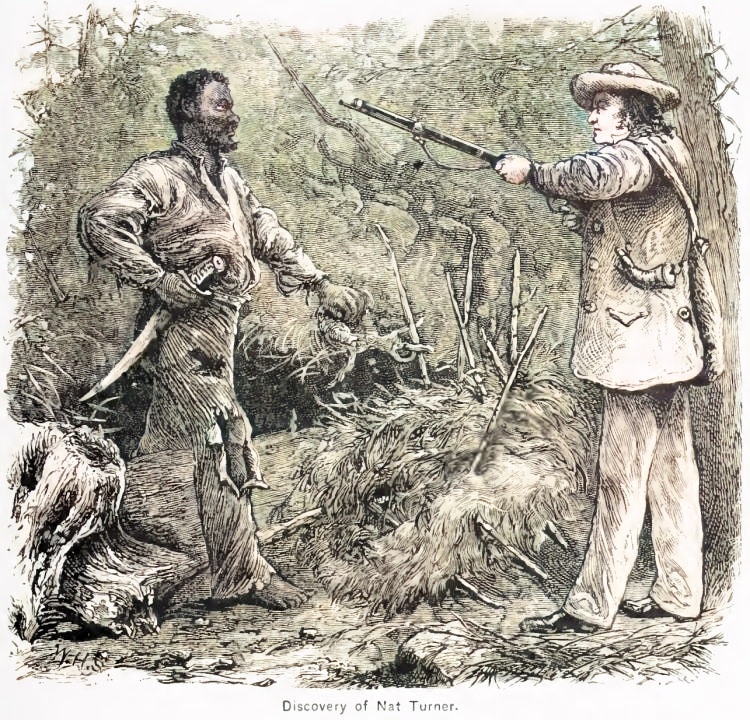
He evaded capture for more than two months, hiding in the woods and finally in a hole dug beneath a fallen tree, before he was found, tried and sentenced to death. He was hanged at Jerusalem, Virginia, on this day in 1831.

Asked before his execution whether he now repented, Turner showed no remorse, reportedly replying, "Was not Christ crucified?"

Discovery of Nat Turner by William Henry Shelton, 1882

⬅ See all events from 11 November

Spread the word on your favourite platform!

1863: Given a Glass of Brandy and Told to Shoot: A Servant Hanged in Melbourne for a Shanty Murder

At a roadside shanty near Mansfield in Victoria, a servant working for shanty keeper Robert Scott was shaken awake by his master's lodger, David Gedge, who admitted his own earlier shot at the delirious, drink sick Scott had failed to go off. Told it was his turn, the servant balked, unsure if Scott's wife would want her husband dead. Gedge sent him to ask her. She said yes, and handed him a glass of brandy before he carried the loaded gun into the bedroom and shot Scott dead on 11 April 1863.

The three staged it as a suicide, the servant forcing Gedge at gunpoint to swear he would never tell. Within a day Gedge turned informer, naming the servant as the man who fired the shot. Confronted, the accused gave his own account in full: Gedge had melted shot in a frying pan to mould a bullet, and Scott's wife had ordered the killing and poured the brandy that steadied his hand.

All three were tried together and convicted. On this day in 1863, the servant was hanged in Melbourne alongside Gedge and Scott's wife, who became the first woman executed in Victoria.

He never denied firing the shot, but to the last maintained he had done so only on Scott's wife's order, after she answered yes and gave him the brandy that sent him to the bedroom.

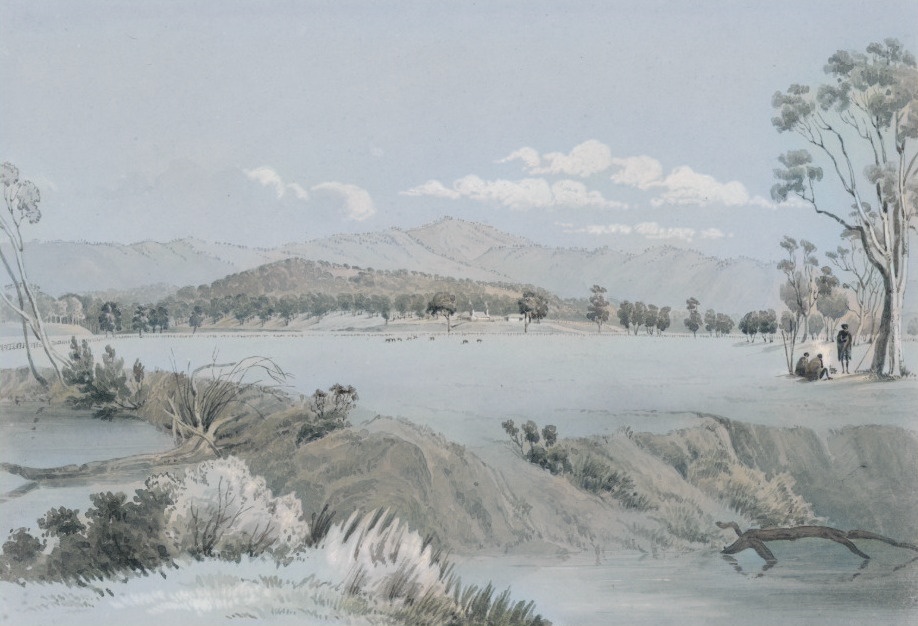
Devil's River district, near Mansfield, where the 1863 murder of Robert Scott took place. Artwork by Edward William Jeffreys, c. 1841–1845. State Library VIC

⬅ See all events from 11 November

Spread the word on your favourite platform!
On This Day in True Crime History

Subscribe to Dark Stories

True crime stories, dark history and tour news, straight to your inbox.