John Dykes is a young man who cannot stop gambling. His parents scrape together what they can to give him an education in old England, but every shilling he touches finds its way to the gaming tables; and when the tables empty his pockets, he fills them again by picking those of strangers.
Stints in Bridewell and the horsepond do nothing to cure him. Each time he is released, he drifts back to the dice, and each time the dice betray him, he drifts a little closer to the road and to something far worse than petty theft.
Listen now and follow Dykes down the path from a boyhood wager to a pistol pressed against a stranger's chest.
FROM THE 1735 TEXT
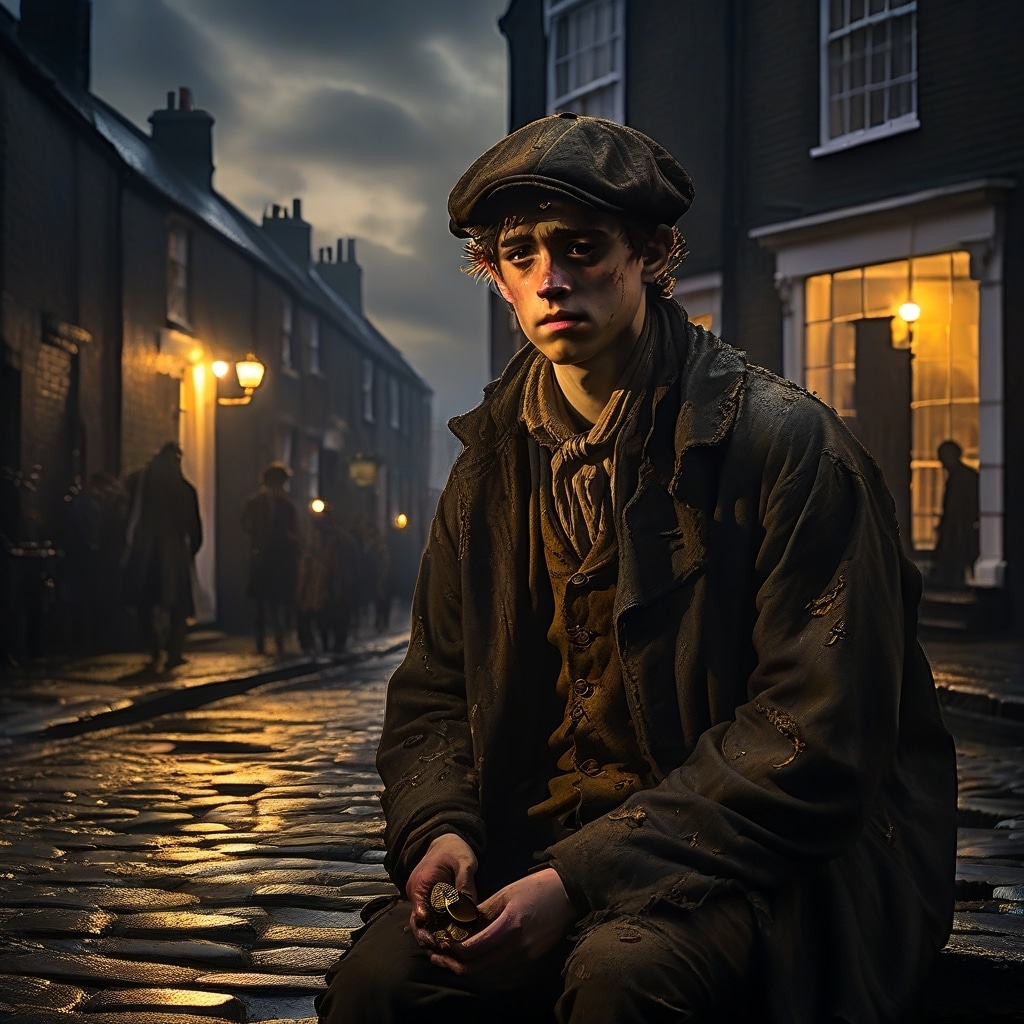
When reduced by losses, would put on an old ragged coat and get out to play at chuck amongst the boys in the street.
CASE FILE No. 12
| NAME | John Dykes |
| AGE | about 23 |
| WHEN | 1721 |
| WHERE | London; Stepney; Mile End to Bow road |
| CHARGE | Theft, picking pockets, highway robbery |
| FATE | Hanged, 23 October 1721 |
| SOURCE | Lives of the Most Remarkable Criminals, 1735 |
HANGED
Dark Lexicon: Old words. Dark meaning.
The past speaks its own dialect; here is what to listen for in this episode.
Chuck and span-farthing: street games played for tiny stakes, usually by children. In old England, a grown man crouching in an alley tossing farthings with boys was a sure sign he had gambled away everything he owned at the adult tables.
Gaming tables: not the polished card rooms of the wealthy, but the rough, often illicit gambling dens scattered across London. They were magnets for thieves, cheats and the desperate; losing there did not just mean poverty: it meant debts that could only be settled by crime.
Horsepond: a public horse-watering trough, but in old England it doubled as a crude punishment. Petty offenders were ducked or dragged through the filthy water as a humiliation meant to discourage future wrongdoing; it rarely worked.
Bridewell: today the word sounds quaint, almost cosy. In old England it was a house of correction where inmates were put to hard labour: beating hemp, picking oakum. Tothill Fields Bridewell, where Dykes was sent, was one of London's grimmest.
Swore upon: to be 'swore upon' meant to have someone give sworn testimony against you before a magistrate. West used the threat of being named by coiners as a pretext to beg money from his own brother: a lie wrapped inside the real terror of the law.
Recruit: today you recruit people; in old England you could also recruit your purse. It meant to replenish or restore something that had been depleted: in Dykes's case, refilling his empty pockets by taking to the highway.
Committed to Newgate: Newgate was London's most infamous prison, the last stop before trial at the Old Bailey. Being committed there meant the authorities considered the charge serious enough for a capital trial; for many, entering its gates was the beginning of the end.
Condemned the next sessions: the Old Bailey sat in sessions several times a year. To be condemned at the next sessions meant the trial came swiftly, and the verdict was death.
About This Series
Lives of the Most Remarkable Criminals (1735) is one of the earliest works of true crime in the English language. Each week this podcast retells one of its stories for today's listener, keeping the old book's most striking lines.
Spread the word on your favourite platform!