1964: The Warren Commission Declares Lee Harvey Oswald the Lone Gunman in the Kennedy Assassination

On September 27, 1964, the Warren Commission delivered its report on the assassination of President John F. Kennedy, concluding after a ten month inquiry that Lee Harvey Oswald acted alone in firing the shots that killed the president in Dallas on November 22, 1963.

The commission, chaired by Chief Justice Earl Warren and formed by executive order of President Lyndon Johnson, found no evidence of a conspiracy, foreign or domestic, and determined that Jack Ruby likewise acted alone when he shot Oswald dead two days after the assassination while Oswald was in police custody.

The report’s single bullet theory, used to explain the wounds suffered by both Kennedy and Texas Governor John Connally from one shot, became the most disputed element of the findings and fueled decades of public skepticism and rival conspiracy theories that persist to this day.
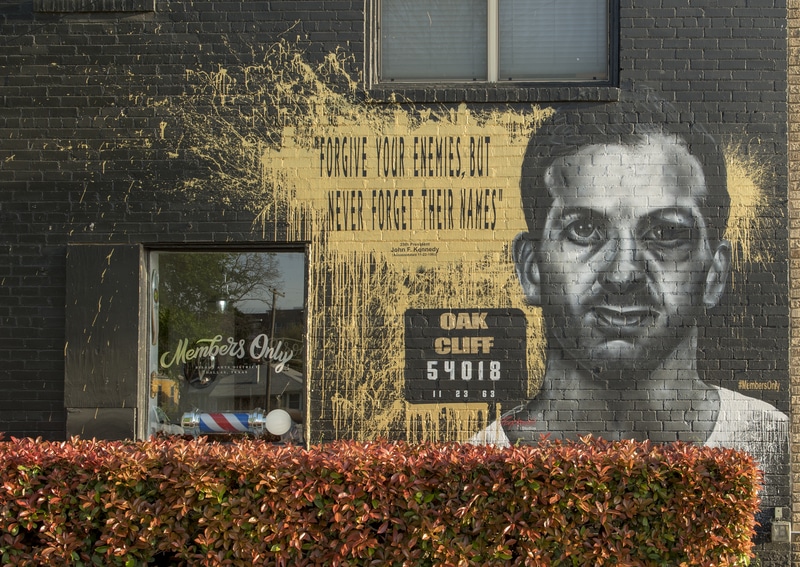

Lee Harvey Oswald Mural, Bishop Arts District, Dallas, Texas. Pictured is a mural on the side of the Members Only barber shop in the Bishop Arts District, Dallas, Texas. It features Lee Harvey Oswald, the man who assassinated president John F. Kennedy on November 22, 1963. He was arrested a short time later in the Texas Movie Theatre in Oak Cliff. It was painted by renowned Dallas muralist, Theo Ponchaveli. The Bishop Arts District is a small shopping and entertainment district in north Oak Cliff, immediately southwest of Downtown Dallas. It was originally developed as warehouses and shops in the 1920s. | ID 112938931 © David Pillow | Dreamstime.com
ID 112938931 © David Pillow | Dreamstime.com

⬅ See all events from 27 September

Spread the word on your favourite platform!

1969: The Zodiac Killer Leaves His Own Scorecard Written on a Victim’s Car Door

On September 27, 1969, at about 6.30 pm, the Zodiac Killer attacked Bryan Hartnell, 20, and Cecelia Shepard, 22, as they picnicked at Lake Berryessa in Napa County, California. He wore a black hooded costume marked with his crosshair symbol and, breaking from the shootings of his earlier attacks, stabbed both victims repeatedly. Hartnell survived; Shepard died two days later.

Before leaving, the killer used a black felt-tip pen to draw his crosshair signature on Hartnell’s car door, then listed beneath it the dates and locations of his previous attacks: Vallejo, 12-20-68, 7-4-69, and the day’s own assault, 6:30, by knife. The first date referred to the killing of David Faraday, 17, and Betty Lou Jensen, 16, on Lake Herman Road, and the second to the shooting of Michael Mageau, 19, and Darlene Ferrin, 22, in a Vallejo park, where Mageau survived and Ferrin died.

The note tied all three attacks together in the killer’s own hand at the scene, before any letter to police or press had been sent. He then drove roughly 27 miles to a car wash in downtown Napa and, from a payphone, calmly called the Napa County Sheriff’s Department himself at 7.40 pm to report the crime.

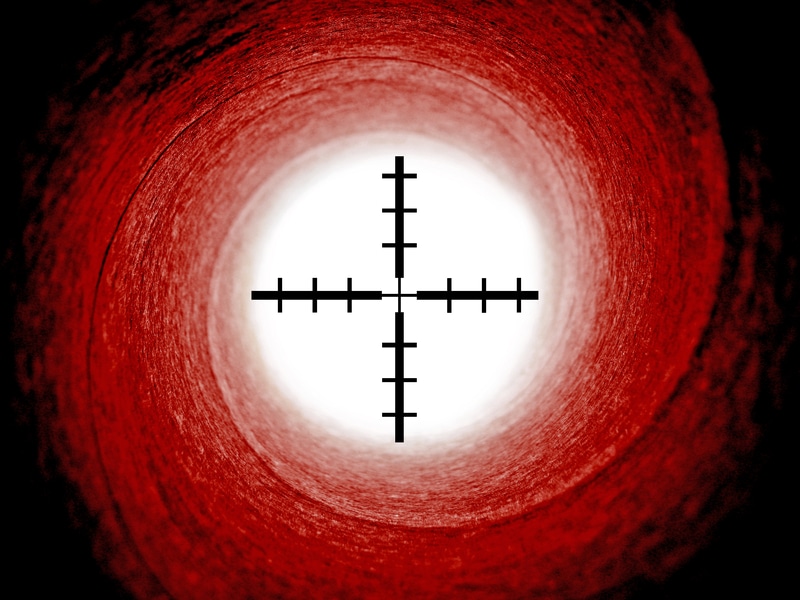
Symbolism
Symbolism – Zodiac Serial Killer Mystery

⬅ See all events from 27 September

Spread the word on your favourite platform!

1989: The Same Calendar Date, Six Years Apart: Harold Shipman Killed Two Elderly Patients in Hyde

Serial killer Dr Harold Shipman had a chilling habit of striking on the same date across different years. On 26 September 1989, he killed 82 year old Elizabeth Mary Burke in Hyde, the Greater Manchester town where his medical practice was based.

Exactly six years later, on the same date in 1995, he killed 87 year old Dora Elizabeth Ashton, another patient from Hyde. Despite the eerie coincidence, Shipman was never charged with either woman’s death; he was only later convicted for a separate group of murders, though he is suspected of killing far more patients over his career as a trusted family doctor.

Injection to patient’s arm.

⬅ See all events from 26 September

Spread the word on your favourite platform!

2020: The Claremont Serial Killer Convicted of Two Murders in Perth

After 24 years, the case that haunted Perth came down to a single judge and a 619-page verdict. Bradley Edwards, a 51-year-old former Telstra technician, was found guilty of two of the three Claremont murders and not guilty of the third.

All three women vanished after nights out in Claremont, then one of the busiest nightspots in the city. Sarah Spiers, 18, called a taxi from a phone booth at 2.06 am in January 1996; when it arrived three minutes later, she was gone. Her remains have never been found, and although Edwards was acquitted of her murder, the judge found it more likely than not that he was involved in her disappearance. Jane Rimmer, a 23-year-old childcare worker, was last seen on security footage that June and was found 55 days later in bushland by a family picking wildflowers. Ciara Glennon, a 27-year-old lawyer, disappeared in March 1997 and was found 19 days later in scrub north of the city.

The hunt became the biggest, longest and most expensive investigation in Western Australian history. Thousands of taxi drivers were fingerprinted and DNA tested, 110 “persons of interest” were sent a questionnaire asking “Are you the killer?”, and a public servant was pursued as the prime suspect for a decade before being cleared.

Edwards had no known link to the case until his arrest in December 2016. DNA found under the fingernails of his final victim matched a kimono dropped by an intruder fleeing a suburban house in 1988, and fibres on both bodies matched the Telstra-issue station wagon he drove at the time. Tried without a jury over seven months and more than 200 witnesses, he was sentenced to life with a 40-year minimum, the judge noting a “high likelihood” that he would die in prison.

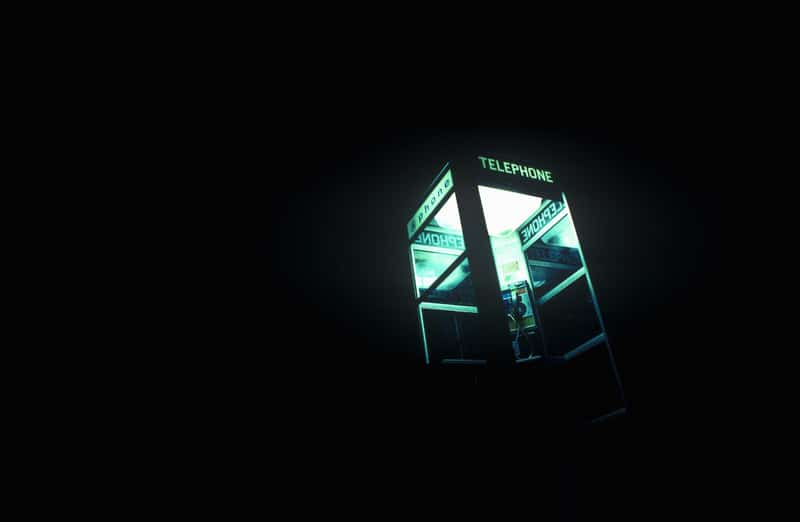
Telephone booth at night with interior lights

⬅ See all events from 24 September

Spread the word on your favourite platform!
On This Day in True Crime History

Subscribe to Dark Stories

True crime stories, dark history and tour news, straight to your inbox.