1853: "Thank You, My Lord, I Am Very Glad of That Sentence": Bushrangers Hanged in Melbourne

Henry Bradley and Patrick O'Connor absconded from assigned service in northwestern Tasmania and broke into a settler's homestead on the night of 14 September 1853, tying up the household room by room. When the owner escaped through a window, the pair turned on his young relation, Alfred Phillips, and shot him dead as he begged them to spare the women and children.

To vanish from the island, they forced the crew of the schooner Sophia to sea at gunpoint, keeping a hostage tied to the mast until they reached Victorian waters. There they kept robbing, wounding one man near Brighton, until a police patrol cornered them near Kilmore. In the gunfight that followed, Bradley and O'Connor shot mounted Cadet Thompson through the chest; captured the next day after a second running battle, they boasted to their captors of already having killed six people back in Van Diemen's Land.

Convicted of shooting Thompson, both men were hanged together in Melbourne on 24 October 1853.

On the scaffold, Bradley said he was willing to die and had already dictated a letter confessing the full extent of his crimes; O'Connor remained defiant to the end, refusing to join seriously in the priest's prayers.

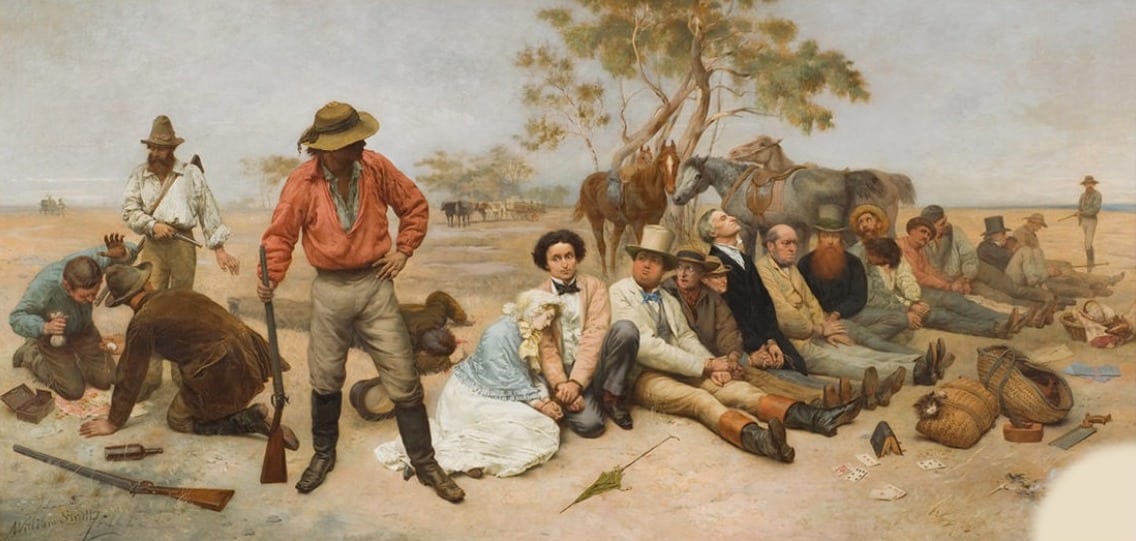
Bushrangers working sketches State Library Victoria

⬅ See all events from 24 October

Spread the word on your favourite platform!

John Meff: The Housebreaker Who Could Not Stay Away

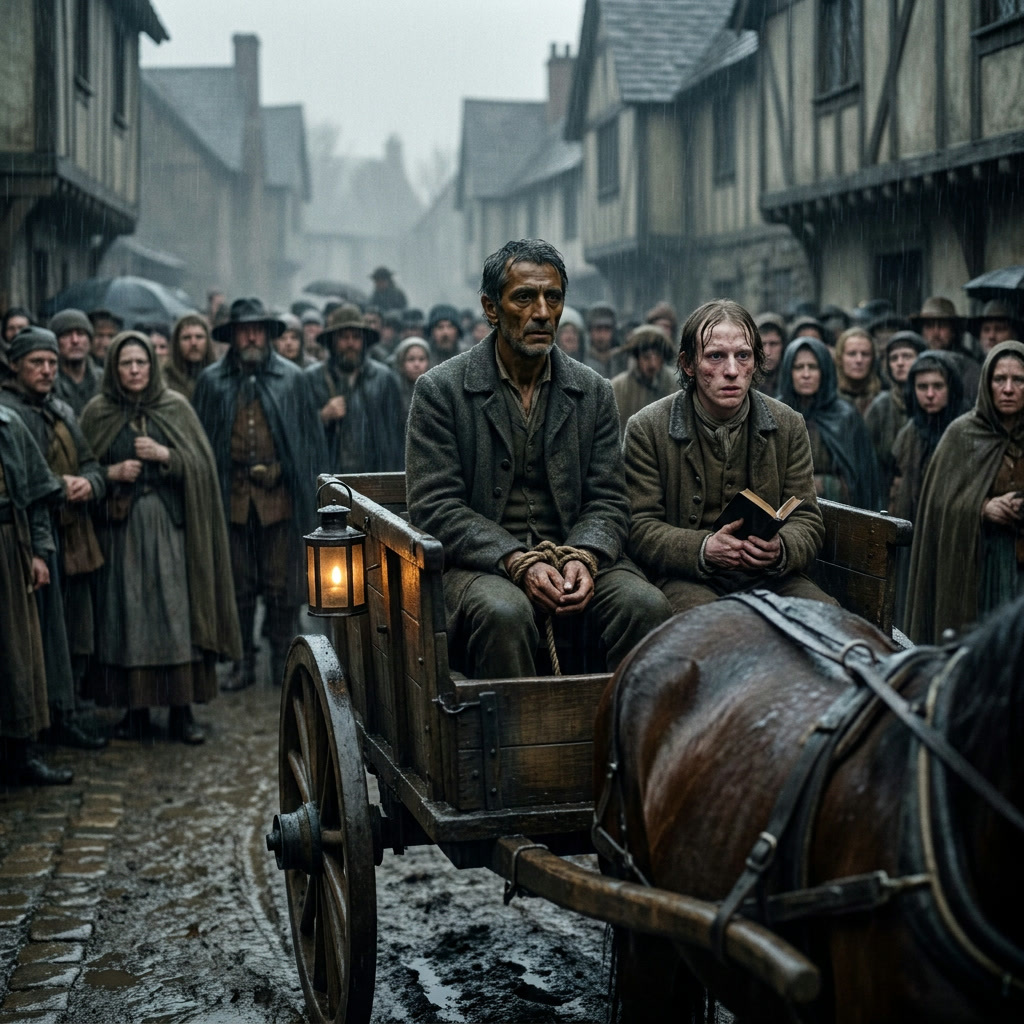
John Meff is the son of French Protestant refugees who fled Louis XIV's persecution and rebuilt their lives in London. Raised with care and apprenticed to a weaver, he marries young; but when honest labour cannot feed his family, he turns to housebreaking.

Almost immediately he is caught, tried and loaded into the cart bound for the gallows: a story that should end right there. Instead, a bizarre twist of fate sends his life spiralling through pirate encounters, a desert island and a desperate return to old England, where the machinery of justice has a long memory.

This is one of the strangest true crime stories you will hear: listen now and follow Meff from the weaver's loom to the edge of the world and back again.

John Meff: The Housebreaker Who Could Not Stay Away

Follow the podcast so you never miss an episode:

Apple PodcastsSpotifyAmazon MusicMore apps

FROM THE 1735 TEXT

the hangman being arrested as he was going to Tyburn, he and the rest were transported through the clemency of the Government

CASE FILE No. 9
NAMEJohn Meff, alias Merth
AGEabout 40
WHEN1721
WHERELondon, Newgate, Tyburn
CHARGEHousebreaking and returning from transportation without lawful cause
FATEHanged at Tyburn, 11 September 1721
SOURCELives of the Most Remarkable Criminals, 1735
HANGED

Dark Lexicon: Old words. Dark meaning.

The past speaks its own dialect; here is what to listen for in this episode.

Marooned: today it conjures a castaway on a tropical beach, almost romantic. In old England and on the high seas it was a death sentence by abandonment: pirates would dump unwanted men on uninhabited islands with nothing, leaving the sun and starvation to do the killing.

Springes: simple snare traps made from whatever flexible material was at hand: cord, wire, or in Meff's desperate case, strands pulled from an old horsehair wig. A springe would tighten around a bird's leg when triggered; on a barren island it could mean the difference between eating and dying.

Fluxes: a word for severe, often bloody diarrhoea, the kind that killed as readily as any fever in the eighteenth century. When the text says the island animals threw the castaways into 'dangerous fluxes,' it means men too weak to stand, wasting away from food their bodies could not tolerate.

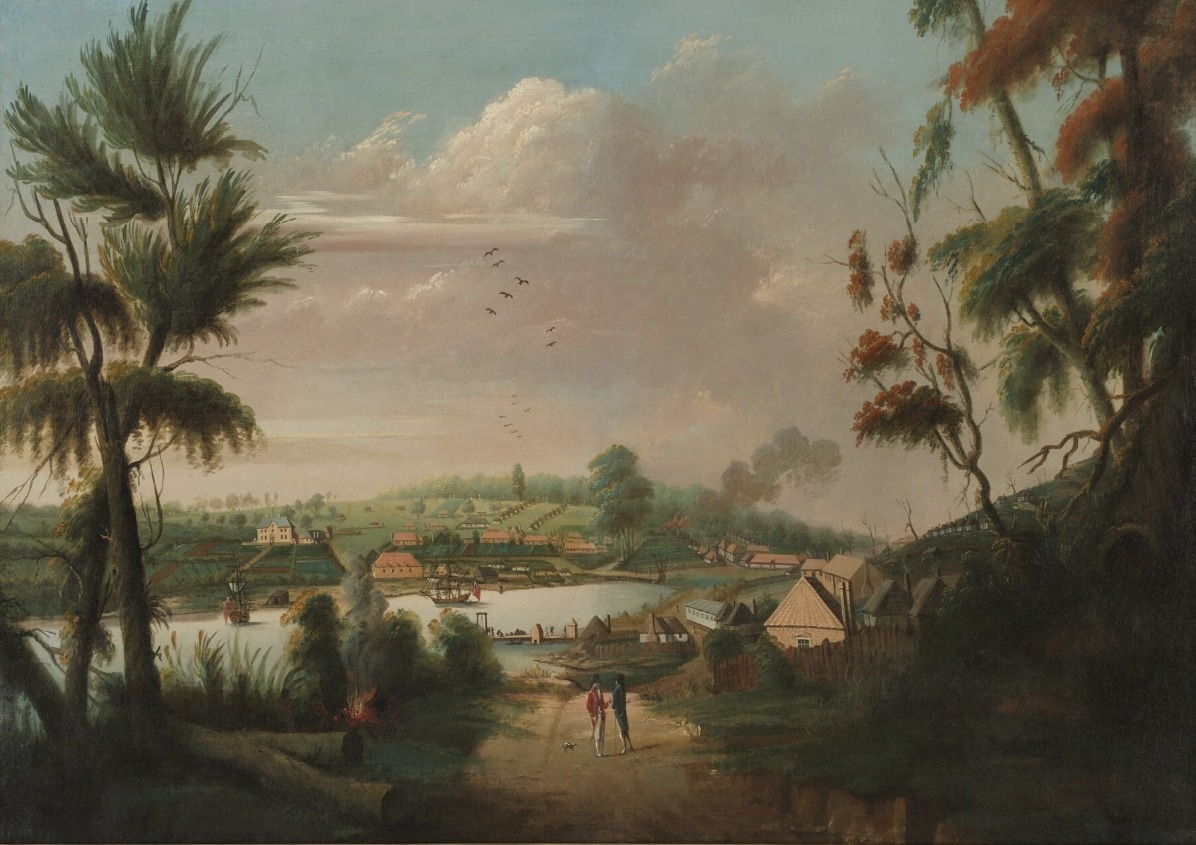
Plantations: not merely farms. In old England this word meant the colonies, especially in the Caribbean and the Americas, where transported convicts were sent to serve out their sentences as forced labourers. It was exile dressed up as mercy.

Act of Indemnity: a sweeping legal pardon issued by the government, sometimes covering whole categories of offence. Meff hoped it would wipe his slate clean; the court had other ideas, since his real crime was returning from transportation itself.

Returning from transportation: in old England, coming back to the country after being transported was a capital offence, no matter how you had lived abroad. The law saw it not as mere rule-breaking but as a defiance of royal mercy: you were spared the rope once, and by returning you were practically tying the noose yourself.

Impeached: today it means to charge a politician with misconduct. In old England it meant to inform on your criminal associates in exchange for your own life: a desperate bargain that could buy you another few years, if your former friends did not find you first.

Put in the cart: the condemned were loaded into an open cart at Newgate and driven through the streets to Tyburn for hanging. The phrase sounds almost casual, but the journey was a public spectacle: crowds lined the route, and taverns along the way offered the doomed a final drink.

About This Series

Lives of the Most Remarkable Criminals (1735) is one of the earliest works of true crime in the English language. Each week this podcast retells one of its stories for today's listener, keeping the old book's most striking lines.

Spread the word on your favourite platform!
Walter Kennedy: The Wapping Boy Who Turned Pirate

Walter Kennedy grows up at Pelican Stairs in Wapping, the son of an anchor-smith, a boy with a 'too aspiring temper' who dreams of something bigger than his father's forge. When his father dies before his apprenticeship is done, Walter follows his own roving inclinations to sea, where tales of buccaneers and pirate kingdoms fill his head with visions of power.

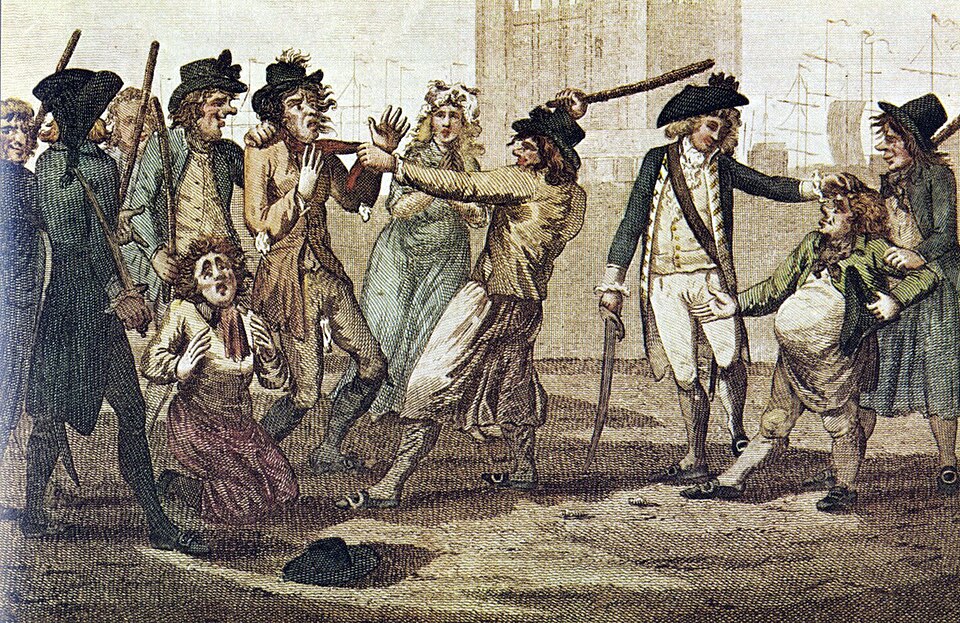
Serving aboard a man-of-war during Queen Anne's war with France, he listens hungrily to every story of maritime desperadoes, from Sir Henry Morgan to Captain Avery. The line between navy sailor and outlaw blurs quickly in old England's waters, and Kennedy is already leaning toward the wrong side of it.

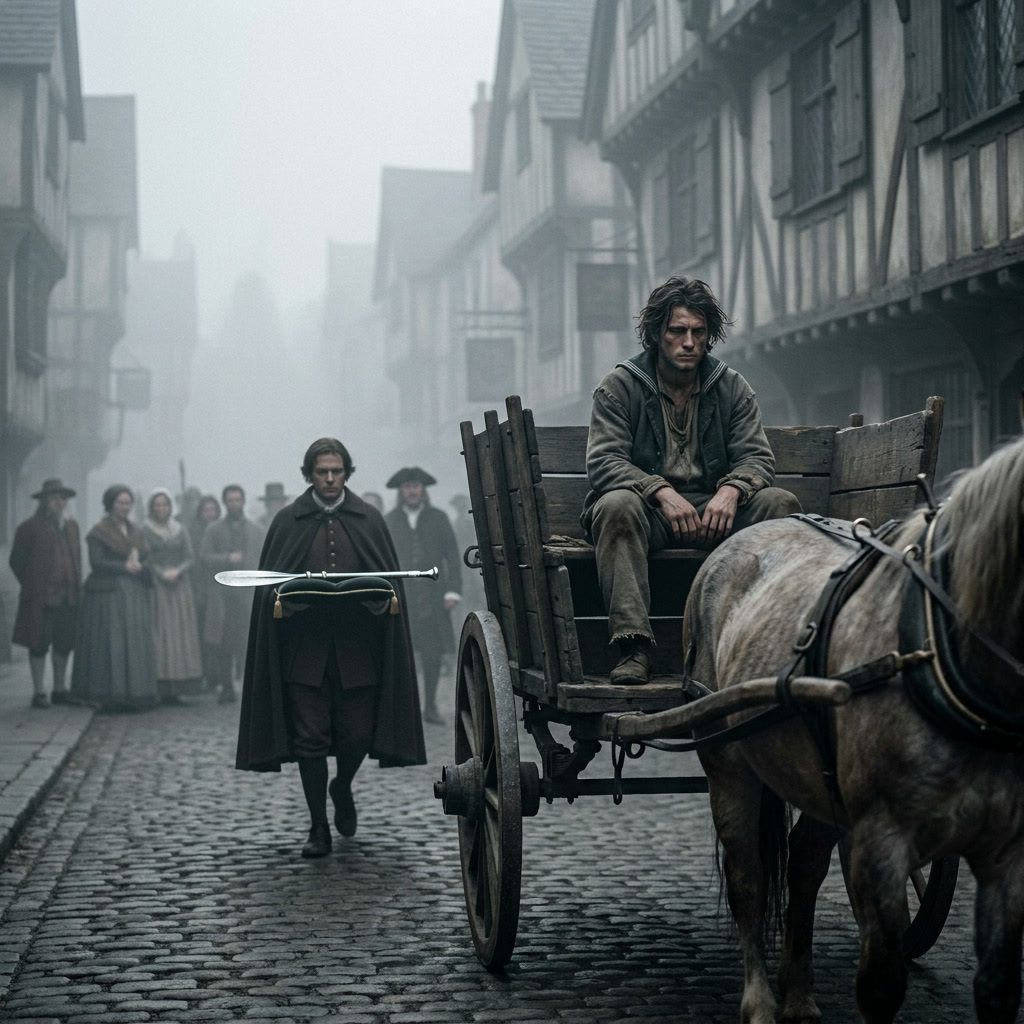
Step aboard and hear how a Wapping boy chased sovereignty on the open ocean: press the silver oar into his story.

Walter Kennedy: The Wapping Boy Who Turned Pirate

Follow the podcast so you never miss an episode:

Apple PodcastsSpotifyAmazon MusicMore apps

FROM THE 1735 TEXT

such is the justice of Providence that few or none of us preserve enough to maintain us

CASE FILE No. 6
NAMEWalter Kennedy
AGEabout 26
WHEN1721
WHEREHigh seas, Brazil, Scotland, London
CHARGEPiracy committed on the high seas
FATEHanged at Execution Dock, 21 July 1721
SOURCELives of the Most Remarkable Criminals, 1735
HANGED

Dark Lexicon: Old words. Dark meaning.

The past speaks its own dialect; here is what to listen for in this episode.

Silver oar: not a rowing implement but a ceremonial mace, the emblem of the High Court of Admiralty. In old England it was laid on the table at piracy trials and carried before the condemned on the way to execution: a glittering reminder that the sea had its own law and its own theatre of death.

Petty treason: today treason means betraying your country, but in old England petty treason was a broader, darker concept: the crime of a subordinate killing a superior, such as a wife killing her husband or a servant killing a master. Piracy was once classed alongside it because it was seen as a betrayal of the sovereign's peace on the seas.

Upon the account: sailor slang in old England for turning pirate. It sounds almost like a business arrangement, and in a way it was: pirates kept meticulous accounts of plunder and divided shares by rank.

Man-of-war: today it might conjure an image of a jellyfish, but in old England it meant a warship of the Royal Navy, armed to the teeth and crewed by men who lived somewhere between discipline and desperation.

Buccaneers: the word originally referred to French hunters on Hispaniola who smoked meat on wooden frames called boucans. By the time Kennedy heard their stories, it meant freelance pirates of the Caribbean: men who operated in a lawless grey zone between privateer and outright criminal.

Ambuscade: the old form of ambush, borrowed from French and still carrying a whiff of military formality. In old England it sounded almost elegant; what it described was anything but.

Execution Dock: not just any gallows. In old England, this stretch of Wapping waterfront was where the Admiralty hanged its pirates, their bodies left on display until three tides had washed over them: the sea reclaiming its own.

About This Series

Lives of the Most Remarkable Criminals (1735) is one of the earliest works of true crime in the English language. Each week this podcast retells one of its stories for today's listener, keeping the old book's most striking lines.

Spread the word on your favourite platform!

On This Day in True Crime History

Subscribe to Dark Stories

True crime stories, dark history and tour news, straight to your inbox.