1864: Samuel Woods Hanged at Melbourne Gaol for Armed Robbery and Shooting at Fitzroy Bank

On the morning of 14 July 1864, four men, Samuel Woods, William Carver, Jeremiah Phillips, and James Anderson, stormed the Fitzroy branch of the English, Scottish, and Australian Chartered Bank. Woods entered alone, advanced toward the manager’s private room, and when confronted by manager John Dowling, threatened to shoot him. In the struggle that followed, Dowling fought to redirect the pistol as Woods fired. Anderson, who had not entered the building, stood watch outside and fled after the robbery, making him equally liable under the law.

All four were brought before the City Court, represented by Crown Solicitor R. F. Gurner, and committed for trial. Woods was convicted and hanged at Melbourne Gaol on 3 August 1864 for shooting with intent.

Waltz in a backroom 1864 Fitzroy bank robbery with pistols and knife

⬅ See all events from 3 August

Spread the word on your favourite platform!

1864: William Carver Hanged at Melbourne Gaol for Armed Bank Robbery at Fitzroy

On 14 July 1864, four men, Samuel Woods, William Carver, Jeremiah Phillips, and James Anderson, stormed the Fitzroy branch of the English, Scottish, and Australian Chartered Bank. Woods entered first, confronting the manager John Dowling at the counter, threatening to shoot him and producing a pistol during the struggle that followed. The gang was arrested and committed for trial, the Crown prosecutor arguing that even those who stood watch outside the building shared equal guilt with those who entered.

Carver was convicted of shooting with intent and hanged at Melbourne Gaol on 3 August 1864.

Waltz in a backroom 1864 Fitzroy bank robbery with pistols and knife

⬅ See all events from 3 August

Spread the word on your favourite platform!

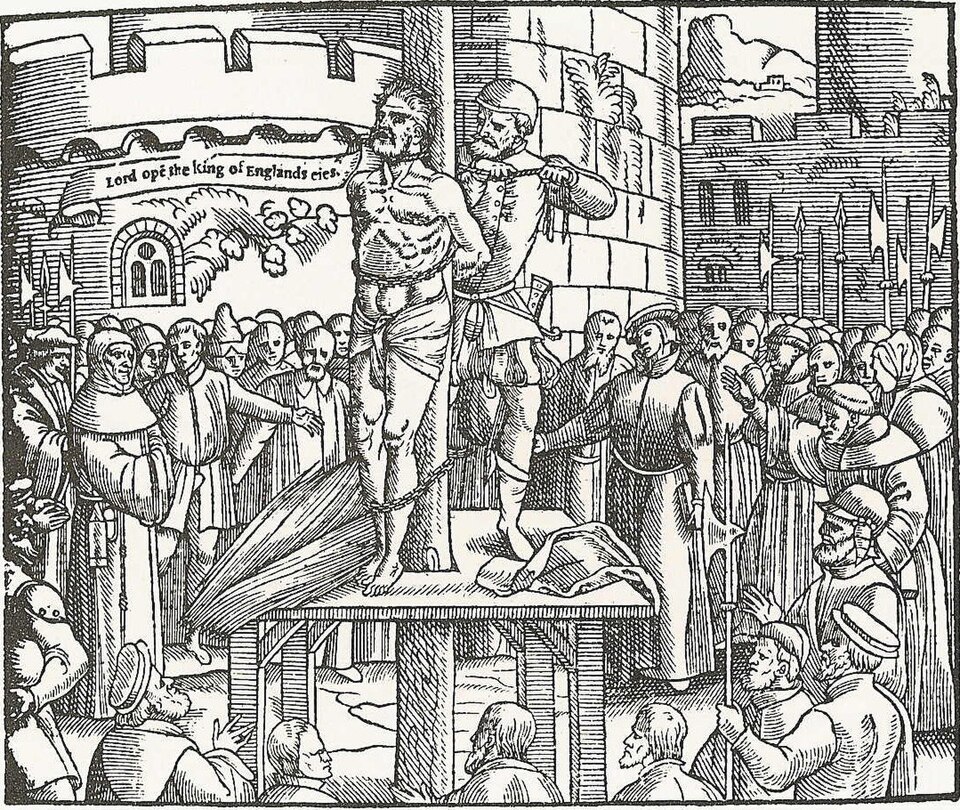
1546: Scholar and Printer Etienne Dolet Hanged and Burned for Heresy in Paris

Etienne Dolet, born in Orleans in 1509, was a French scholar, translator and printer whose humanist convictions put him on a collision course with the French Inquisition. Educated at Padua and Toulouse, he built a reputation as a gifted orator and a defiant critic of religious orthodoxy. His publications in Lyon drew the close attention of inquisitorial authorities, and after several periods of imprisonment, the combined forces of the parlement of Paris, the Inquisition, and the Sorbonne secured his conviction for heresy, blasphemy and sedition.

On 3 August 1546, his 37th birthday, Dolet was hanged and burned alongside his books on the Place Maubert in Paris. He is remembered today as a martyr for freedom of speech and freedom of the press.

16th century engraving portrait of Etienne Dolet

⬅ See all events from 3 August

Spread the word on your favourite platform!

1807: Aaron Burr on Trial for Plotting the Secession of New England

Aaron Burr, former Vice President of the United States, stood trial beginning 3 August 1807, accused of conspiring to engineer the secession of New England and carve out an independent empire in the American west. The charges grew from years of suspicion surrounding his political ambitions and alleged dealings with foreign powers after his catastrophic fall from grace following the fatal duel with Alexander Hamilton in 1804.

The trial, presided over by Chief Justice John Marshall in Richmond, Virginia, became one of the most closely watched legal proceedings in early American history. Burr was ultimately acquitted on the treason charge, Marshall ruling that the prosecution had failed to prove an overt act of treason as required by the Constitution.

1803 Painting of Aaron Burr

⬅ See all events from 3 August

Spread the word on your favourite platform!
On This Day in True Crime History

Subscribe to Dark Stories

True crime stories, dark history and tour news, straight to your inbox.