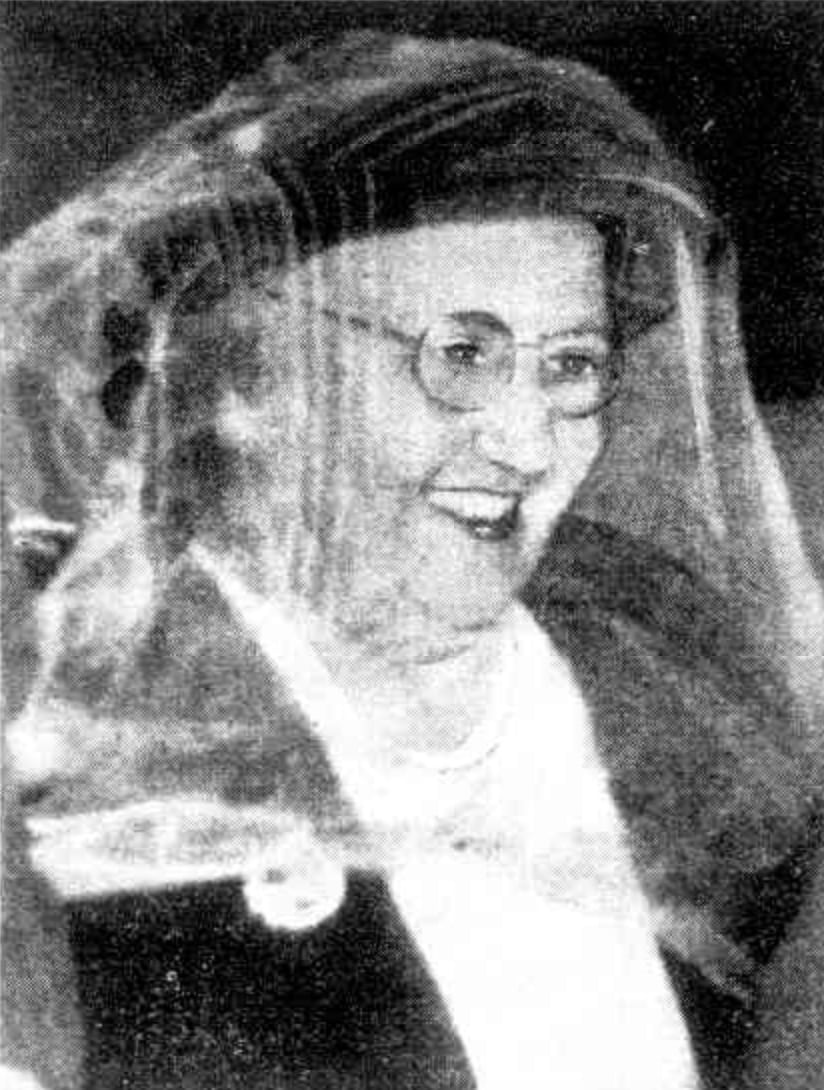
Henry Stock married Elizabeth Keats when she was nineteen and already raising another man’s child. The marriage soured, she took out a maintenance order against him, and when she vanished with her young son in April 1884, searchers found their badly decomposed remains in dense scrub near the Ouse district, both riddled with shot that matched Stock’s own gun. Witnesses recalled him muttering that he would “murder her yet” and would rather “swing” than live with her again.

His first trial ended in a deadlocked jury; a second, before Hobart’s Chief Justice Dobson, convicted him. On the morning of his execution at Campbell Street Gaol in Hobart, hangman Solomon Blay prepared to carry out his hundredth hanging. Before he was led to the scaffold, Stock scratched a message on his cell wall naming two sisters whose evidence had convicted him, hoping to see them “here before long,” and warning other young men to keep from woman. He walked to the gallows carrying a small bunch of flowers tied with a scripture text: “He shall speak peace unto the heathen.”

To the end he denied the killings, declaring on the drop, “I swear by Heaven that I am innocent.”


Henry Stock, c. 1883. Photograph attributed to T. J. Nevin. Tasmania Supreme Court, Death warrants and related papers, vol. 2, C 203. Mitchell Library, State Library of NSW.

⬅ See all events from 13 October

Spread the word on your favourite platform!

The trouble began with cooking pots. When the commandant of the Norfolk Island penal settlement ordered all private kettles and saucepans confiscated in June 1846, tightening an already brutal regime, convicts erupted in fury the next morning. A mob armed with axes and wooden billets killed a convict constable at the lumber-yard gate, beat an overseer to death with a carving fork and billets, then struck down two more sleeping constables before soldiers finally restored order.

Fourteen men were tried months later before a military jury; twelve were convicted and hanged in two batches of six on the same morning in October 1846, their bodies buried outside consecrated ground in a spot still known as Murderers’ Mound. A thirteenth man was hanged six days after for the same overseer’s killing.

Before his execution, the ringleader declared that four of the twelve condemned men were innocent, insisting he had not even spoken to one of them on the morning of the riot and that the others had played no part in the killings, but it was to no avail.

Murderers mound on Norfolk Island circa 1900

⬅ See all events from 13 October

Spread the word on your favourite platform!

Before dawn on Friday 13 October 1307, royal officers across France moved on hundreds of Knights Templar at once, arresting the warrior monks in their own preceptories under sealed orders opened simultaneously nationwide. King Philip the Fair, deeply in debt to the order he had once sworn to protect, accused its knights of heresy and secret blasphemous rites.

Under torture, many confessed to charges historians now regard as fabricated to justify seizing the order’s vast wealth. The arrests marked the beginning of the end for the Templars, who were suppressed within a few years and their leaders burned at the stake, and contributed to the enduring misfortune of the date of Friday the 13th.

Medieval illustration of the Grand Master of the Templars burning at the stake.

⬅ See all events from 13 October

Spread the word on your favourite platform!

Two days after shooting cabdriver Paul Stine dead in San Francisco, the Zodiac Killer sent the San Francisco Chronicle a taunting letter dated October 13, 1969. Inside was a torn piece of Stine’s bloodstained shirt, offered as proof the killer was the same man terrorising the Bay Area, not a copycat.

The letter mocked police for failing to catch him despite patrols flooding the area that night, and promised more killings to come. It remains one of several pieces of physical evidence tied to an identity that, more than fifty years on, has never been conclusively proven.

Symbolism
Symbolism

⬅ See all events from 13 October

Spread the word on your favourite platform!
On This Day in True Crime History
1855·The Wife Who Forged a Will and Bought a Murderer: Bridget Hurford Hanged at Perth
1855·Hanged at Perth, William Dodd Spent His Final Words Blaming an Innocent Man
1855·"I Am Sorry I Did Not Kill Him": a Convict Hanged at Perth for a Shovel Attack on a Warder
1883·A Father Who Watched Him Hang: James Gardiner Executed at Brisbane for Killing German Ada
1953·Caroline Grills Laughed During Her Own Trial for Poisoning
More Crime On This Day →

Subscribe to Dark Stories

True crime stories, dark history and tour news, straight to your inbox.