1897: “My Poor Boy, My Charlie”: A Mother’s Anguished Cry Before Her Son Was Hanged for Murder

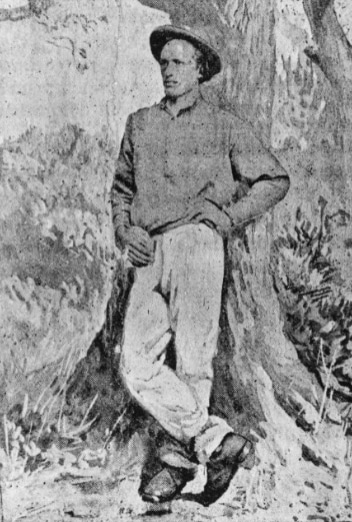
Charles John Hall murdered his wife Minnie at Eaglehawk, near Bendigo, on 11 February 1897. The crime shocked a district where Hall had been well known for very different reasons. A talented and athletic footballer nicknamed “John Bull,” he had been, according to one contemporary newspaper, “the idol of the hour” only a year earlier. He was convicted of Minnie’s murder and sentenced to death at Bendigo Gaol on 13 September 1897.

The night before, his parents were allowed a final visit, a scene warders later described as worse to witness than the hanging itself. His mother collapsed, shrieking through the gaol, “My poor boy, my Charlie,” before being carried to a cab and put to bed at home. Hall himself broke down during the visit. On the morning of his execution, he walked firmly to the scaffold and looked steadily at the hangman as the noose was fixed. Asked for his final words, Hall replied quietly, “I commit my soul to God.”

Outside the gaol a large crowd gathered, mostly women and children, with harsh feeling directed at Hall but deep sympathy for his grieving parents.
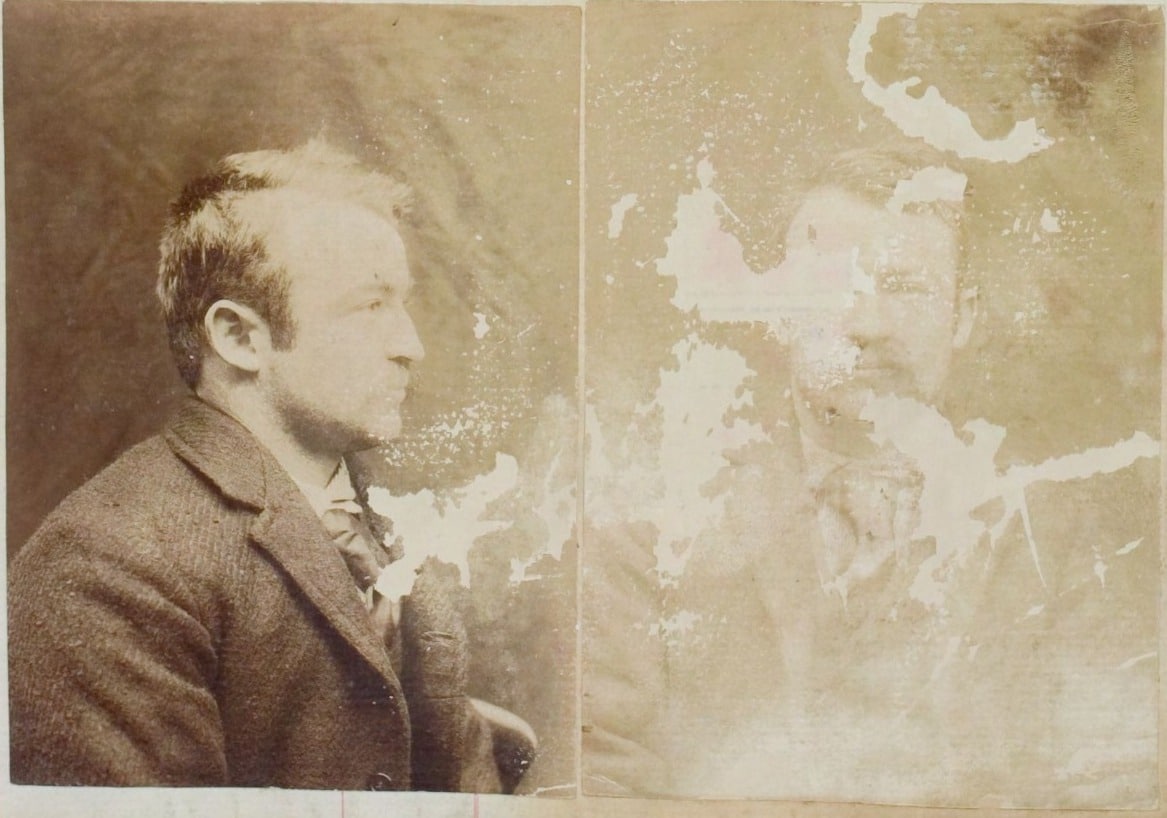

Charles John Hall, prisoner no. 27965, 1897. Public Record Office Victoria, VPRS 515/P0000, Central Register of Male Prisoners, Volume 51, p. 208. Out of copyright.

⬅ See all events from 13 September

Spread the word on your favourite platform!
True Crime Scene Tape

1866: The Wild Scotchman Handed a Harsh 25 Years for Mail Robbery

Bushranger James Macpherson, known as the Wild Scotchman, was found guilty at Maryborough of robbing the local mails and sentenced to two concurrent 25-year terms. The presiding judge made clear the sentence was deliberately severe, intended as a warning to deter other would-be bushrangers from following his example.

The punishment stood out for its length even by the standards of colonial Queensland justice, reflecting how seriously authorities viewed the ongoing threat of mail robbery to the colony’s roads and communications.

Portrait of bushranger James MacPherson 1866: The Wild Scotchman

⬅ See all events from 13 September

Spread the word on your favourite platform!
True Crime Scene Tape

1982: A Dingo Did Take the Baby: The Second Inquest Into Azaria Chamberlain’s Disappearance Begins

Nine week old Azaria Chamberlain vanished from her family’s tent at a campsite near Ayers Rock on the night of 17 August 1980. Her mother, Lindy Chamberlain, said she had seen a dingo leaving the tent, and the baby’s blood stained jumpsuit was found nearby days later, but her body was never recovered. A first inquest in 1981 accepted the dingo account and found no evidence of foul play.

That finding was overturned on appeal, and a second inquest opened on 13 September 1982, reopening a case that had already divided the country. This inquest went the other way, committing Lindy Chamberlain for trial on a charge of murder, a reversal that would send her to prison and make her one of the most publicly vilified women in Australian history.

Lindy Chamberlain was convicted later that year and sentenced to life imprisonment, but the case unravelled in 1986 when a piece of Azaria’s matinee jacket was found near a dingo lair, corroborating the original account. She was released and eventually exonerated, and a fourth inquest in 2012 formally confirmed that a dingo had taken and killed the child.

Australian dingo standing in bushland setting

⬅ See all events from 13 September

Spread the word on your favourite platform!
True Crime Scene Tape

1826: The Head Was Never Found: Three Men Hanged at Hobart for Murder

Alexander Simpson, a shopkeeper who lived and slept in two houses near Pittwater not far from Hobart, was last seen walking home at dusk. The next morning his body was found mutilated on rocks below the high-water mark, his head and much of his flesh removed and never recovered. A discoloured mark around his neck suggested he had been strangled with a cord before his body was carried to the water and cut apart, apparently to prevent identification. His shop had been completely rifled, yet the doors were found padlocked exactly as usual, suggesting the killers had taken his keys and relocked the premises after the robbery. Strangely, no footprints, blood or signs of a struggle were ever found.

Three neighbours who knew Simpson well, Thomas Dunnings, Edward Everitt and William Smith, stood trial for three days on largely circumstantial evidence, including stolen goods traced back to Simpson’s shop and their movements on the night of the killing. All three were convicted, sentenced to death on 2 September 1826 and hanged together at Hobart on 13 September 1826.

Each man gave a different account at the end. Dunnings insisted he had “had no hand in it”; Everitt admitted stealing goods from the house after Simpson’s death but denied any part in the murder; Smith maintained the evidence used to convict him was “entirely false.”

Vintage door secured with padlock and chain, lockdown security

⬅ See all events from 13 September

Spread the word on your favourite platform!
True Crime Scene Tape
On This Day in True Crime History

Subscribe to Dark Stories

True crime stories, dark history and tour news, straight to your inbox.