Young Edward Dunn vanished near his family’s farm at Port Gregory, north of Champion Bay in Western Australia in October 1865. Search parties tracked his footprints for a short distance before they disappeared, and no trace of him surfaced until the following April, when fragments of clothing, a skull and other remains were pulled from a well.

The mystery stood unsolved until 1873, when one of the accused broke down in a Geraldton lock-up and told police what had happened: a group of men had come across Dunn, killed him, then cooked and ate portions of his body before hiding his remains down the well. Two men were convicted of murder, admitted their guilt, and were hanged at Perth Gaol on this date, eight years after the killing.


Pitcher and well in the Negev Desert, Israel

⬅ See all events from 16 October

Spread the word on your favourite platform!

Nine months after her husband Louis XVI went to the guillotine, Marie Antoinette followed him, tried by the Revolutionary Tribunal for treason against the new French Republic. Her hair had been cropped and her wrists bound behind her back; she rode to the Place de la Revolution in an open cart, not the closed carriage that had carried the king. Witnesses recorded that climbing the scaffold she stepped on her executioner’s foot and murmured an apology, a small, almost absurd courtesy moments before the blade fell on 16 October 1793. The crowd that had once cheered a queen watched in silence.

Marie Antoinette's execution in 1793
Marie Antoinette’s execution in 1793

⬅ See all events from 16 October

Spread the word on your favourite platform!

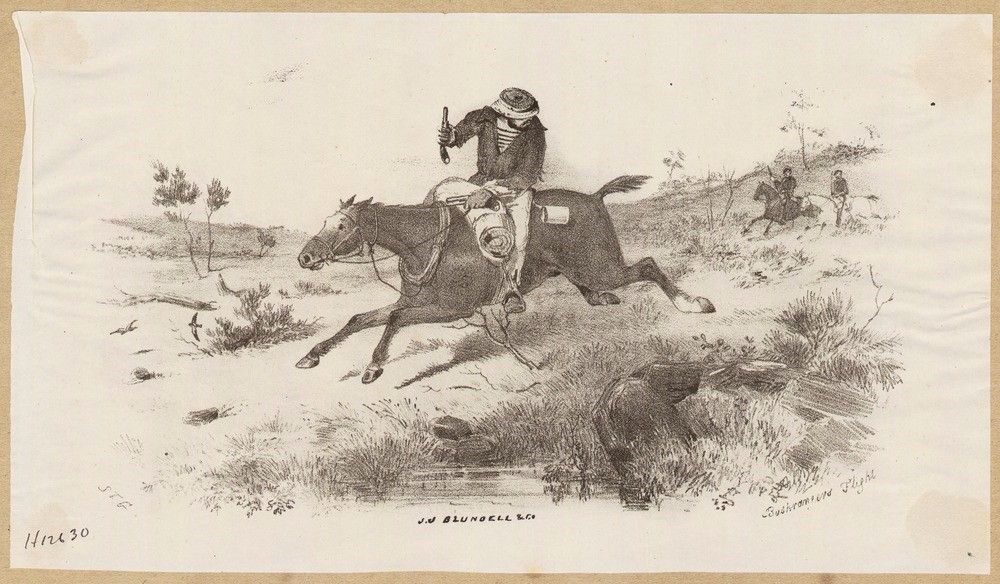
Matthew Craven and Thomas Cavanagh rode with a bushranging gang led by Patrick Sullivan that terrorised stations around Bathurst for half a year, robbing homesteads, stealing horses and holding settlers at gunpoint. Captured after a shootout at a bark hut, the pair pleaded guilty at trial to burglary and theft and were sentenced to hang.

On 16 October 1826 they left Sydney Gaol with three other condemned men bound for Burwood, where they were hanged before a large crowd that morning. Straight afterwards, the two men, Craven and Cavanagh travelled further on on to the Western Road near Parramatta, arriving about noon to face their own gallows.

Witnesses said their contrition was conspicuous; Craven, described as barely twenty, reportedly hung his head and sobbed bitterly as the ropes were fitted.

Bushrangers in action: Water colour drawing created by George Lacy 1867

⬅ See all events from 16 October

Spread the word on your favourite platform!

At a settler’s hut near Burwood, outside Sydney, bushranger Thomas Mustin levelled a loaded musket point-blank at a visiting neighbour, and pulled the trigger. It merely flashed in the pan; he drew a pistol, and that misfired too, and in the scuffle that followed Mustin and his companions escaped briefly into the bush.

Mustin, Daniel Watkins and John Brown were convicted over this attack and a string of armed robberies around Burwood and the Liverpool Road, including one household where the terrified wife recognised Brown as a former constable but was too afraid to say so.

On 16 October 1826 the three were marched from Sydney Gaol under military escort. All three acknowledged the justice of their sentence on the scaffold and prayed for mercy, offering no claim of innocence. They hanged together on a temporary gallows at Burwood, and their bodies were left on display throughout the day.

Bushrangers holding up coach passengers illustrated scene

⬅ See all events from 16 October

Spread the word on your favourite platform!
On This Day in True Crime History

Subscribe to Dark Stories

True crime stories, dark history and tour news, straight to your inbox.