At the Central Criminal Court in Sydney, 30-year-old Yvonne Gladys Fletcher of Newtown was sentenced to death after a seven-day trial for the 1948 murder of her first husband, Desmond George Butler, who died after months of wasting illness caused by thallium poisoning. Asked if she had anything to say before sentence was passed, she replied simply, “No, your Honor,” but moments later a prayer book she had carried through every day of the trial crashed to the floor and she collapsed in the dock, sobbing, as police lifted her out.

Mr Justice Kinsella told the court the crime was “horrible” because the poison had been “secretly administered within the family circle” to an unsuspecting victim, destroying him “mentally and physically while permitting him to linger for months in wretched agony.” Fletcher was the first person in Australian criminal history convicted of murder by thallium poisoning, and the jury recommended that the sale of the poison to the public be banned outright.

What the sentencing did not reveal to onlookers was already known to the court: Fletcher had also been committed for trial over the death of her second husband, who had died from the same poison at Newtown only months earlier. The Crown Prosecutor noted the chilling parallel between the two cases, telling the jury, “There is no question that both Butler and Fletcher died from thallium poisoning… the same matrimonial discord, the same hatred towards each man, the same sudden illness, and the same dreadful symptoms.” The judge himself observed that had this conviction concerned her second husband, evidence of his cruelty toward her might have offered some mitigation, but no such excuse existed for the killing of her first.
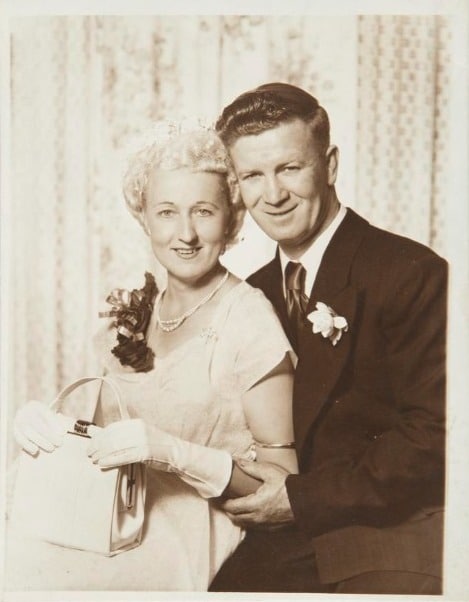

Yvonne Fletcher and Second Husband: Photograph by Robert Haswell. Gift, 2006. Justice & Police Museum Collection, Museums of History New South Wales, JP2006/1.

⬅ See all events from 23 September

Spread the word on your favourite platform!

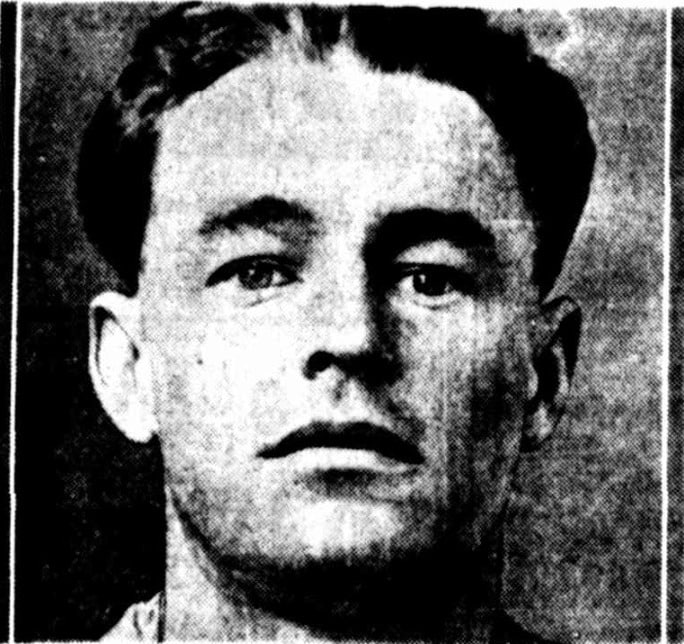
John Trevor “Jack” Kelly was found guilty of kidnapping on 23rd September 1937, and was sentenced to eighteen months’ imprisonment, with a recommendation that he undergo observation following concerns about lasting effects from a motor accident.

Released in November 1938, Kelly committed murder less than three months later. He stood trial before the same judge who had sentenced him for kidnapping, but this time he was sentenced to death, becoming the last prisoner executed in New South Wales.

John Trevor Kelly axe murderer.

⬅ See all events from 23 September

Spread the word on your favourite platform!

On the night of September 23, 1983, armed robbers held up a Kentucky Fried Chicken restaurant in Kilgore, Texas, just before closing. Five people inside, three employees and two friends waiting for one of them, were abducted and driven to a field on County Road 232, where each was shot in the back of the head and torso. The victims were identified as David Maxwell, 20, Joey Johnson, 20, Monty Landers, 19, Mary Tyler, 37, and Opie Hughes, 39.

The case went unsolved for over two decades. A torn fingernail found on one body once led investigators to arrest James Earl Mankins Jr., the son of a state representative, but DNA testing proved the fingernail was not his and he was released before trial.

In November 2005, cousins Darnell Hartsfield and Romeo Pinkerton, both already imprisoned on other charges, were arrested and charged with capital murder. DNA evidence pointed to a third, then-unidentified man involved in the killings and the rape of Hughes. Pinkerton denied any involvement, yet that October he pleaded guilty to five lesser counts of murder and received five concurrent life sentences.

The mystery of the third perpetrator was not resolved until decades later: in 2023 the Texas Rangers reopened the case, and DNA testing in 2025 finally identified him as Devan Riggs, a man who had died in 2010 without ever facing charges.

Kentucky Fried Chicken Restaurant at night. DALLAS, Tx, USA - APR 17, 2016: Exterior of a Kentucky Fried Chicken (KFC) fast food restaurant illuminated at night. Dallas, Texas, United States | ID 73870204 © Typhoonski | Dreamstime.com
ID 73870204 © Typhoonski | Dreamstime.com

⬅ See all events from 23 September

Spread the word on your favourite platform!

Captain Nathan Hale, a young American officer serving under George Washington, was captured behind British lines on Long Island while gathering intelligence on troop movements ahead of the British occupation of New York City. Found with incriminating documents hidden in his boots, he was condemned without a formal trial and hanged by the British the following morning, on the orders of General William Howe.

Hale was reportedly denied the services of a clergyman and even a Bible in his final hours. He was hanged from a tree or ladder, with no gallows or drop, meaning death likely came slowly by strangulation rather than a broken neck.

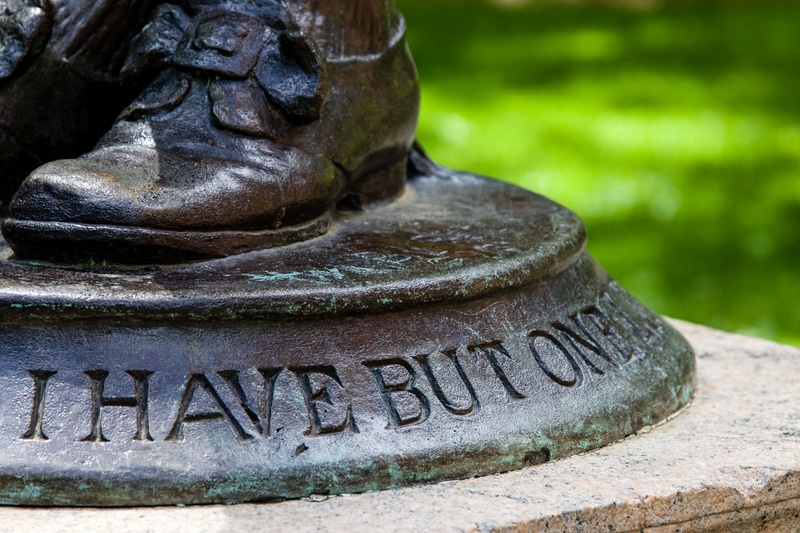
His last words are reputed to have been, “I only regret that I have but one life to give for my country,” a line said to echo a sentiment from a play he had read, and one that transformed him into an enduring symbol of American revolutionary sacrifice despite his execution as a spy.

Nathan Hale statue detail with partial quote I have but one

⬅ See all events from 22 September

Spread the word on your favourite platform!
On This Day in True Crime History

Subscribe to Dark Stories

True crime stories, dark history and tour news, straight to your inbox.