1876: Wild Bill Hickok Shot Dead at the Poker Table in Deadwood

James Butler Hickok, known as Wild Bill Hickok, was shot and killed on August 2, 1876, while playing poker at a saloon in Deadwood, Dakota Territory. The killer was Jack McCall, an unsuccessful gambler who approached from behind and fired a single shot. Hickok, 39, had built a formidable reputation as a frontier lawman, Union army scout, marksman, and showman, though much of his legend rested on exaggeration, including his own.

The cards Hickok held at the moment of his death, two pairs of black aces and eights, passed into folklore as the dead man’s hand. McCall was initially acquitted but later retried, convicted, and hanged. Hickok remains one of the most mythologised figures of the American Old West.

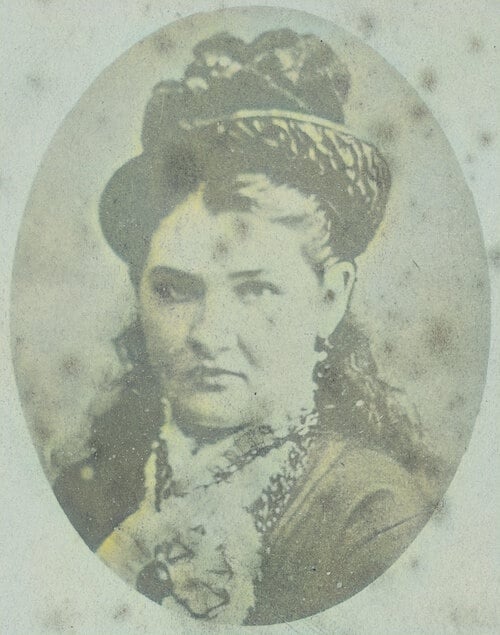
Portrait photograph of James Hickok

⬅ See all events from 2 August

1864: Alexander Ritchie Hanged at Toowoomba Gaol for the Murder of Mr Owen at Yandilla

On the evening of 29 April 1864, Mr Owen was shot and killed while travelling by buggy between Leyburn and Yandilla in Queensland, accompanied by the Reverend Mr Thackery. Alexander Ritchie, a convict, was tried, convicted by jury, and sentenced to death. The execution, the first to take place at Toowoomba Gaol, was carried out on 1 August 1864. A scaffold enclosed with glazed calico had been erected in the western yard of the new gaol, with the High Sheriff, E. H. Halloran, overseeing preparations.

Ritchie maintained his innocence to the end, supported in his final days by the Reverend Mr Hart and Dr Nelson. He ascended the scaffold with calm and resolve, addressing the assembled witnesses with striking words: “Gentlemen, I am innocent of this charge in the sight of God, but not of men. God has put this punishment upon me for other sins of which I have been guilty, but of this I am innocent.”

Alexander Ritchie Hanged at Toowoomba Gaol for the Murder of Mr Owen at Yandilla

⬅ See all events from 1 August

1848: Augustus Dancey Hanged at Melbourne Gaol for the Murder of a Boy at Stony Creek

Augustus Dancey was hanged at Melbourne Gaol on 1 August 1848 for the murder of Matthew Lucke, a young boy, at Stony Creek. The case drew considerable public attention, and Dancey spent his final hours receiving the sacrament, joining the prison chaplain in hymns, and eating a hearty breakfast of beefsteak before calmly submitting to the pinioning of the executioner.

Despite repeated entreaties from the Reverend Mr. Thompson to confess his guilt, Dancey maintained his innocence to the last. Waking at midnight in his cell the night before his execution, he declared he was ‘as innocent as the child unborn’ of the crime for which he was to hang.

Augustus Dancey Hanged at Melbourne Gaol for the Murder of a Boy at Stony Creek

⬅ See all events from 1 August

1589: Monk Jacques Clement Stabs King Henry III to Death in Saint-Cloud

On 1 August 1589, Jacques Clement, a Dominican lay brother and zealous supporter of the Catholic League, gained an audience with King Henry III at Saint-Cloud, where the king was besieging Paris during the French Wars of Religion. Concealing a dagger beneath his cloak, Clement stabbed the king under the pretence of delivering a confidential message. The royal attendants cut Clement down immediately, but Henry III lingered until the following morning, dying after urging Henri of Navarre that conversion to Catholicism was the only path to lasting peace.

Clement, born in 1567 at Serbonnes in Burgundy, had been radicalised by League ideology and the targeted killings of its leaders, the Duke and Cardinal de Guise. His plot had the quiet blessing of Catherine de Guise, Duchess Montpensier, who saw it as righteous vengeance. The League faithful hailed him as a martyr; Royalists and Protestants condemned him as a fanatic. His corpse was posthumously quartered and burned.

Portrait of Jacques Clement assassin of King Henry III

⬅ See all events from 1 August

On This Day in True Crime History

Subscribe to Dark Stories

True crime stories, dark history and tour news, straight to your inbox.