In Versailles in 1789, a physician named Joseph Guillotin stood before France’s new National Assembly and argued that execution should not be a matter of rank or suffering. He proposed that every condemned prisoner, noble or commoner, die the same way: instantly, by a single blow of a blade, rather than by the axe, the sword, or the rope, methods that often took multiple strokes or slow strangulation to finish the job.

Guillotin framed it as a mercy, a way to strip cruelty and class privilege out of state killing. He did not invent the device that would later carry his name, nor did he ever operate one, but the machine built from his proposal would go on to define the French Revolution’s Reign of Terror, and the word guillotine would forever be linked to the man who only meant to make dying less brutal.
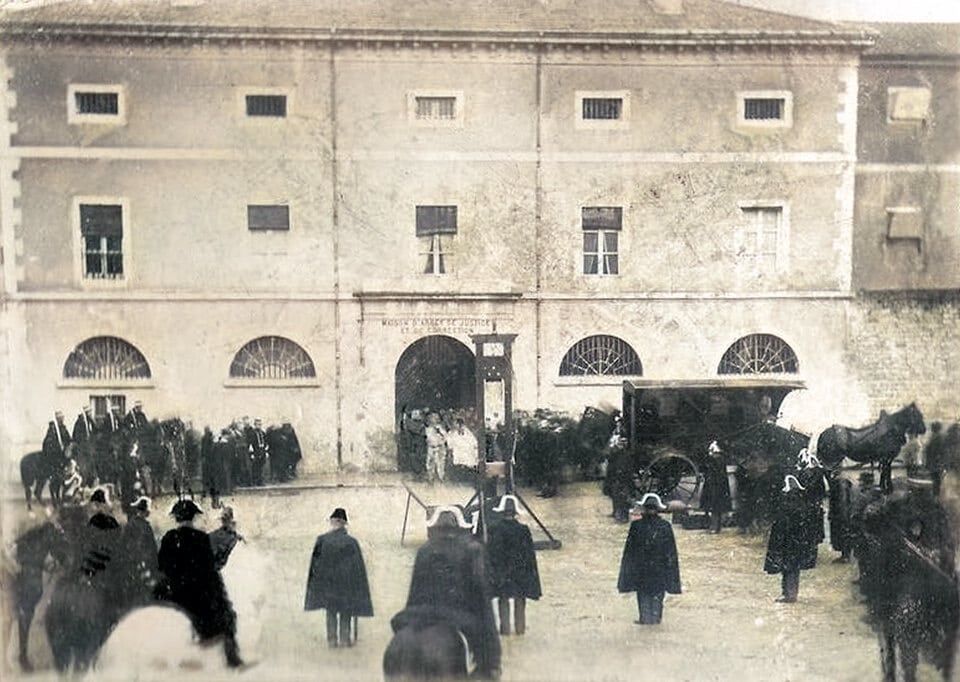

Public guillotine execution scene 1897

⬅ See all events from 10 October

Spread the word on your favourite platform!

Eight-year-old Graeme Thorne was snatched walking to school in Sydney in 1960, just a day after his family’s lottery win made headlines. Six weeks later his body was found wrapped in a tartan picnic blanket on vacant land at Seaforth, still in his school uniform, gagged and bound with string.

Forensic scientists traced the blanket to one of only 3,000 ever woven at an Onkaparinga mill, then matched rare tree pollen and pink mortar scraped from the body to a single property at Clontarf, once home to a blue Ford, a Pekingese dog and a blonde-haired wife. By the time police reached the house, its occupant, Hungarian migrant Stephen Bradley, had already sailed for London with his family aboard the SS Himalaya. Two Sydney detectives were waiting for him when the ship docked at Colombo, and he was brought back to face extradition and trial.

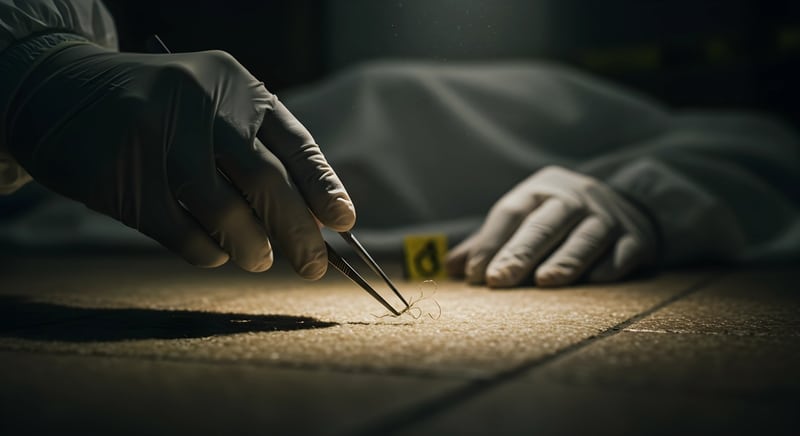
Forensic hair evidence collected at crime scene

⬅ See all events from 10 October

Spread the word on your favourite platform!

Kevin Simmonds and fellow inmate Leslie Newcombe escaped Sydney‘s Long Bay jail on 9 October 1959 by squeezing through a ventilator in an old chapel while prisoners watched a film. The next day they killed prison guard Cecil Mills at Emu Plains Prison Farm and fled with his gun, triggering what became the biggest manhunt in Australian history.

Newcombe was caught within a fortnight, but Simmonds evaded hundreds of armed police, tracker dogs and a helicopter for more than five weeks, tying up two rangers and stealing their truck along the way. Detective Sergeant Ray Kelly, nicknamed ‘Gunner’ for his record of shooting suspects, finally ran him down near Mulbring on 15 November, by which point crowds were cheering him at police stations as a folk hero.

A jury convicted both men of manslaughter rather than murder, and Simmonds was sent to the ‘intractables’ wing of Grafton gaol. Six years of brutal treatment there left him a vacant, self-harming shell of the man who had outrun the state; he was found hanged in his cell in 1966.

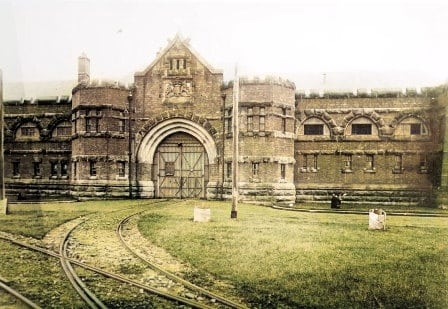
Long Bay Gaol Entrance (circa 1900)

⬅ See all events from 9 October

Spread the word on your favourite platform!

Che Guevara had already helped topple one government, fighting alongside Fidel Castro in Cuba, when he slipped into Bolivia in 1966 to light the same fuse there. He spent nearly a year leading a ragged guerrilla band through the jungle, hunted by the Bolivian army with American backing, before troops cornered and captured him on 8 October 1967 in a remote ravine.

He was held overnight in a schoolhouse in a small village, then shot dead the following day on orders from the Bolivian government, which wanted him silenced rather than put on public trial. His death turned him instantly into a global revolutionary icon, his face reproduced on posters and T-shirts for decades after the jungle where he fell was forgotten.

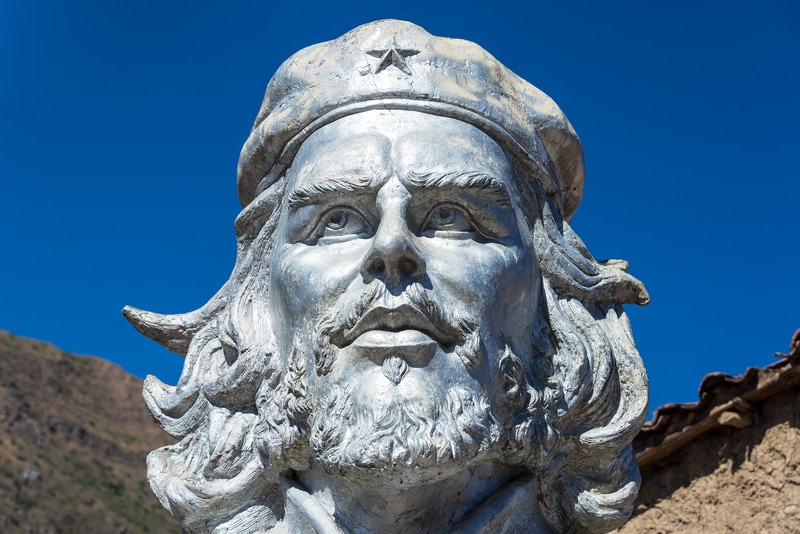
Bust of Che Guevara in La Higuera. LA HIGUERA, BOLIVIA - AUGUST 6: Monument to Che Guevara in La Higuera, Bolivia seen on August 6, 2014. Guevara was executed in La Higuera in 1967 | ID 54527187 © Jesse Kraft | Dreamstime.com
ID 54527187 © Jesse Kraft | Dreamstime.com

⬅ See all events from 9 October

Spread the word on your favourite platform!
On This Day in True Crime History
1855·The Wife Who Forged a Will and Bought a Murderer: Bridget Hurford Hanged at Perth
1855·Hanged at Perth, William Dodd Spent His Final Words Blaming an Innocent Man
1855·"I Am Sorry I Did Not Kill Him": a Convict Hanged at Perth for a Shovel Attack on a Warder
1883·A Father Who Watched Him Hang: James Gardiner Executed at Brisbane for Killing German Ada
1953·Caroline Grills Laughed During Her Own Trial for Poisoning
More Crime On This Day →

Subscribe to Dark Stories

True crime stories, dark history and tour news, straight to your inbox.