1901: President McKinley’s Killer Sentenced to Death After Jury Deliberates Barely an Hour

Leon Czolgosz shot President William McKinley on 6 September 1901 at the Pan-American Exposition in Buffalo, New York, firing two shots from a revolver he had concealed inside a handkerchief. McKinley lingered for eight days before dying of his wounds on 14 September.

Czolgosz’s trial opened on 23 September. The jury took less than an hour to find him guilty, and on 26 September he was sentenced to death. He was executed in the electric chair at Auburn Prison on 29 October 1901, and prison officials later poured acid into his coffin to prevent the grave becoming a shrine.

Czolgosz showed no remorse for the killing. From the scaffold he declared, “I killed the President because he was the enemy of the good people, the good working people. I am not sorry for my crime.”
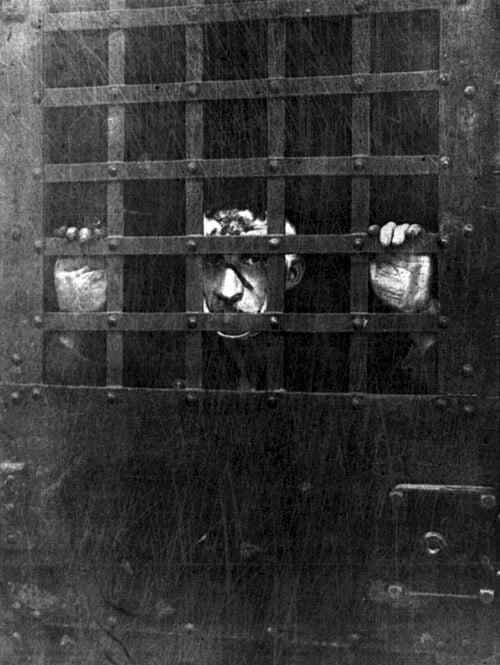

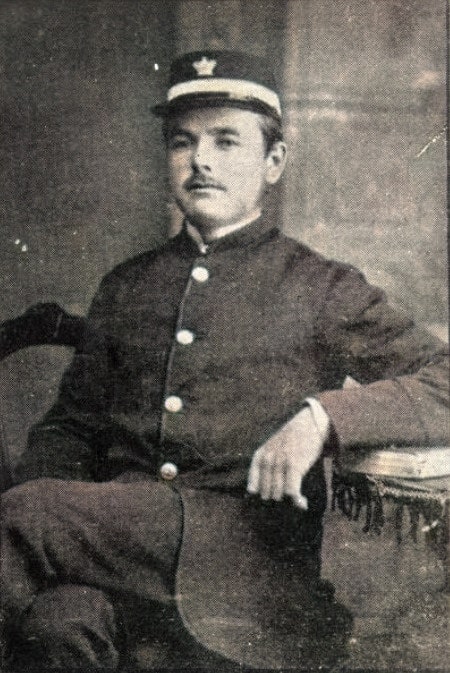
Leon F Czolgosz in Jail

⬅ See all events from 26 September

Spread the word on your favourite platform!

1932: Nine Minutes on the Gallows: the Longest Last Speech in Melbourne History

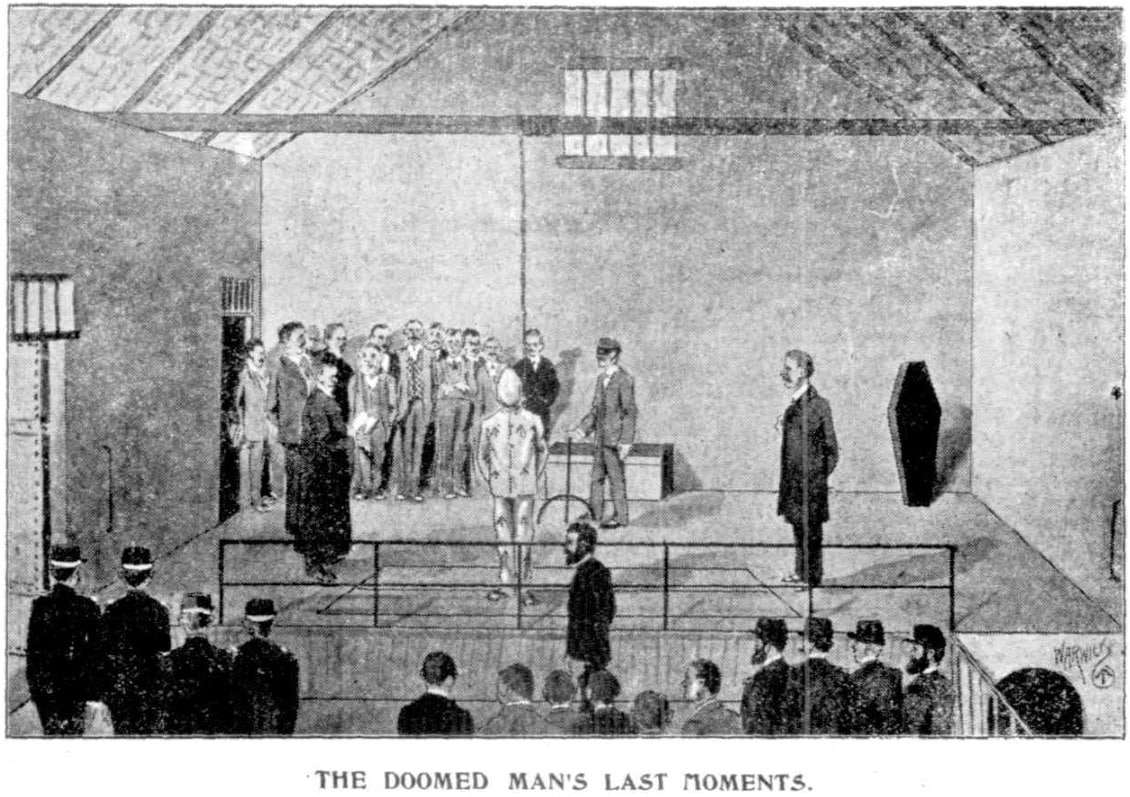
David Bennett spoke from the gallows for nine minutes, the longest statement ever made by a condemned man in Victoria. The 59-year-old painter and carpenter had walked to the scaffold calmly, and he spoke in a clear, steady voice.    He was hanged in Melbourne for a capital assault committed in July 1932, the first execution in Victoria since 1924 and the first since 1891 for any crime other than murder. It was not his first such conviction. In Western Australia in 1911 he had been sentenced to life imprisonment and a flogging by a judge who told him: “You are not fit to live in this world.”    He served just three years in Fremantle Gaol before the Attorney-General released him on legal doubts about the conviction, causing an outcry unprecedented in the state. Bennett moved east, and in 1930 he came forward to Melbourne detectives with information about a notorious unsolved murder. A man was arrested on his word, and was later found to be innocent.    Bennett admitted nothing. He claimed his defence had never been properly put to the jury, and ended: “I repeat that I am not guilty, and again ask forgiveness from those whom I have wronged as I forgive those who have wronged me. Good-bye.”

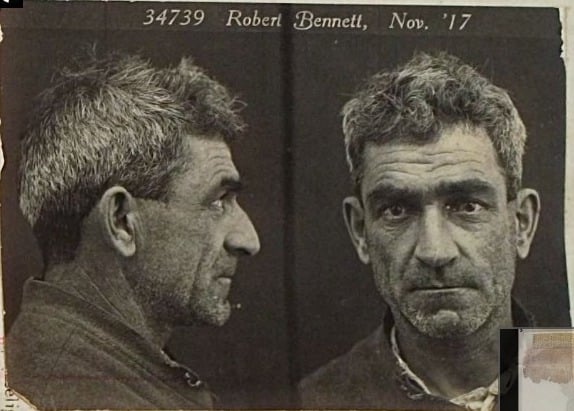
An Unspeakable Degenerate - CeVPRS 1100/P0002, David Bennett
An Unspeakable Degenerate – CeVPRS 1100/P0002, David Bennett

⬅ See all events from 26 September

Spread the word on your favourite platform!

1860: Flogged as a Soldier, Broken on Norfolk Island, Hanged at Hobart: the Ruin of a Convict

Moments after the bolt was drawn at the Campbell Street Gaol in Hobart, the chaplain stepped forward and read aloud a letter the dead man had written the day before in the condemned cell. It was addressed “To all men at Port Arthur”, and Martin Lydon had begged that it be made public.

It was the story of a ruined life in a few lines. Disobedient at ten, a soldier at 16, Lydon struck an officer of his company in a moment of anger and was flogged: “this ruined me”. He came to hate the army and took to drink, and further violence saw him transported. “The vileness of Norfolk Island turned me into an animal,” he wrote. Only three weeks earlier, in H division, he had boasted that he did not care about being hanged. Now he called that his “wicked flashiness”: “Every man about to die must fear the judgment of God.”

Lydon had been capitally convicted in the Supreme Court of a felonious assault at Port Cygnet, south of Hobart, committed while drunk, a crime that then carried the death penalty. Lydon disputed part of the evidence given at his trial, but he did not dispute the sentence: what he had done in his drunkenness, he wrote, deserved death. “May the drunkenness that brought on me this misery be a warning to all of you.”

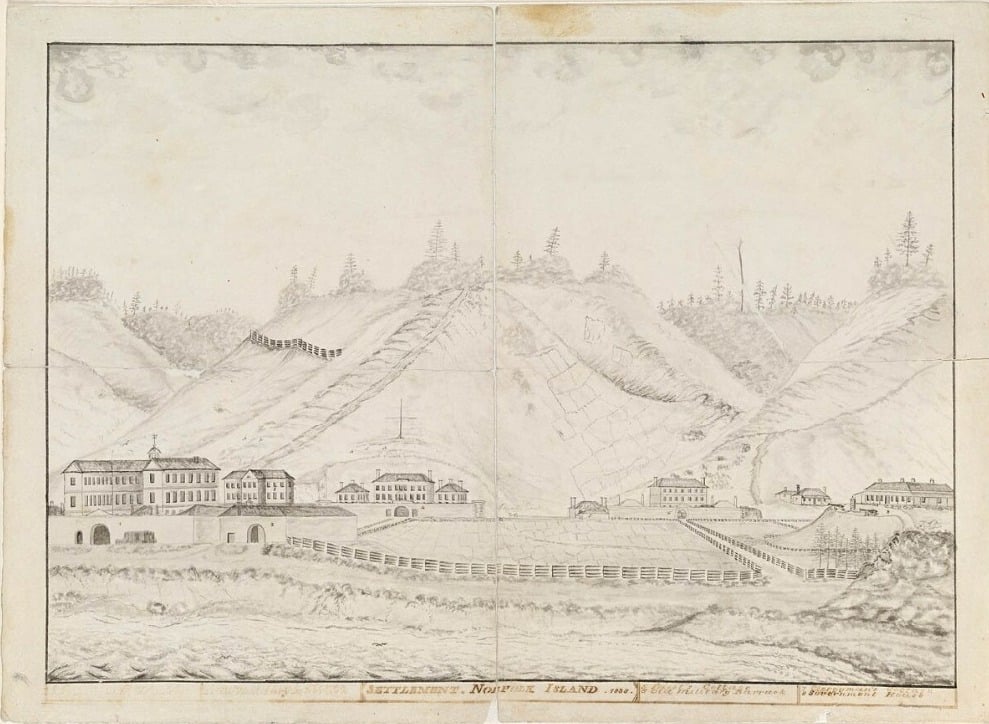
Norfolk Island settlement, 1838. Ink and wash drawing, artist unknown. State Library of New South Wales, SV8/Norf I/5.

⬅ See all events from 25 September

Spread the word on your favourite platform!

1883: “I Have Cooked Eight”: the Whispered Confession Only the Hangman Heard

Robert Francis Burns walked out of a Melbourne courtroom in August 1882 an acquitted man, and was arrested for a different murder before he had left the building. The first charge concerned a fellow railway navvy, last seen heading off with Burns and a gallon of whiskey. A headless body was found in the bush, but the Crown could not prove whose it was.

The second charge held. Michael Quinlivan, “a quiet saving man”, had been great mates with Burns, the only two Irishmen in their work gang. In June 1880 he withdrew 15 pounds from the bank, left a roadside hotel with Burns and was never seen alive again. Weeks later his body was found in a sheep paddock with a fractured skull.

The first jury could not agree after more than six hours; the second convicted in 45 minutes. On the gallows at Ararat Gaol, before about 30 spectators, the hangman was visibly nervous, and Burns plunged into eternity without any final words. Instead, he left a written statement thanking his gaolers, his lawyers and his priest, and admitting nothing.

Afterwards the hangman swore that as he pinioned the prisoner, Burns murmured: “I have cooked eight, five in Victoria and three in Sydney, and now you are going to cook me.”

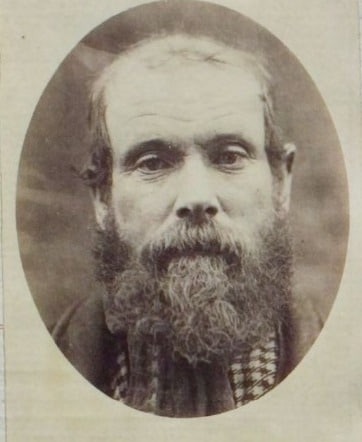
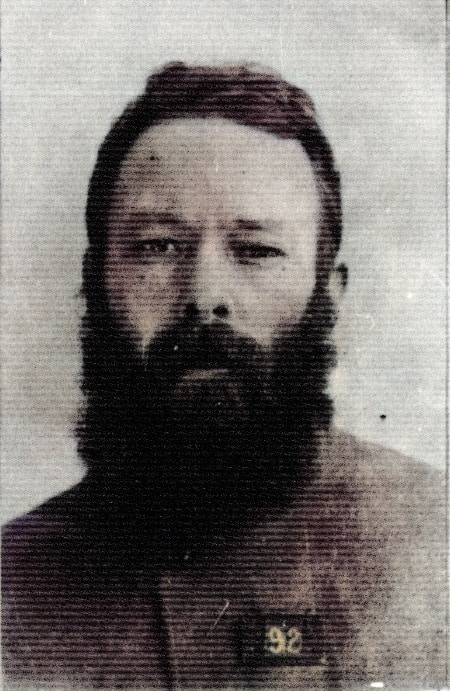
Robert Francis Burns Mugshot: VPRS 515/P0000, Central Register for Male Prisoners 19384 - 19880
Robert Francis Burns Mugshot: VPRS 515/P0000, Central Register for Male Prisoners 19384 – 19880

⬅ See all events from 25 September

Spread the word on your favourite platform!
On This Day in True Crime History

Subscribe to Dark Stories

True crime stories, dark history and tour news, straight to your inbox.