1866: The Sussex Street Mystery: Sydney’s Inquest Returns a Verdict of Wilful Murder

In September 1866 a boy’s dog began scratching at a rubbish heap near Sussex Street in Sydney, and uncovered a charred, half-roasted human head. Further searching turned up the dismembered chest of a woman, but no other remains were ever found, and no one in the city had reported her missing.

At the inquest a young doctor testified that the head wounds had killed her almost instantly, and that her body had been carefully dissected and burned afterwards, evidently by someone with real anatomical skill, in an apparent effort to destroy any means of identifying her. The jury returned a verdict of wilful murder against a person or persons unknown, and the government posted a reward of two hundred pounds, offering a pardon to any accomplice willing to name the killer.
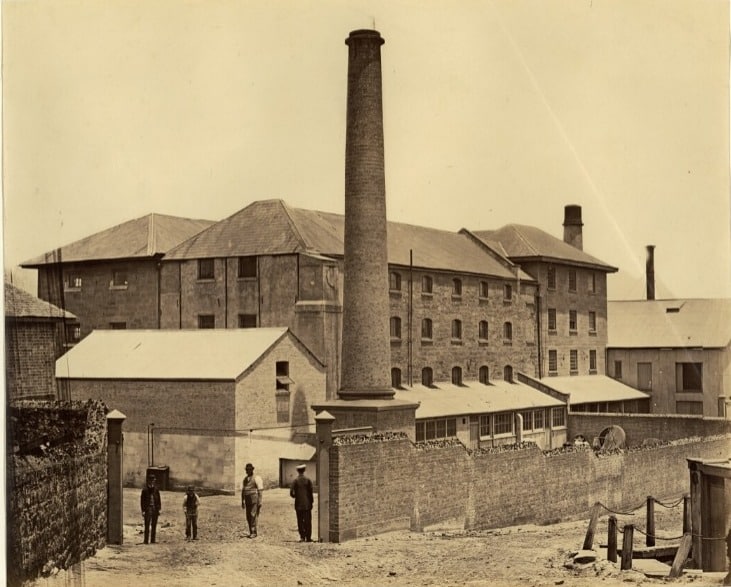

Close to the scene of the crime: Barker & Co. Mills, corner of Sussex and Bathurst Streets, Sydney, before June 1872. Possibly photographed by Charles Pickering. State Library of New South Wales, SPF/484.

⬅ See all events from 2 October

Spread the word on your favourite platform!

1917: Told to Dig a Hole in the Dark: the Stepson Who Undid Eugenia Falleni in the “Man-Woman” Trial at Darlinghurst

Annie Birkett married Harry Crawford in Sydney in 1913 not knowing that Crawford had been born Eugenia Falleni and had lived as a man for twenty years. A neighbour told her in 1917. That October the pair went picnicking at Chatswood and Annie never came home; a charred body was found in scrub off Mowbray Road the next morning, still alive when the fire was lit, the doctor said. It lay unidentified for three years. Falleni told her son she had run off with another man.

The boy remembered other things. Days after his mother vanished his stepfather took him to The Gap and tried to coax him to the cliff edge; a week later he led him into scrub at night, told him to dig a hole, then threw the shovel away and took him home. In 1920 the son went to police. The body was matched through its false teeth, and among its effects he knew his mother’s shoes, one sole mended by his stepfather. Tried at Darlinghurst in what the papers called the “Man-Woman case”, put into the dock first in a suit and then in a dress, Falleni was convicted in two hours.

Sentenced to death, later commuted to life, Falleni told the judge: “I am not guilty, your Honor. I know nothing whatsoever of this charge.”

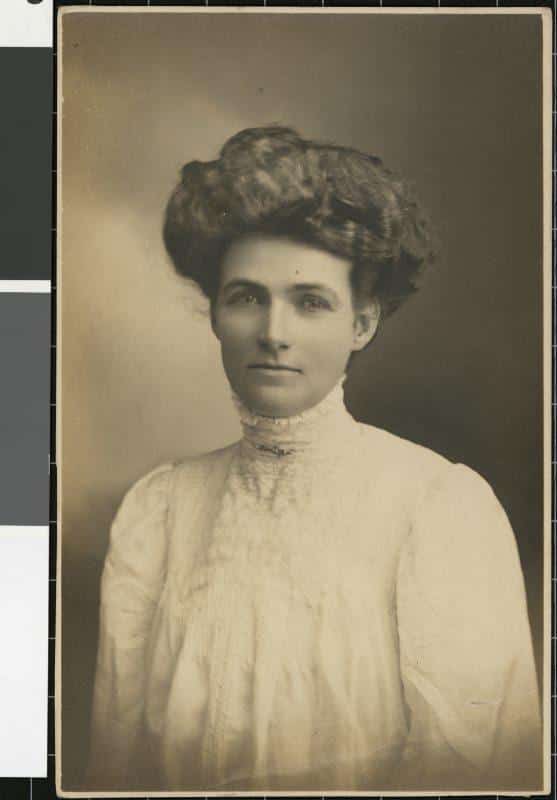
Portrait of Annie Birkett, circa 1910. Justice & Police Museum Collection, Museums of History NSW. Gift of Linda Slinger, 2011. Accession no. JP2011/1-2.

⬅ See all events from 1 October

Spread the word on your favourite platform!

1805: “I Have Killed Biddy, and Am Going to Deliver Myself Up”: A Hawkesbury Murderer Hanged at Sydney

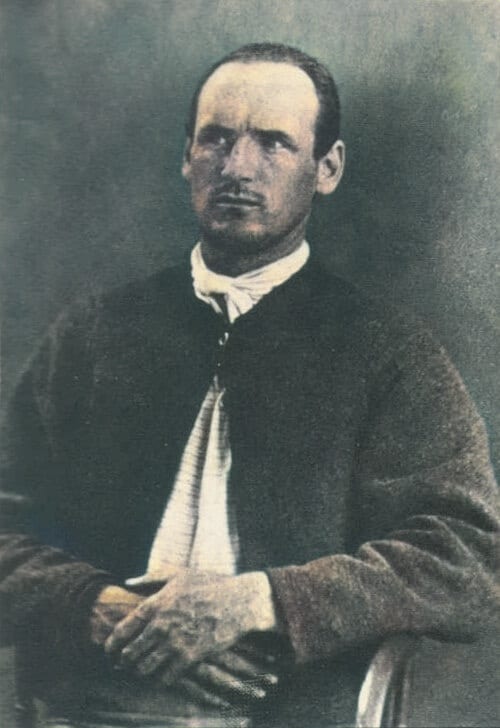
William Miller, a labourer at Hawkesbury near Sydney, attacked Bridget Horan (also recorded as Kean) with a hoe on the afternoon of 18 September 1805. Minutes later he ran to a neighbour and blurted out the truth: “Yes: I have killed Biddy, and am going to deliver myself up.” He then led the chief constable straight to her body himself, the hoe still lying beside it.

At his trial before the Court of Criminal Jurisdiction in Sydney, Miller pleaded not guilty to acting with malice, insisting the killing had come from unbridled momentary rage rather than intent. The court was unconvinced. He was convicted and hanged on 30 September 1805, his body afterwards handed over for dissection.

Witnesses said Miller never wavered from his confession, going to the gallows with what observers called sincere repentance, seemingly resigned that only his own death could answer for hers.

Rustic garden hoe in dirt.

⬅ See all events from 30 September

Spread the word on your favourite platform!

1808: The Bushranger Who Apologised Mid-Robbery, Then Hanged at Sydney

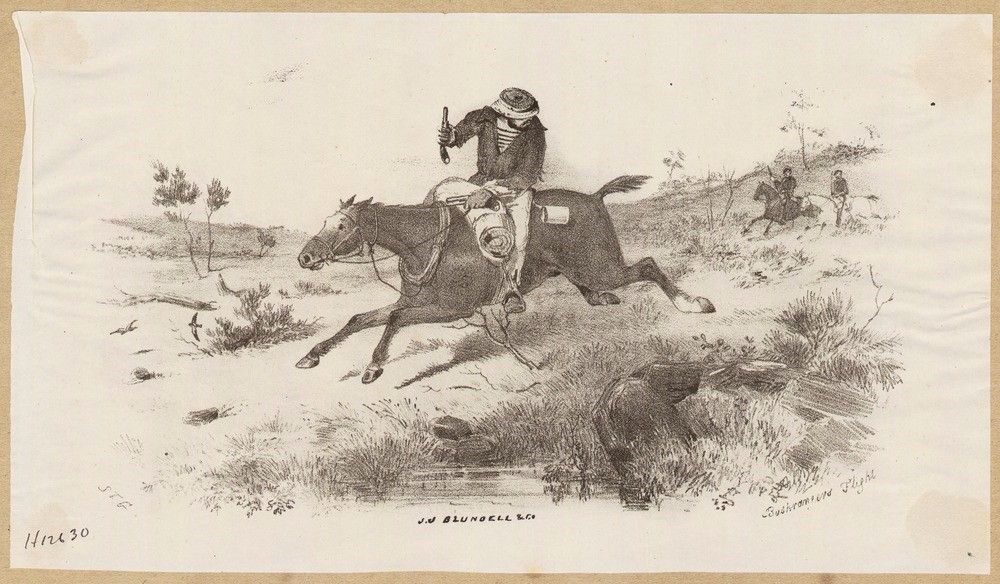
Hugh Dowling and his accomplices broke into William Styles’s house near the Nepean River in 1808, beat a sleeping servant unconscious, bound Styles’s wife as she nursed an infant, and ransacked the home at gunpoint. When Styles’s wife protested handing over her husband’s watch, Dowling reportedly replied, “I ask your pardon madam,” before taking a pipe instead and settling in to smoke tobacco with his companions before leaving.

He wore a crude crape mask, but it slipped while he examined stolen banknotes by candlelight, and Styles’s wife later swore in court that she had seen his bare face clearly enough to identify him without doubt. Convicted despite an alibi the court found riddled with contradictions, Dowling was sentenced to death and hanged the following Thursday.

Dowling maintained his innocence through trial, but the alibi he offered collapsed under questioning and was judged a fabrication by the court.

Antique pocket watch resting on old books.

⬅ See all events from 28 September

Spread the word on your favourite platform!
On This Day in True Crime History

Subscribe to Dark Stories

True crime stories, dark history and tour news, straight to your inbox.