1805: “I Have Killed Biddy, and Am Going to Deliver Myself Up”: A Hawkesbury Murderer Hanged at Sydney

William Miller, a labourer at Hawkesbury near Sydney, attacked Bridget Horan (also recorded as Kean) with a hoe on the afternoon of 18 September 1805. Minutes later he ran to a neighbour and blurted out the truth: “Yes: I have killed Biddy, and am going to deliver myself up.” He then led the chief constable straight to her body himself, the hoe still lying beside it.

At his trial before the Court of Criminal Jurisdiction in Sydney, Miller pleaded not guilty to acting with malice, insisting the killing had come from unbridled momentary rage rather than intent. The court was unconvinced. He was convicted and hanged on 30 September 1805, his body afterwards handed over for dissection.

Witnesses said Miller never wavered from his confession, going to the gallows with what observers called sincere repentance, seemingly resigned that only his own death could answer for hers.


Rustic garden hoe in dirt.

⬅ See all events from 30 September

Spread the word on your favourite platform!

1845: She Watched Her Friend Killed and Waited for the Killers: A Woman Hanged at Hobart

Eliza Benwell was housemaid at an inn in New Norfolk, near Hobart, where fellow servant Jane Saunders worked alongside her. In January 1845 three of the inn’s male servants seized Saunders in the garden during what began as friendly play, stuffed a handkerchief into her mouth and dragged her, apparently lifeless, down to the river. Benwell stood by and watched it happen, then waited at the house for the men to return before letting them in.

The three killers were tried and hanged first. Benwell was convicted separately as an accessory before and after the fact, a charge carrying the same capital sentence as murder itself. She was hanged before a huge crowd on 30 September 1845, closing her eyes on the scaffold so she would not have to look at the spectators, reportedly the first woman executed in the city in fifteen years.

On the eve of her death she confessed that she could have saved Saunders’s life had she known a murder was intended.

Hobart, Tasmania, Australia - December 24 2016: Hobart city and derwent river viewed from suburb of sandy bay with sea mist rolling over eastern shore | ID 130062583 © Andrew Balcombe | Dreamstime.com
ID 130062583 © Andrew Balcombe | Dreamstime.com

⬅ See all events from 30 September

Spread the word on your favourite platform!

1852: Timothy Sullivan Cried “Robbers, Robbers” While Beating an Old Shepherd to Death

Timothy Sullivan lived with an elderly shepherd named Daniel Harrington at King’s Plains, near Carcoar in the Bathurst district. On the night of 4 June 1852, neighbours were woken by Sullivan himself shouting “robbers, robbers” from his hut. When a neighbour, Daniel Healy, ran to help, he found no robber, only Sullivan raining blows on the old man with a heavy weapon he then hurled onto the roof. Harrington, barely alive, managed to whisper his own name before he died.

At the Bathurst Assizes the judge dismissed the robbery story as invention, noting that nothing had actually been stolen and that the wounds showed deliberate, prolonged violence. Convicted of wilful murder, Sullivan was hanged on 30 September 1852; the drop was so severe it very nearly tore his head from his body.

On the scaffold a priest read a statement on Sullivan’s behalf: he claimed he had rushed out in the dark with a flesh fork believing a robber was near, striking blindly, and insisted “he did not know it was Harrington he was wounding.”

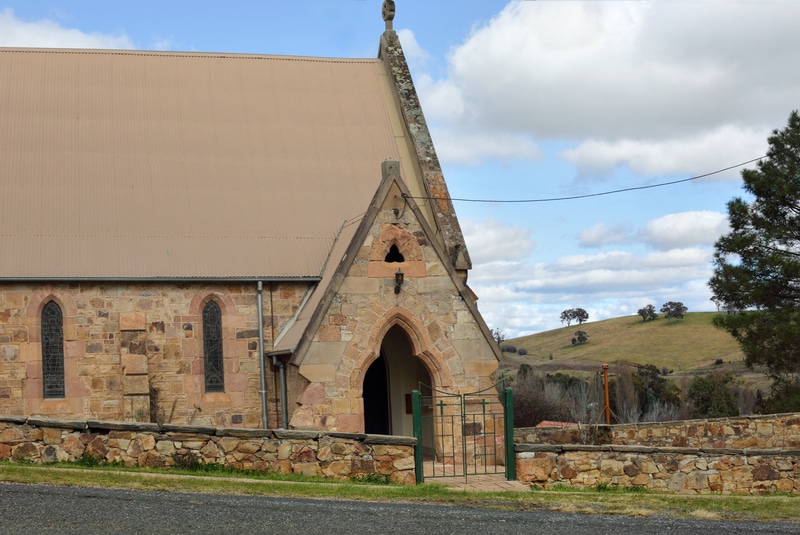
Sandstone building in Carcoar

⬅ See all events from 30 September

Spread the word on your favourite platform!

1982: Seven Dead, No One Ever Charged: the Chicago Tylenol Poisonings

On September 29, 1982, 12 year old Mary Kellerman took a Tylenol capsule for a cold and died within hours. Within two days six more people in the Chicago area died the same way, including three members of a single family, the Januses, who had unknowingly shared capsules from the same tainted batch.

Someone had opened bottles on store shelves, replaced the medicine inside with potassium cyanide, and resealed them for unsuspecting buyers to find. No poisoner was ever caught. A man named James W. Lewis was convicted of extortion after writing to the manufacturer claiming responsibility and demanding a million dollars to stop the deaths, but he later insisted the letter was a bluff, and investigators could never tie him to the actual killings.

The case remains unsolved to this day, but it changed how medicine is sold worldwide, ending loose powder capsules and ushering in the tamper proof seals now standard on every bottle.

Capsules of Tylenol Pain Killer. A container of Tylenol tablets pain killer. | ID 207734574 © Arne Beruldsen | Dreamstime.com
ID 207734574 © Arne Beruldsen | Dreamstime.com

⬅ See all events from 29 September

Spread the word on your favourite platform!
On This Day in True Crime History

Subscribe to Dark Stories

True crime stories, dark history and tour news, straight to your inbox.