John Taylor and George Waters had absconded from the notorious penal settlement at Macquarie Harbour, Van Diemen’s Land’s infamous secondary punishment station for repeat offenders, before turning to highway robbery. Their crime involved robbing soldiers of their arms, a particularly bold offence that ultimately led to their conviction.
Both men were sentenced to death on 2 September 1826 and hanged together at Hobart just eleven days later, on 13 September 1826.
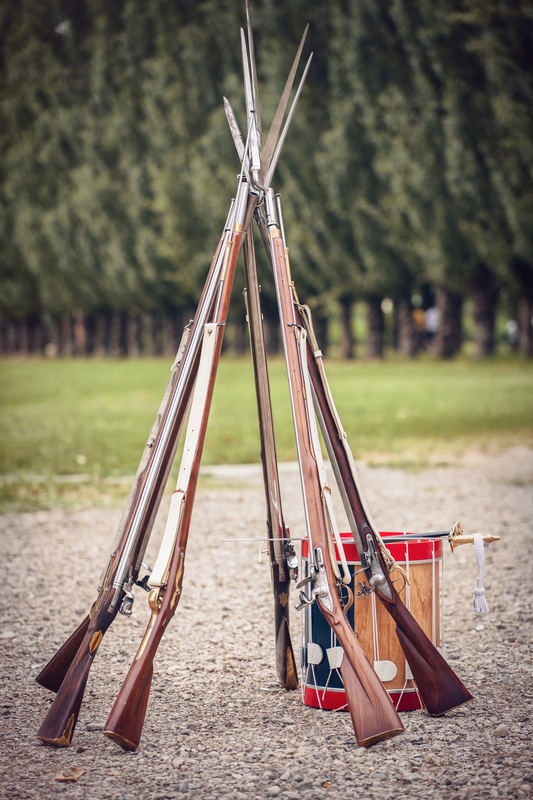
British Army drum and muskets historical military equipment
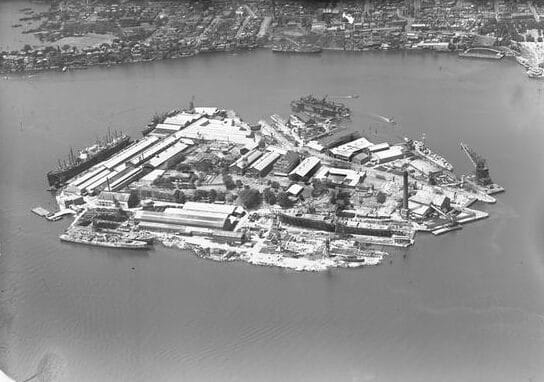
Frederick Wordsworth Ward, the bushranger known as Captain Thunderbolt, was serving time on Sydney‘s Cockatoo Island, a prison ringed by harbour currents and sheer sandstone cliffs and widely declared impossible to escape. On the night of 11 September 1863, Ward slipped his cell and plunged into the water, swimming through the cold, shark infested harbour to the mainland shore.
The breakout humiliated colonial authorities and turned Ward into a folk figure almost overnight. He spent the next seven years roaming the bush of northern New South Wales, robbing coaches, inns and travellers as one of the colony’s most enduring and elusive bushrangers before he was finally shot dead by police near Uralla in 1870.
Cockatoo Island, Sydney, 1951. Photograph by Frank Hurley. National Library of Australia, PIC FH/7951. Out of copyright.
Just three years after Maitland Gaol had officially opened its gates in 1848, its first gaoler, James Cox, was sacked. So many prisoners had slipped out under his watch that on 10 September 1851 the authorities removed him from the post entirely.
His replacement was John Wallace, formerly principal turnkey at Darlinghurst Gaol in Sydney, who took over as gaoler at Maitland. His wife, Mrs Wallace, was installed alongside him as the gaol’s matron, a husband and wife team brought in to tighten a prison that had already earned a reputation for losing its inmates.
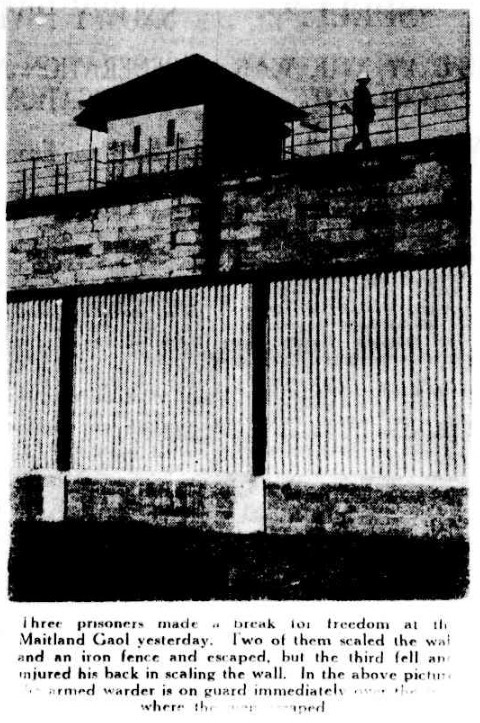
Warder guards wall after prisoner escape attempt at Maitland Gaol 1940
John Thomas, a convict known as prisoner number 7279, escaped from a work party at Sutherland’s Bay in June 1863, taking a blanket, a carpenter’s axe and other items. He made his way to Peninsula Farm near Perth, where he entered the cottage of 70-year-old servant Duncan Urquhart and began helping himself to clothing.
When Urquhart returned and discovered the intruder, Thomas fled through a window armed with Urquhart’s own axe. He pursued the elderly man outside and struck him repeatedly, fracturing his skull. Despite his terrible injuries, Urquhart managed to make his way more than half a mile towards the farmhouse on his hands and knees, covered in blood.
Around noon, farmhouse owner Joseph Hardey stepped outside and saw a stranger walking up the cart road, coatless and carrying a bundle over his shoulder. The man calmly asked Hardey for directions to a property several miles further inland, apparently unconcerned that the man he had just attacked lay gravely injured nearby. Hardey later identified the stranger as Thomas.
Urquhart survived for more than two months, but died in the Colonial Hospital on 24 August 1863 from his injuries. Thomas was tried before Chief Justice Burt at the Supreme Court on 2 September and convicted of wilful murder. He was hanged in front of Perth Prison on 8 September 1863.