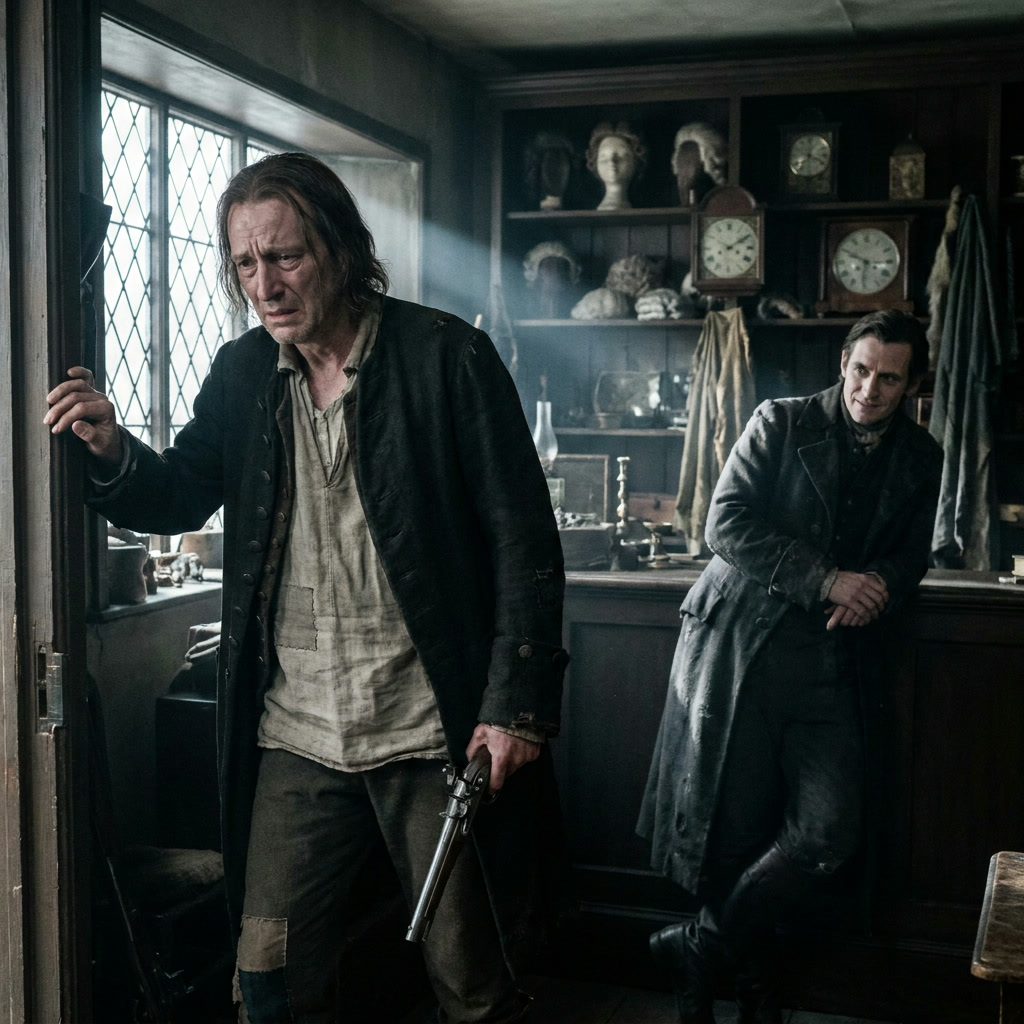
James Wright is a man who robs travellers on the roads of old England with tears running down his face. Born in Enfield to honest, hardworking parents, he is apprenticed to a peruke-maker and sets up shop in the Old Bailey: a respectable start that unravels when his appetite for women and leisure drains every penny he earns.
Reduced to downright want, Wright convinces himself that taking from the rich is a lesser sin; he never robs a poor man. It is a distinction that lets him sleep at night: but the roads of old England are not forgiving places, and the line between a gentleman thief and a condemned man is thinner than he knows.
Listen now and follow James Wright down the darkening road where conscience and crime ride side by side.
Follow the podcast so you never miss an episode:
FROM THE 1735 TEXT
hardly ever robbing a passenger without tears in his eyes
Dark Lexicon: Old words. Dark meaning.
The past speaks its own dialect; here is what to listen for in this episode.
Peruke-maker: a craftsman who made perukes, the elaborate powdered wigs that were standard wear for respectable men in old England. It was a skilled and profitable trade: enough to set a young man up in life, if he could keep his spending in check.
Equipage: today this word sounds quaint, but in old England it meant the visible trappings of wealth: a fine coach, liveried servants, matched horses. Wright used a victim's equipage the way a modern thief might size up a luxury car; the grander the display, the fatter the purse inside.
Impeached: in modern English, impeachment is a formal charge against a head of state. In old England it meant something more personal and more dangerous: to be accused or informed upon by a former associate. Being impeached by a companion was often a death sentence, because the informer's testimony came with firsthand knowledge no alibi could shake.
Assizes: the travelling courts that moved through the counties of old England, bringing royal justice to places far from London. An acquittal at the assizes in Kingston gave Wright a second chance; it also gave him a false sense of safety.
Newgate: London's most notorious gaol, a place of filth, disease and dread. Prisoners awaiting execution spent their final days here, sometimes attending chapel in its walls: a grim rehearsal for the hereafter.
Malefactor: a wrongdoer or criminal. In old England the word carried a heavier moral weight than it does today; it marked a person not just as a lawbreaker but as someone who had chosen evil.
Ignominious: shameful, deeply dishonourable. Wright used the word himself when refusing to name his associates; he did not want to send them to an ignominious death. The public hanging was designed to be exactly that: a spectacle of shame as much as punishment.
About This Series
Lives of the Most Remarkable Criminals (1735) is one of the earliest works of true crime in the English language. Each week this podcast retells one of its stories for today's listener, keeping the old book's most striking lines.