1997: Anybody Can See This Book: How Harold Shipman Calmly Deflected the Undertaker Who Suspected Him

Mary Walls was a healthy 78 year old who had been playing with her great-grandchild just the day before. On 14 November 1997 she died during a home visit from her doctor, Harold Shipman, who told her niece she had suffered a heart attack overnight and refused to go to hospital. When the niece arrived she found Mrs Walls fully clothed, sitting upright in her armchair, as though she had simply dozed off mid errand.

That same month, local undertaker Deborah Bambroffe was noticing the identical signature turning up again and again among Shipman's patients, elderly women found dressed and sitting up, and raised her fears with another doctor, though she later admitted they had seemed "so ludicrous" at the time. Her father confronted Shipman directly over the clustering of deaths. Shipman did not flinch; he simply fetched his death register, flicked it open and said, "anybody can see this book", then drifted into small talk about the weather, leaving the family reassured.

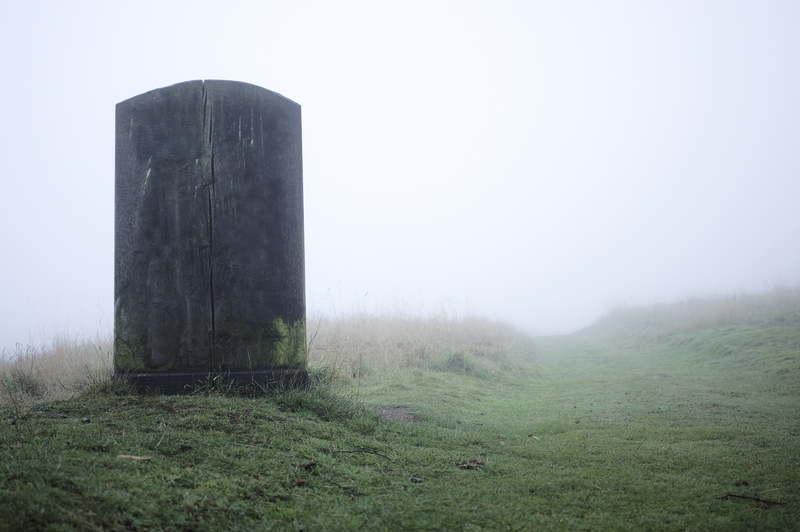
Shipman was later convicted of murdering Mary Walls by lethal injection and falsifying her medical history to cover it up. An inquest found she had been unlawfully killed, one of close to two hundred patient deaths eventually linked to him.


Falsified Medical History's

⬅ See all events from 14 November

Spread the word on your favourite platform!

2020: The Yorkshire Ripper Dies Behind Bars

Peter Sutcliffe terrorised the north of England for five years, murdering thirteen women and girls between 1975 and 1980 in a killing spree that left entire communities too frightened to walk home at night. Caught and convicted, he was handed a whole life sentence, a term meaning he would never be released regardless of age or health.

He spent his final decades moving between high security psychiatric institutions and prison, his notoriety never fading even as the public that once feared him grew old. He died at University Hospital of North Durham on this day in 2020, aged 74, after contracting COVID-19 while still a prisoner at HM Prison Frankland.

The End
The End

⬅ See all events from 13 November

Spread the word on your favourite platform!

1887: Bloody Sunday: London Police and Troops Crush an Unemployed Workers Protest in Trafalgar Square

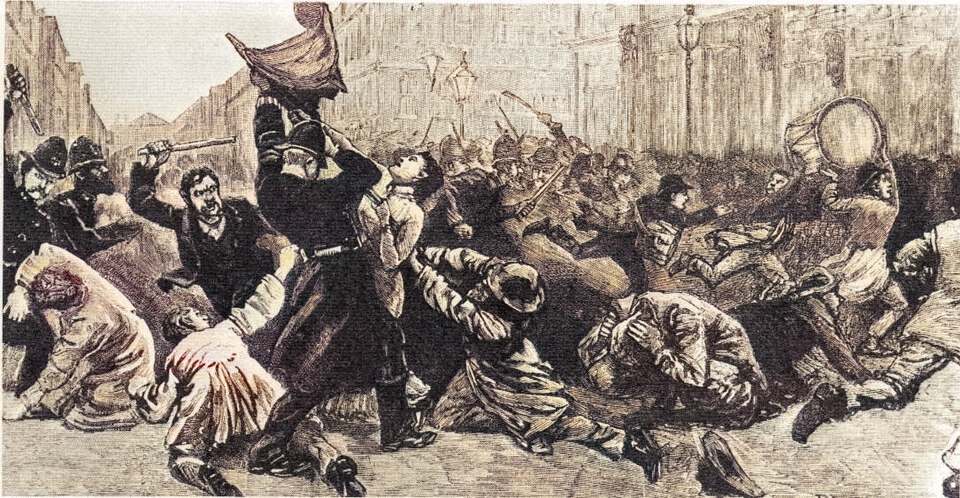
Tens of thousands of unemployed workers and Irish protesters converged on Trafalgar Square in London on this day in 1887, defying a police ban to demand jobs and the release of an imprisoned Irish MP. Commissioner Charles Warren met them with 2,000 constables and 400 soldiers under fixed bayonets; a local manufacturer even offered his steam fire engine as an improvised water cannon to clear the crowd, an offer Warren turned down.

The baton charges that followed left two or three protesters dead and hundreds injured, with 400 arrests made amid iron bars, knives and broken glass. Organisers including John Burns and Robert Cunninghame-Graham were jailed for six weeks, while Annie Besant, who addressed the crowd, was never charged.

The violence was not over. The following Sunday a young clerk named Alfred Linnell was run down by a police horse during a second demonstration, dying a fortnight later from his injuries; his funeral drew thousands and turned him into a martyr for the cause.

Bloody Sunday, London, 1887. Illustration from The Illustrated London News.

⬅ See all events from 13 November

Spread the word on your favourite platform!

1888: The Last Known Victim of Jack the Ripper: Mary Kelly Murdered Behind a Locked Door

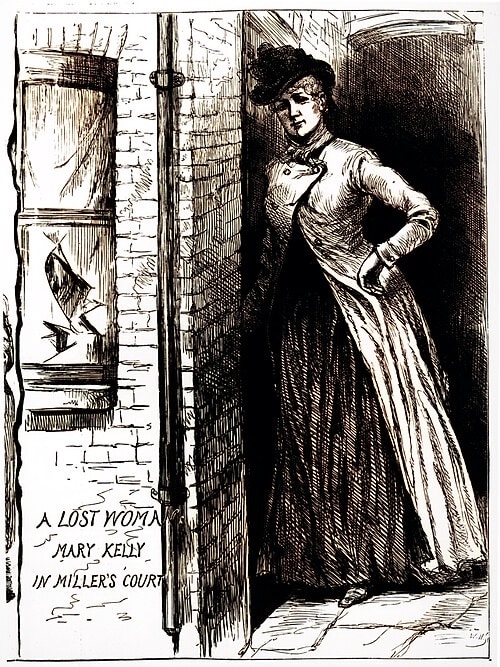
Mary Kelly broke the pattern that had defined four earlier Whitechapel murders. Her killer did not strike her down on a dark street but inside her own rented room at Millers Court, a tiny space off Dorset Street where he had hours, not minutes, to work unseen. On this day in 1888, a rent collector sent to chase six weeks of unpaid arrears peered through a broken windowpane and found her body so extensively mutilated that her appearance in life could never be established.

She was identified only by her former partner, who recognised her by the ear and the eyes alone. An inquest returned a verdict of wilful murder against some person or persons unknown, and despite a police pardon offered to any accomplice who came forward, no one was ever charged. Kelly is widely considered the Rippers final and most savage victim, and his identity has remained one of history's most notorious unsolved mysteries ever since.

Mary Jane Kelly - Ripper Victim

⬅ See all events from 9 November

Spread the word on your favourite platform!
On This Day in True Crime History

Subscribe to Dark Stories

True crime stories, dark history and tour news, straight to your inbox.