1843: Bushranger Martin Cash Captured After Shooting a Constable Dead in Hobart

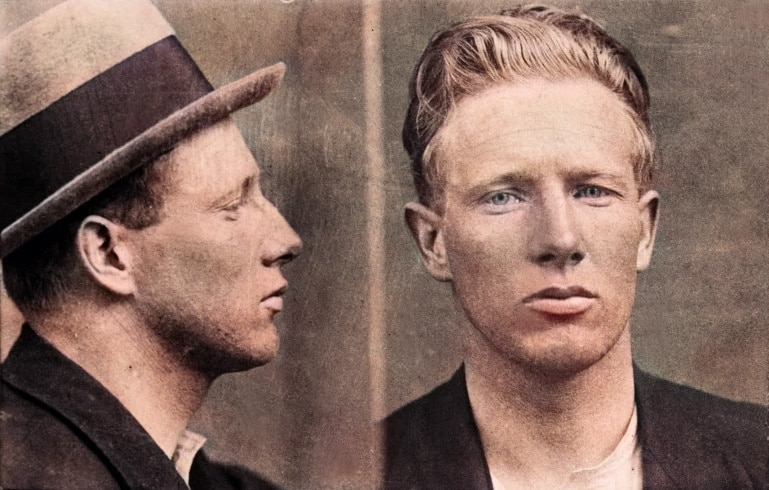
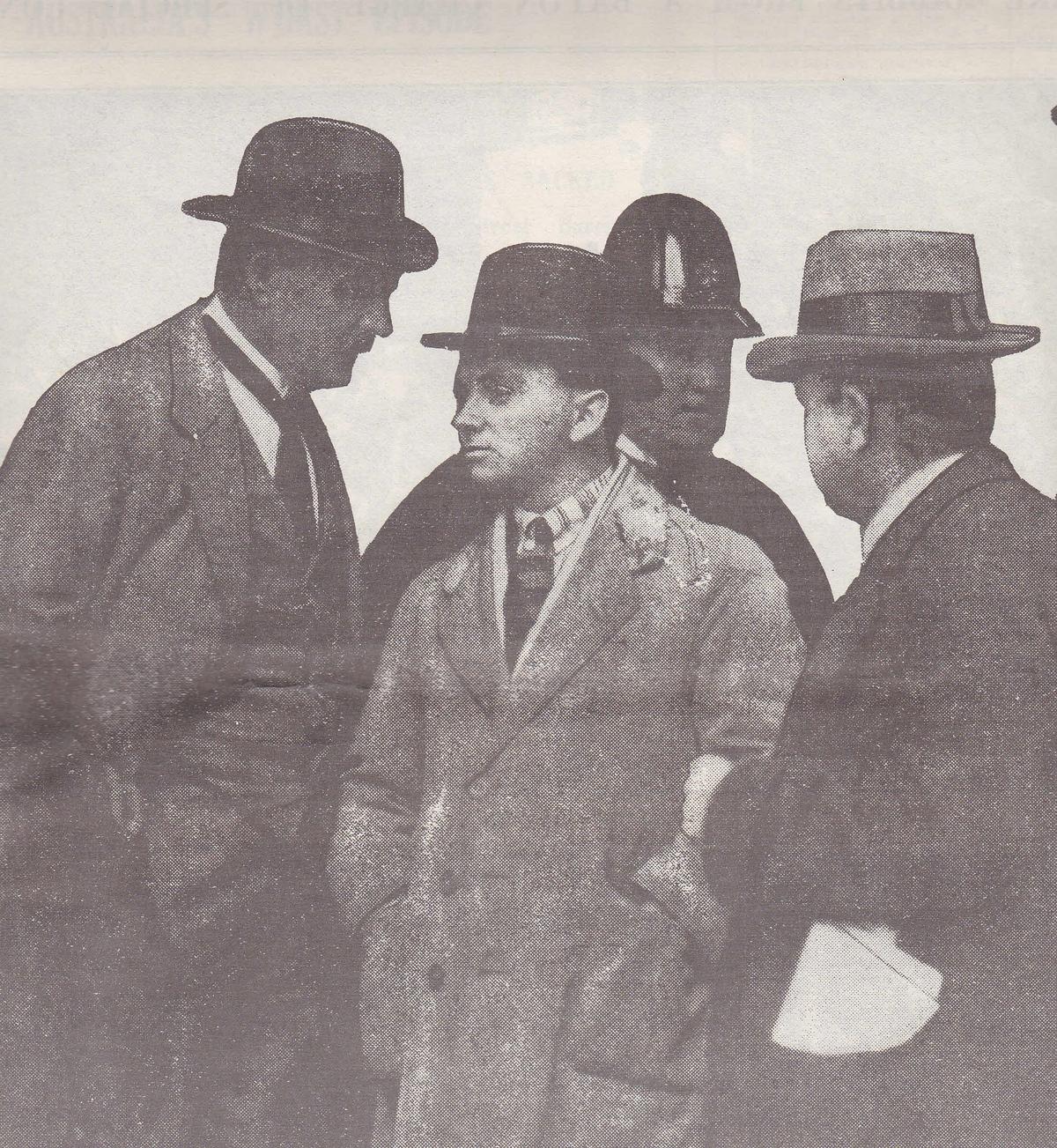
On 29 August 1843, notorious bushranger Martin Cash was captured in Hobart after venturing into the town in search of his former partner, Bessie, who had taken up with another man. Cash, a wanted escapee with a substantial government reward on his head, was spotted by two plain-clothes constables in Harrington Street, close to Bessie’s address and only about 100 yards from the watch-house. He fled through the streets, firing at his pursuers, and in attempting to reach the Domain mistakenly ran into a dead end near the Campbell Street Gaol. Forced to turn back, he lost ground; the spot later became known as Martin’s Mistake. Near the Old Commodore Inn, Constable Peter Winstanley tried to seize Cash and was shot at close range. Cash was eventually wrestled to the ground and captured after a violent struggle. Winstanley died two days later, on 31 August. Cash was convicted of his murder and sentenced to death, but received a last-minute reprieve and was transported for life to Norfolk Island. Cash ultimately survived his years as a bushranger and convict, dying in Tasmania in 1877. He also left behind his own account of his life, dictated to James Lester Burke and published in Hobart in 1870 as The Adventures of Martin Cash, one of the best-known first-person accounts of Australian bushranging and the convict era.
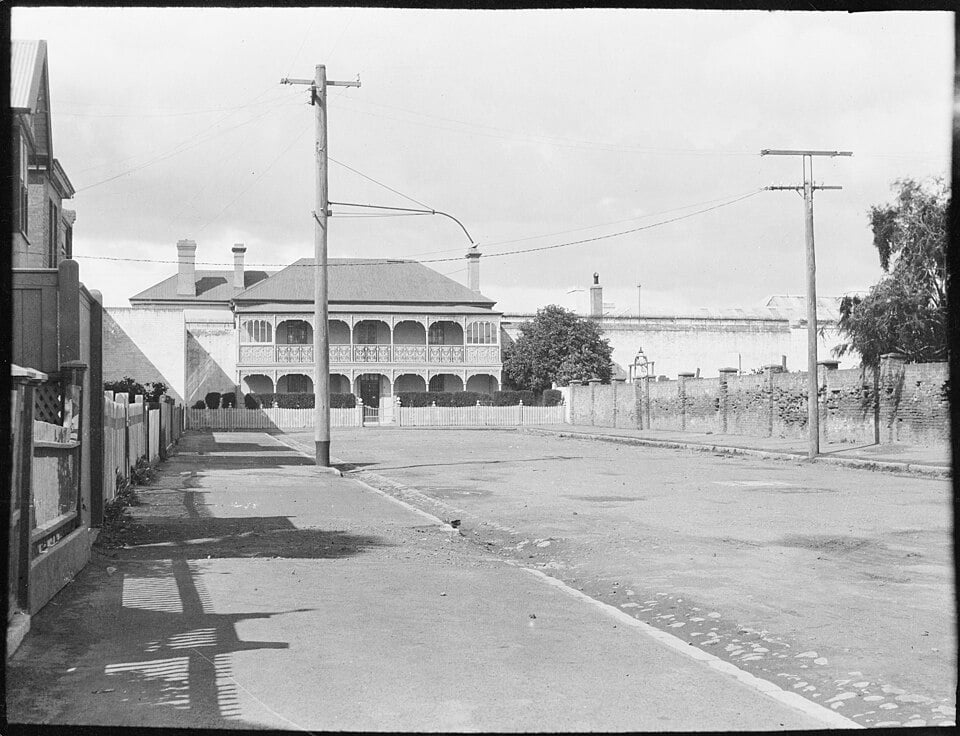

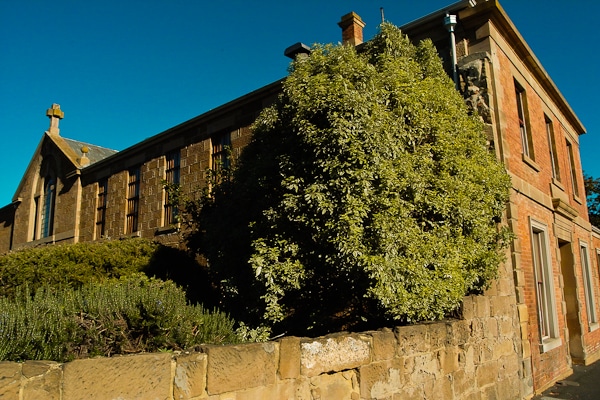
Residence of the Governor of the Hobart Gaol, at the end of Melville Street, known colloquially as Martin's Mistake.
Residence of the Governor of the Hobart Gaol, at the end of Melville Street, known colloquially as Martin’s Mistake.

⬅ See all events from 29 August

Spread the word on your favourite platform!

1877: Martin Cash, the Bushranger Who Cheated the Gallows, Dies at His Farm

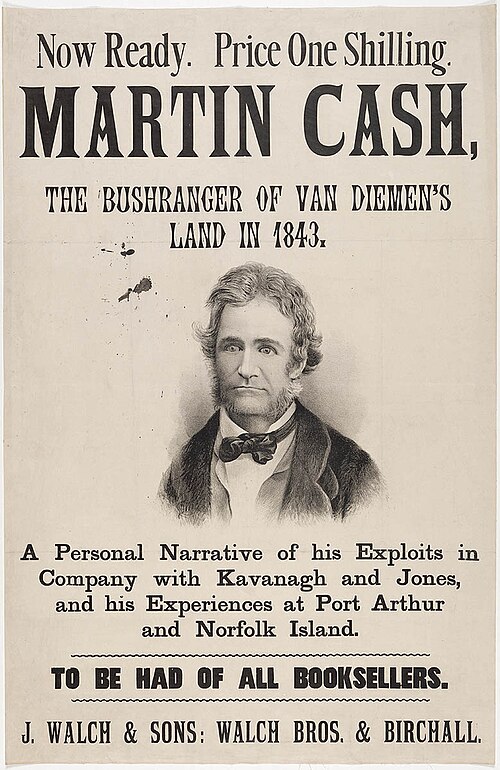
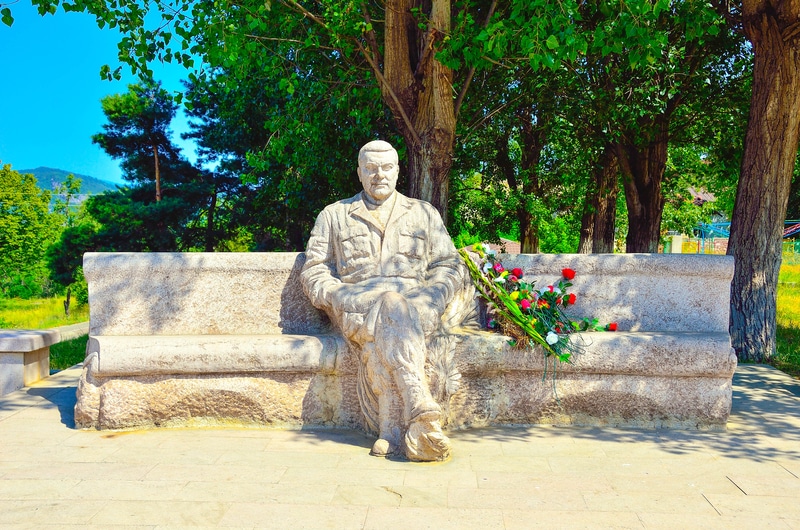
Martin Cash, Irish-born convict and bushranger, died on 26 August 1877 at his farm cottage in Glenorchy, Tasmania, aged 68. Twice he escaped from the supposedly escape-proof Port Arthur penal colony, the second time by swimming the shark-infested waters. On Boxing Day 1842, Cash and two companions absconded from a work party and launched an eight-month bushranging spree across Van Diemen’s Land, robbing mail coaches and homesteads before his eventual recapture. His 1870 autobiography, The Adventures of Martin Cash, ghostwritten by a fellow former convict, became a bestseller. He was one of the few bushrangers of his era to die of natural causes, cheating the gallows.

Martin Cash Author: The Bushranger of Van Diemen's Land in 1843
Martin Cash Author: The Bushranger of Van Diemen’s Land in 1843

⬅ See all events from 26 August

Spread the word on your favourite platform!

1857: Alexander Cullen Hanged at Campbell Street Gaol for the Murder of Betsy Ross

Betsy was known to frequent the Red Lion Tavern in Liverpool Street and was living with Cullen in a house behind the tavern. On the night of the murder, witnesses saw her drinking at the Red Lion before she later returned towards the area with Cullen.

Cullen had lost his wife only a few months earlier and was supporting his young daughter. His landlord described him as sober, hardworking and careful with money, saying Cullen would sometimes explain how much he had earned, pay half towards the rent, and keep the rest “to feed the child.”

Later that night, Betsy was found dead inside their home with a bloodied tomahawk beside her. Cullen was arrested with blood on his hands and later admitted, “I have done it, and I am sorry for it.” He was convicted of murder andexecuted at the Campbell Street Gaol.

Alexander Cullen Hanged at Campbell Street Gaol for the Murder of Betsy Ross

⬅ See all events from 18 August

Spread the word on your favourite platform!

1891: Arthur Cooley Hanged at Campbell Street Gaol for the Murder of Mary Camille Ogilvy

Mary Camille Ogilvy, wife of a magistrate of Inverquharity station near Richmond, Tasmania, was shot dead on the morning of 14 August 1891 while walking back from the gate after seeing her husband off to the Richmond Police Court.

Her body was found the following dawn, pinned beneath a willow in the Coal River, with part of her skull destroyed by a gunshot. Evidence suggested she had been shot some 50 yards from the water and her body dragged to the riverbank. A search party of nearly 100 people with lanterns had scoured the district through the night before she was found.

Arthur Cooley, a young man already on bail awaiting trial for an assault charge, was arrested as the prime suspect and faced a coroner’s inquest that same Saturday afternoon. Public anger in the district was described as approaching lynching point. Cooley was convicted of the murder and hanged at Campbell Street Gaol on 17 August 1891.

Hobart Gaol prison exterior historic stone building

⬅ See all events from 17 August

Spread the word on your favourite platform!
On This Day in True Crime History

Subscribe to Dark Stories

True crime stories, dark history and tour news, straight to your inbox.