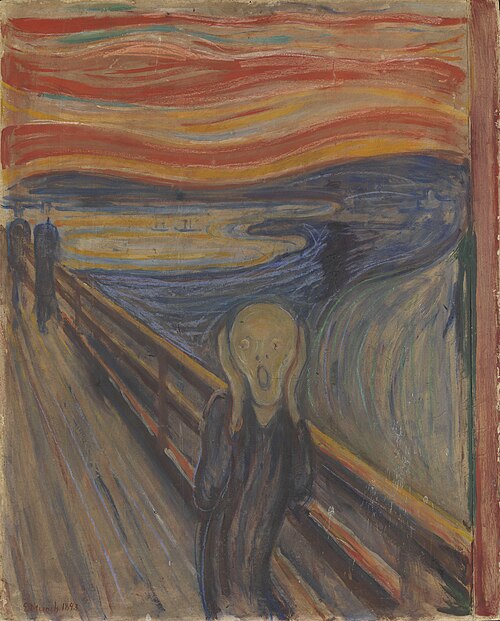
Edvard Munch’s iconic painting The Scream, stolen from the Munch Museum in Oslo on 22 August 2004, was recovered by Norwegian police on 31 August 2006. The theft had been carried out in broad daylight by masked gunmen who forced staff to the ground before fleeing with the painting and another Munch work, Madonna.
The recovery came after a lengthy investigation involving multiple arrests. The paintings were found hidden and showed some damage, but were ultimately restored and returned to public display.
Edvard Munch, The Scream (1893). Photo: Børre Høstland/National Museum of Norway. CC BY 4.0, via Wikimedia Commons.
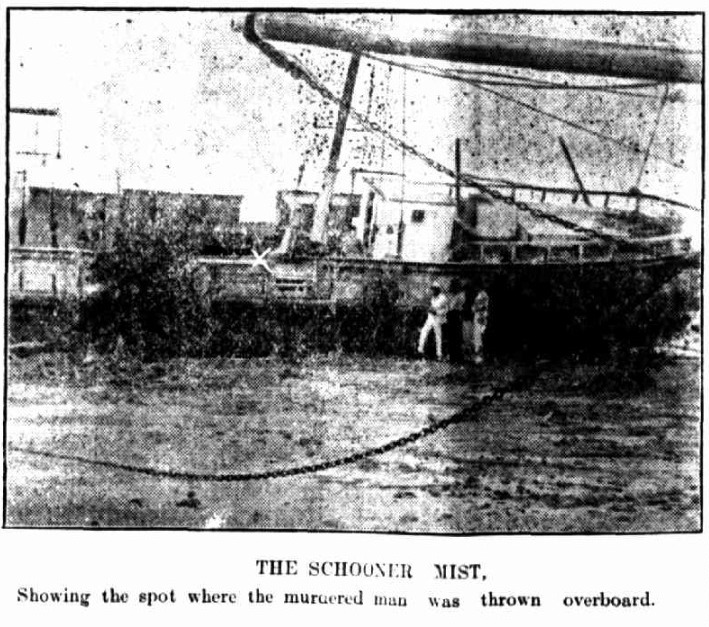
Mark Liebglid, a commercial traveller who bought and sold pearls in Perth-region waters for Freedman and Co. and Falk and Co., was lured aboard the abandoned schooner Mist in Broome harbour on 30 August 1905 under the pretence of viewing a stolen pearl. Known for flashing a large money clip, a gold signet ring, and a willingness to buy pearls of questionable provenance, Liebglid was beaten with a slingshot and oars by Charles Hagen, Pablo Marquez, and Simeon Espada, then drowned. His body was found floating near the vessel the following morning.
The stolen pearl at the centre of the plot was believed to have been hidden by a crew member in a coil of rope with its whereabouts never conclusively confirmed.
Schooner Mist showing where Mark Leibglid was thrown overboard
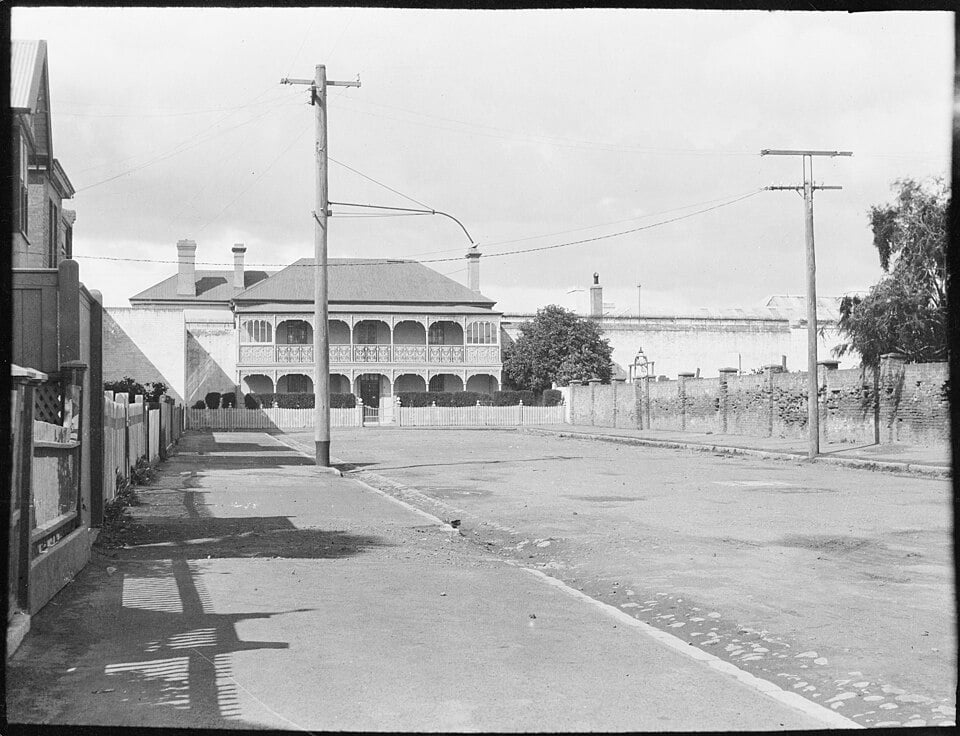
On 29 August 1843, notorious bushranger Martin Cash was captured in Hobart after venturing into the town in search of his former partner, Bessie, who had taken up with another man. Cash, a wanted escapee with a substantial government reward on his head, was spotted by two plain-clothes constables in Harrington Street, close to Bessie’s address and only about 100 yards from the watch-house. He fled through the streets, firing at his pursuers, and in attempting to reach the Domain mistakenly ran into a dead end near the Campbell Street Gaol. Forced to turn back, he lost ground; the spot later became known as Martin’s Mistake. Near the Old Commodore Inn, Constable Peter Winstanley tried to seize Cash and was shot at close range. Cash was eventually wrestled to the ground and captured after a violent struggle. Winstanley died two days later, on 31 August. Cash was convicted of his murder and sentenced to death, but received a last-minute reprieve and was transported for life to Norfolk Island. Cash ultimately survived his years as a bushranger and convict, dying in Tasmania in 1877. He also left behind his own account of his life, dictated to James Lester Burke and published in Hobart in 1870 as The Adventures of Martin Cash, one of the best-known first-person accounts of Australian bushranging and the convict era.
Residence of the Governor of the Hobart Gaol, at the end of Melville Street, known colloquially as Martin’s Mistake.
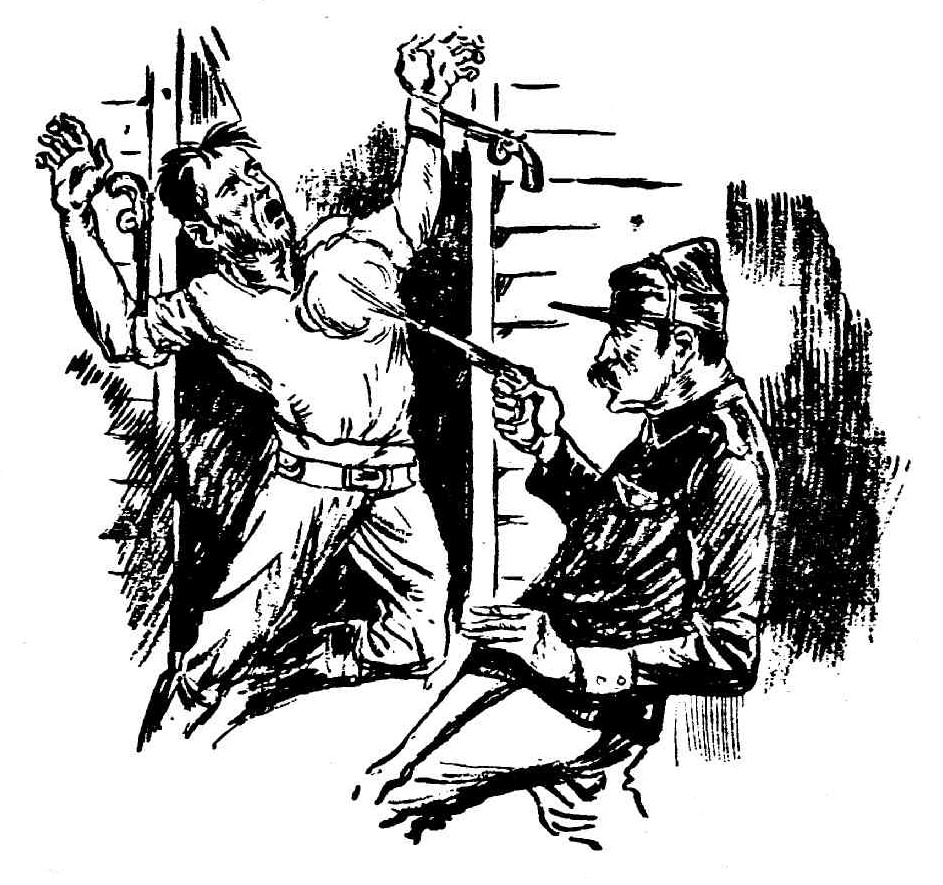
Police raided a public house at Cook’s Vale Creek, New South Wales, on 29 August 1863, where bushranger Fred Lowry emerged armed with two revolvers and exchanged gunfire with Senior-Sergeant Stephenson. Lowry, a gaunt six-foot man born in Windsor around 1836 to former convicts, had built a career of horse theft, mail-coach robbery, and prison escape, briefly riding with the Gardiner-Hall gang before forming his own bushranger outfit. Shot in the throat during the exchange, Lowry was captured along with accomplice Larry Cummins, who was found in bed with a loaded revolver. Stolen banknotes from the Mudgee mail were recovered at the scene. Lowry died from his wound the following day. His purported last words, ‘Tell ’em I died game’, cemented his place as the archetypal Australian bushranger.