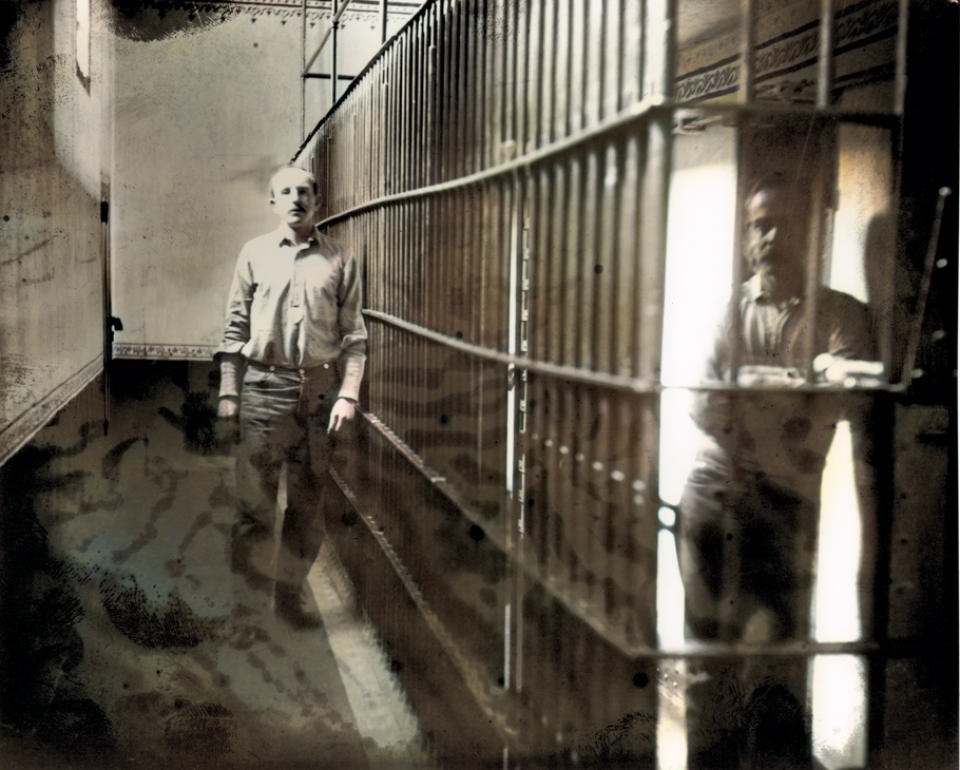
William Barton is born into comfort: his grandfather keeps a thriving eating house in Covent Garden, gentlemen press coins into the boy's hand, and a good trade awaits him. But something wild runs in the Barton blood, and no amount of kindness can hold him still.
His father has already abandoned the family for Jamaica and a mistress; now young Will follows, chasing a fortune that does not exist. What begins as restless dreaming hardens, voyage by voyage, into something far more dangerous: a man who discovers he has a taste for robbery and no talent for stopping.
This is true crime at its most human and its most reckless: listen to the story of William Barton.

Follow the podcast so you never miss an episode:
FROM THE 1735 TEXT
Content, when its basis rests not upon virtue, is incapable of continuing long.
Dark Lexicon: Old words. Dark meaning.
The past speaks its own dialect; here is what to listen for in this episode.
Uxorious: excessively devoted to one's wife. In old England this was not a compliment; when the text calls Barton 'too uxorious,' it means his obsessive love for his wife drove him to rob rather than let her live in poverty.
Reconnoitre: to scout ahead and gather intelligence on an enemy. Barton uses the word with military precision, sending his partner forward to size up a stage coach as though it were a battlefield position: four men with blunderbusses, two ladies and a footman.
Blunderbuss: a short, wide-mouthed firearm that sprayed shot in a broad pattern, devastating at close range. Coaches in old England carried them specifically for highway defence; the fact that four passengers held them tells you how dangerous the roads had become.
Transported: sentenced to forced exile in a colonial plantation. In old England, transportation was meant as mercy compared to hanging, but returning before your term expired was a capital offence all by itself.
Planter: a colonial landowner who purchased the labour of transported convicts and enslaved people alike. Barton's master pays eighteen pounds for him: the going price for a human being with useful skills.
Brace of balls: a pair of musket balls fired in quick succession. The word 'brace' simply meant two, often of matched items; here it is a warning volley, two shots cracking over the coachman's head.
Committed to Newgate: sent to Newgate Prison, the most feared gaol in old England. To be 'committed' was not a casual booking; it meant a magistrate had formally ordered you held there, often in chains, to await trial.
Ignominious death: a death marked by public shame and disgrace. In old England, a public hanging was designed to humiliate as much as to punish; the word 'ignominious' tells you the crowd was meant to see not just a death but a lesson.
About This Series
Lives of the Most Remarkable Criminals (1735) is one of the earliest works of true crime in the English language. Each week this podcast retells one of its stories for today's listener, keeping the old book's most striking lines.