Harold Shipman was a trusted family doctor in Hyde, England, who killed his patients with lethal injections of diamorphine and then falsified their medical records to make the deaths look natural. He often urged grieving families toward cremation, quietly destroying the evidence a post-mortem might have found.

What he did not understand was his own surgery computer. The practice software secretly time stamped every entry, and when investigators compared those hidden timestamps to the dates on his altered files, the lie was obvious: he had been rewriting patient histories after his victims were already dead. He went on trial in 1999 charged with just 15 murders, though he is believed to have killed close to 250 patients over more than two decades, making him Britain’s most prolific serial killer.

Shipman never confessed and maintained his innocence throughout the trial. He was convicted on all counts and later took his own life in prison.

A Serial Killers Computer Log tracked everything.

⬅ See all events from 5 October

Spread the word on your favourite platform!

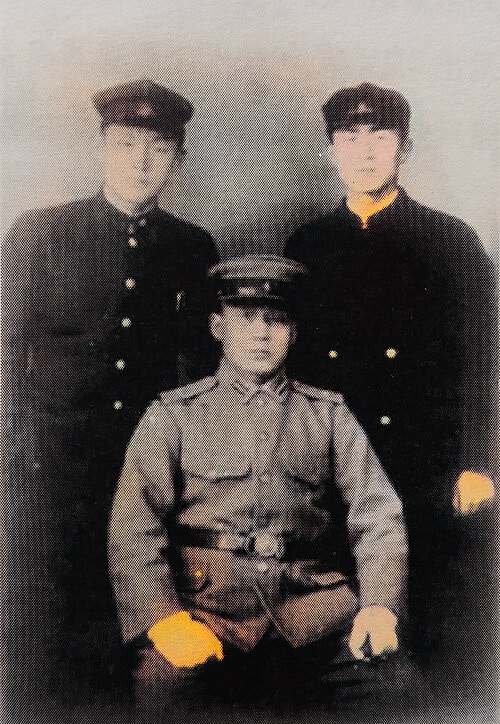
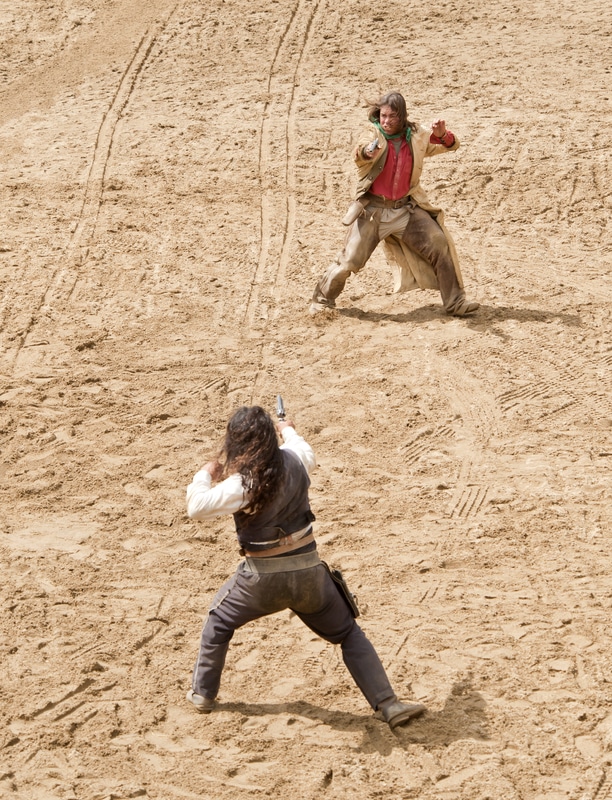
Five months after his brother Jesse James was gunned down in 1882, Frank James boarded a train to the Missouri state capital and laid his revolver in the hands of Governor Crittenden. “I have been hunted for twenty-one years,” he said, “have literally lived in the saddle… It was one long, anxious, inexorable, eternal vigil.” He added that he had never let another man touch his gun since 1861.

Tried for only two of the gang’s robberies and killings, in Missouri and Alabama, James was acquitted both times, helped by testimony from a former Confederate general. He was never extradited over the infamous Northfield raid and never spent a day in prison. He spent his remaining three decades as a shoe salesman, a racetrack official and a tour guide on the old family farm, where he died in 1915 at the age of 72.

Frank James outlaw and criminal figure

⬅ See all events from 5 October

Spread the word on your favourite platform!

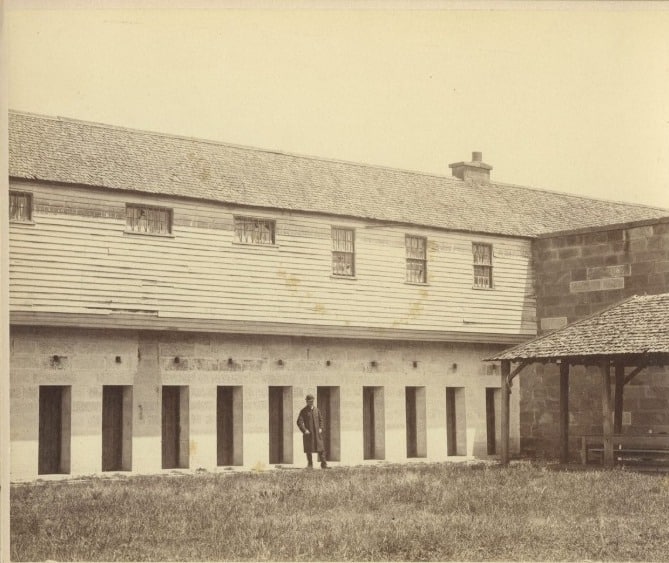
John Jones, a hutkeeper on a station near Mount Joy in South Australia’s remote Eyre Peninsula, was found dead in his hut in May 1860, his skull broken and the hut stripped of flour, tea and clothing. The accused was convicted at the Supreme Court in Adelaide largely on the testimony of a young companion who admitted taking part in the killing himself.

Before the execution, around 400 citizens, headed by the Lord Bishop of Adelaide, signed a memorial asking the government to remit the death sentence. He had been tried and condemned under British law newly imposed on his people, with little understanding of its workings; the petition failed regardless. He was taken back across the Eyre Peninsula and hanged at Streaky Bay on 5 October 1860, near the district where the killing had occurred

Portrait of Augustus Short

⬅ See all events from 5 October

Spread the word on your favourite platform!

Henry Howard ran the Frankston Hotel, near Melbourne, in partnership with widowed licensee Elizabeth Wright. When she hired a barman named Thomas Harman to keep an eye on the books, Howard convinced himself the pair were lovers, though Harman had a wife of his own and, as the judge later noted, there was no evidence of any affair. On the night the hotel’s contents were sold off, Howard stabbed Wright to death with a freshly sharpened butcher’s knife, then killed Harman as he ran to her screams.

He was found sitting calmly beside Wright’s body with the bloody knife at his feet, and when told Harman had also died, witnesses said he smiled. Arrested on the spot, he told police only, “Prove it.” At his trial his single explanation was, “I come from a race that will not take an insult, even if it brings them to the gallows.” He was hanged at Melbourne Gaol on 4 October 1875, the hangman’s badly set noose leaving him convulsing for several minutes before he died.

On the scaffold he confessed to murdering Wright but insisted he had never meant to kill Harman.

Butcher knife on cutting table close-up

⬅ See all events from 4 October

Spread the word on your favourite platform!
On This Day in True Crime History
1867·Hanged at Perth Gaol, His Final Words a Shout for the Irish Republic
1908·The Slowest Death: a Perth Stepmother's Acid Poisoning Spree Claims a Third Child
1923·Squizzy Taylor Walked Free While a Man Who Never Fired a Shot Hanged for a Melbourne Bank Murder
More Crime On This Day →

Subscribe to Dark Stories

True crime stories, dark history and tour news, straight to your inbox.