Archives: Dark Stories: On This Day In True Crime History - Page 59
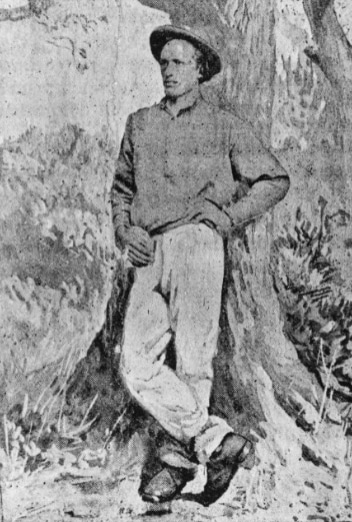
James Alpin Macpherson, known as the Wild Scotchman, was one of Queensland’s most notorious bushrangers before his capture and imprisonment. Released from prison in 1874, he lived out the remainder of his days quietly, working as a stockman and station overseer far from his outlaw past.
Macpherson died on 23 August 1895 at Burketown, Queensland, aged 53, after falling from a horse. The man who had once terrorised the bush met his end not in a blaze of gunfire, but in an ordinary accident on the land he had spent his later years working.
Portrait of bushranger James MacPherson 1866: The Wild Scotchman
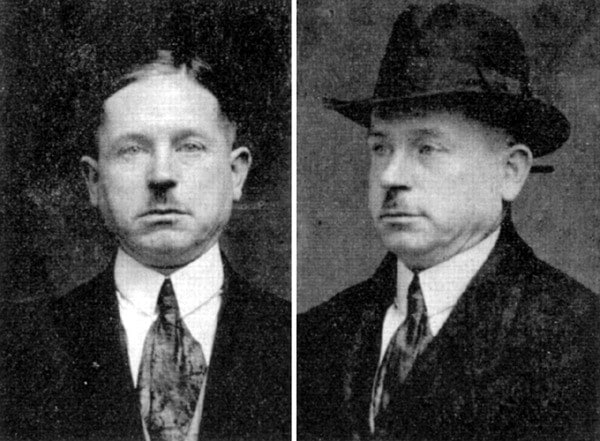
Peter Kurten, known as the Vampire of Dusseldorf, murdered two young foster sisters at a fairground on 23 August 1929, in one of a string of attacks that terrorised the city throughout that year. Born in Cologne in 1883, the eldest of 13 children, Kurten endured a childhood of brutal poverty and domestic terror, and had already demonstrated violent and sadistic tendencies from boyhood, including drowning two playmates on the Rhine at the age of nine.
His killing spree in 1929 left Dusseldorf gripped by fear. He was eventually arrested, tried, and convicted of nine murders, though police suspected him in as many as 68 attacks. His victims were overwhelmingly women and girls. He was executed by guillotine in July 1931. Shortly before his death, he asked the prison psychiatrist whether he would still be able to hear his own blood gushing from his neck after the blade fell. When told his brain might function for a few seconds, Kurten replied: ‘That would be the pleasure to end all pleasures.’
Peter Kürten police mugshot, 1931. Photographer unknown; Wikimedia Commons, CC BY-SA 3.0.
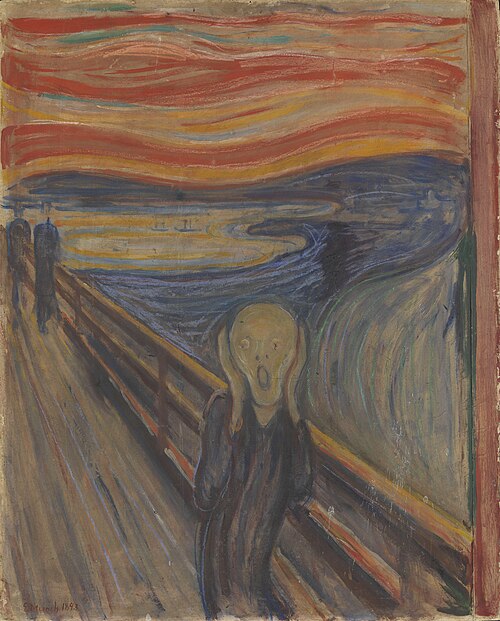
In broad daylight on 22 August 2004, masked gunmen entered the Munch Museum in Oslo, Norway, and tore two priceless works from the walls: the 1910 version of Edvard Munch’s iconic The Scream and his enigmatic Madonna. A quick-thinking bystander photographed the thieves as they fled to a getaway car. Fragments of the gilded frames were later found nearby, and fears circulated that the paintings had been deliberately destroyed to eliminate evidence.
Norwegian police arrested a suspect in April 2005, and in early 2006 six men stood trial. Three were sentenced to between four and eight years in prison. Then, in August 2006, police announced they had recovered both works. The Scream bore moisture damage to its lower-left corner; Madonna showed tears and holes on her right side. Before restoration, the Munch Museum exhibited the damaged paintings to the public for five days, drawing more than five thousand visitors.
Edvard Munch, The Scream (1893). Photo: Børre Høstland/National Museum of Norway. CC BY 4.0, via Wikimedia Commons.
On August 22, 1972, John Wojtowicz and Salvatore Naturile attempted to rob a branch of Chase Manhattan Bank at 450 Avenue P in Gravesend, Brooklyn. A third accomplice fled before the robbery began after spotting a police car. Rather than escaping with the cash, Wojtowicz and Naturile held seven bank employees hostage for fourteen hours. Wojtowicz, a former bank teller, had working knowledge of bank operations, but the plan unravelled completely.
Naturile was shot and killed by an FBI agent during the final moments of the standoff. Wojtowicz was arrested and sentenced to 20 years at Lewisburg Federal Penitentiary, serving five. The story became the basis for the 1975 film Dog Day Afternoon, starring Al Pacino.