1867: Joseph Ballam Hanged at Ballarat for the Piggoreet Road Murder

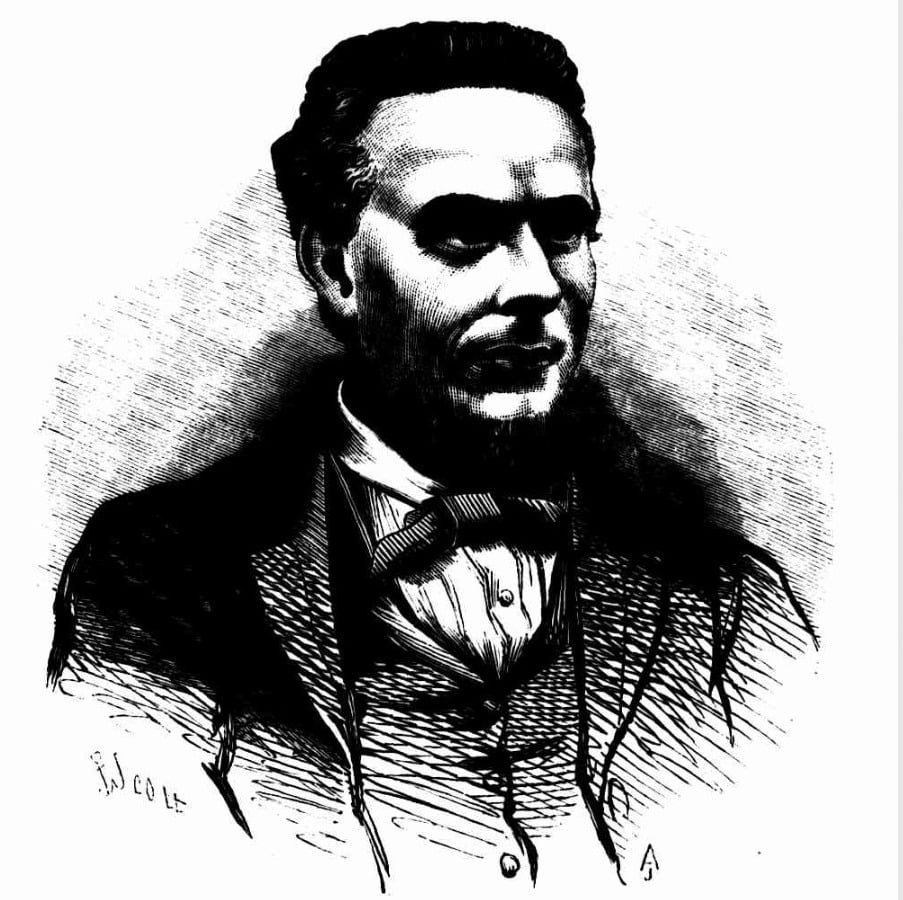
Thomas Ulick Burke, manager of the Bank of Australasia at Smythesdale, was shot and killed on 10 May 1867 while travelling alone by buggy through the bush near the Coach and Horses Hotel after purchasing gold from claims along the Break-o’-Day road. His valise was found empty, all gold and banknotes taken. Joseph Ballam, an unemployed lodger at the Cosmopolitan Hotel in Piggoreet, had spent the days before the murder quietly canvassing the local claims for yield information, noting that the Break-o’-Day Company would have a good haul that fortnight.

At the Ballarat Circuit Court, before Judge Barry, Ballam and co-accused George Searle, keeper of the Cosmopolitan Hotel, were charged with the wilful murder. Witnesses placed both men on horseback near the route Burke had taken on the afternoon of the killing, their horses shod with shoes of distinctive shape that a farrier could identify. Ballam was convicted and hanged at Ballarat on 7 August 1867.

Piggoreet murder prisoners Ballan and Searle Smythesdale police court

⬅ See all events from 7 August

Spread the word on your favourite platform!

1890: William Kemmler: The First Man Executed by Electric Chair

William Kemmler, a vegetable peddler from the slums of Buffalo, New York, became the first person in history executed by electric chair. On March 29, 1889, in the grip of a drunken rage, he accused his common-law wife Matilda ‘Tillie’ Ziegler of theft and betrayal, retrieved a hatchet from the barn, and beat her to death. He then walked to a neighbour’s house and announced what he had done.

Convicted of first-degree murder in May 1889 and sentenced to death, Kemmler was chosen as the inaugural test of New York’s new electrocution law, which had replaced hanging on January 1, 1888. His execution at Auburn Prison on August 6, 1890 did not go smoothly. Developers including George Westinghouse had fought to block use of their technology for executions, and legal appeals argued the chair violated the Eighth Amendment’s ban on cruel and unusual punishment. The appeals failed, and Kemmler died in the chair, though witnesses reported the process was prolonged and deeply disturbing.

Illustration of a man executed by electrocution in electric chair

⬅ See all events from 6 August

Spread the word on your favourite platform!

1856: Michael Casey Hanged at Oatlands for a Brutal Assault with Intent to Murder

Michael Casey, an Irish labourer working to clear land at Falmouth, Tasmania, attacked a fellow worker named John Hewitt with a stick and then kicked him in the head, leaving him unable to move. The following morning, Casey returned armed with a gun, stood over the stricken man, and said ‘you are not dead then’ before fleeing when a bystander appeared. A jury found him guilty of wounding with intent to kill, and he was sentenced to death.

While awaiting execution at Oatlands Gaol, Casey attempted suicide by sharpening an iron spoon and opening a vein in his arm, concealing the wound beneath a strip of old blanket. The act was discovered before he died, and he was nursed back to health only to face the gallows. On 5 August 1856, he was hanged in what was reported as the first private execution within the precincts of Oatlands Gaol.

Colonial era solitary cells uncovered beneath old pool at gaol

⬅ See all events from 5 August

Spread the word on your favourite platform!

1944: The Cowra Breakout: Bloodiest Mass Prison Escape of World War II

In the early hours of 5 August 1944, more than 1,000 Japanese prisoners of war held at the 12th Australian Prisoner of War and Internees Camp near Cowra, New South Wales, launched a mass breakout. Climbing over dead bodies and barbed wire, the escapees stormed the perimeter in what many had accepted as a suicide mission, a final bid to reclaim lost honour in the face of capture. It remains the largest mass escape of World War II and one of the bloodiest in history.

By the time the chaos subsided, 234 Japanese prisoners were dead and 108 wounded. Three Australian guards were killed, and a fourth officer was stabbed to death during the subsequent manhunt. Over 300 men were recaptured across the following nine days. The Cowra camp, opened in 1941, had grown to hold some 4,000 POWs and internees by 1944, including Italians, Formosans, Koreans, and Japanese non-commissioned officers, all held under Australia’s National Security Act 1939.

Police and troops search for Cowra POW camp escapees August 1944

⬅ See all events from 5 August

Spread the word on your favourite platform!
On This Day in True Crime History

Subscribe to Dark Stories

True crime stories, dark history and tour news, straight to your inbox.