Archives: Dark Stories: On This Day In True Crime History - Page 35
Susan Atkins, one of the most notorious members of Charles Manson’s cult and a participant in the infamous 1969 Tate-LaBianca murders, died in custody at California’s Central California Women’s Facility while serving a life sentence.
Atkins had spent nearly four decades behind bars, repeatedly denied parole despite being terminally ill with brain cancer in her final years. Her role in the killing of actress Sharon Tate and others made her one of the most infamous figures to emerge from the Manson Family’s 1969 murder spree.
On the night of September 23, 1983, armed robbers held up a Kentucky Fried Chicken restaurant in Kilgore, Texas, just before closing. Five people inside, three employees and two friends waiting for one of them, were abducted and driven to a field on County Road 232, where each was shot in the back of the head and torso. The victims were identified as David Maxwell, 20, Joey Johnson, 20, Monty Landers, 19, Mary Tyler, 37, and Opie Hughes, 39.
The case went unsolved for over two decades. A torn fingernail found on one body once led investigators to arrest James Earl Mankins Jr., the son of a state representative, but DNA testing proved the fingernail was not his and he was released before trial.
In November 2005, cousins Darnell Hartsfield and Romeo Pinkerton, both already imprisoned on other charges, were arrested and charged with capital murder. DNA evidence pointed to a third, then-unidentified man involved in the killings and the rape of Hughes. Pinkerton denied any involvement, yet that October he pleaded guilty to five lesser counts of murder and received five concurrent life sentences.
The mystery of the third perpetrator was not resolved until decades later: in 2023 the Texas Rangers reopened the case, and DNA testing in 2025 finally identified him as Devan Riggs, a man who had died in 2010 without ever facing charges.
In the early hours of September 23, 1986, 23-year-old penguin parade worker Beth Barnard was found stabbed to death in a house on Phillip Island, Victoria. A blanket had been placed over her body, but beneath it her throat had been cut, her nightgown pushed up, and her body slashed and stabbed repeatedly, with defensive wounds on her hands. Cigarette butts and a knife lay near the body, and bloodied paper towels were stuffed around the bathroom sink.
Carved into her chest was a knife wound resembling the letter A, leading some to dub the killing the Scarlet Letter murder. Barnard had been having an affair with her married employer, Fergus Cameron, a founding shareholder of the Phillip Island Grand Prix. The night before her body was found, his wife, 36-year-old Vivienne Cameron, learned the truth and smashed a wine glass across his head and back before driving him to hospital.
Fergus spent that night at his sister’s house while Vivienne asked friends to mind their two young sons. She then vanished and was never seen again. A coroner later found that Vivienne had contributed to Beth Barnard’s death and concluded that she had taken her own life by jumping from the nearby San Remo Bridge, although her body has never been recovered.
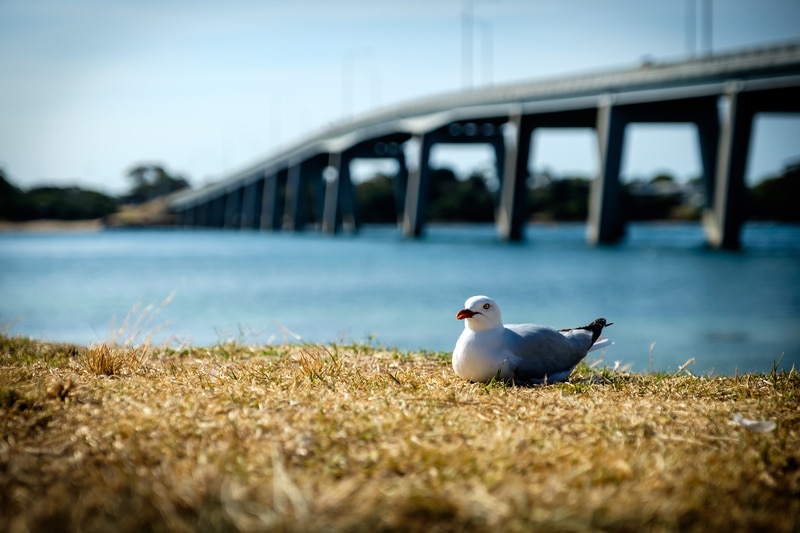
Seagull portrait on grass with San Remo Bridge blurred behind
At the Central Criminal Court in Sydney, 30-year-old Yvonne Gladys Fletcher of Newtown was sentenced to death after a seven-day trial for the 1948 murder of her first husband, Desmond George Butler, who died after months of wasting illness caused by thallium poisoning. Asked if she had anything to say before sentence was passed, she replied simply, “No, your Honor,” but moments later a prayer book she had carried through every day of the trial crashed to the floor and she collapsed in the dock, sobbing, as police lifted her out.
Mr Justice Kinsella told the court the crime was “horrible” because the poison had been “secretly administered within the family circle” to an unsuspecting victim, destroying him “mentally and physically while permitting him to linger for months in wretched agony.” Fletcher was the first person in Australian criminal history convicted of murder by thallium poisoning, and the jury recommended that the sale of the poison to the public be banned outright.
What the sentencing did not reveal to onlookers was already known to the court: Fletcher had also been committed for trial over the death of her second husband, who had died from the same poison at Newtown only months earlier. The Crown Prosecutor noted the chilling parallel between the two cases, telling the jury, “There is no question that both Butler and Fletcher died from thallium poisoning… the same matrimonial discord, the same hatred towards each man, the same sudden illness, and the same dreadful symptoms.” The judge himself observed that had this conviction concerned her second husband, evidence of his cruelty toward her might have offered some mitigation, but no such excuse existed for the killing of her first.
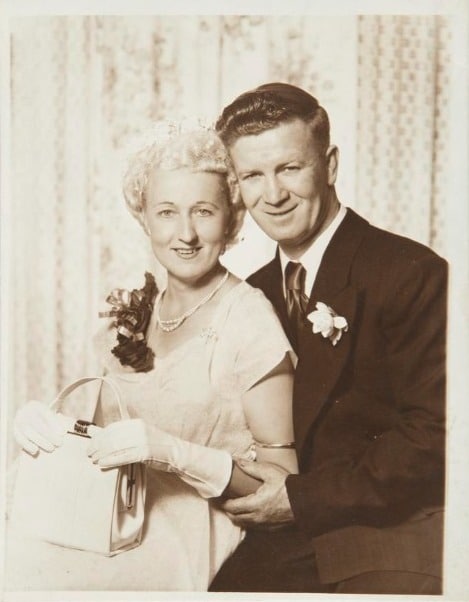
Yvonne Fletcher and Second Husband: Photograph by Robert Haswell. Gift, 2006. Justice & Police Museum Collection, Museums of History New South Wales, JP2006/1.