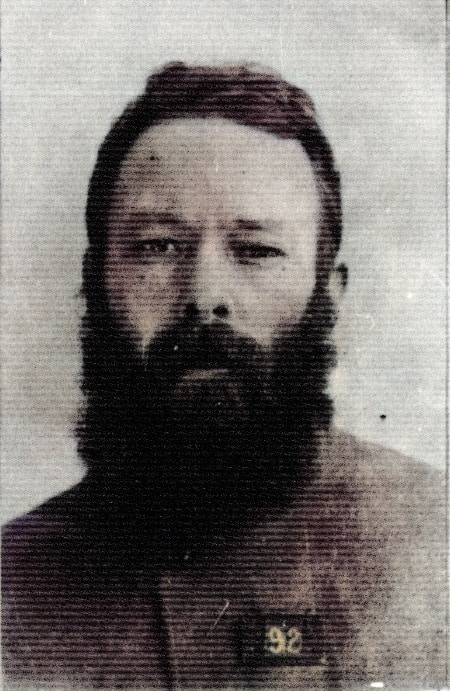
Henry Needle was a robust carpenter until 1889, when he began suffering violent, unexplained vomiting at the family home in Richmond, near Melbourne. His doctor once found untouched broth and jelly by his bed, and noted Henry had grown strangely wary of food prepared by his wife, Martha. He died on 4 October 1889; his death was recorded as hepatitis, no post-mortem was ordered, and no suspicion touched the devoted nurse at his side.

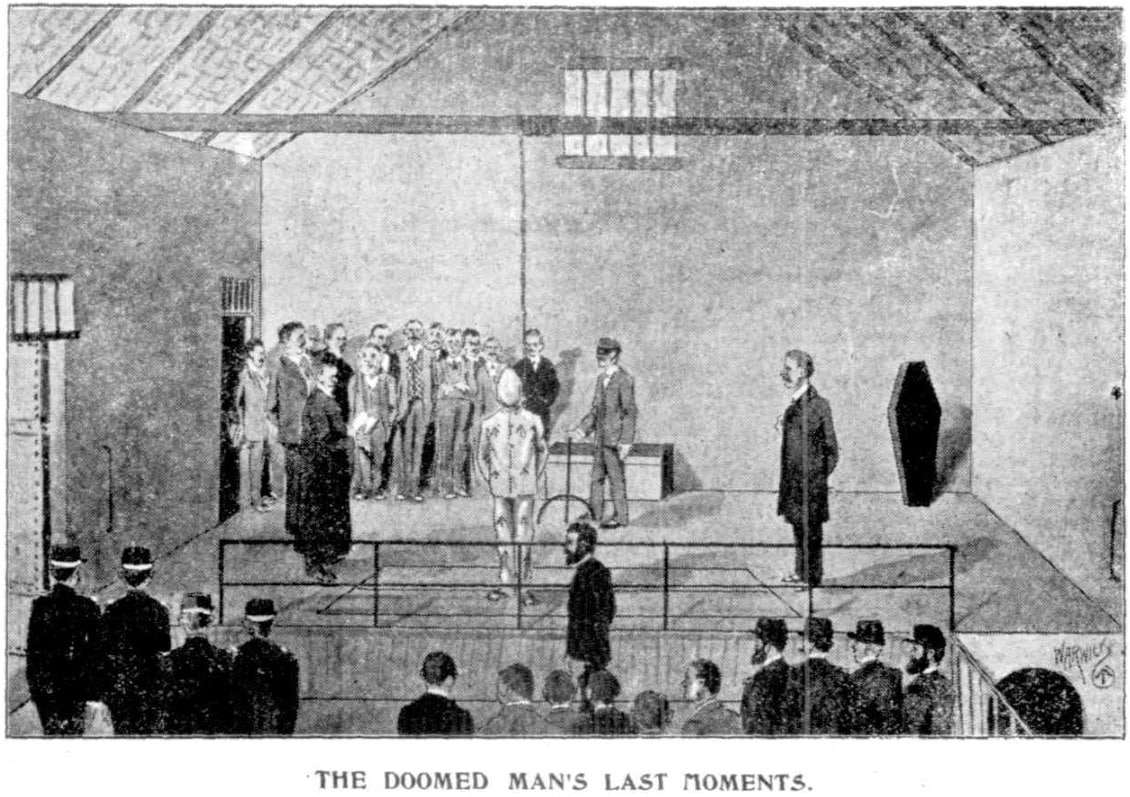
The truth emerged five years later, after police caught Martha handing a laced cup of tea to another man and Henry’s body was exhumed and found packed with arsenic, along with the bodies of the couple’s three young children, all of whom had died in her care under equally mysterious circumstances. Martha Needle was hanged at Melbourne Gaol in October 1894 for the poisoning of her fiance’s brother, the last of at least five family members she is believed to have killed.
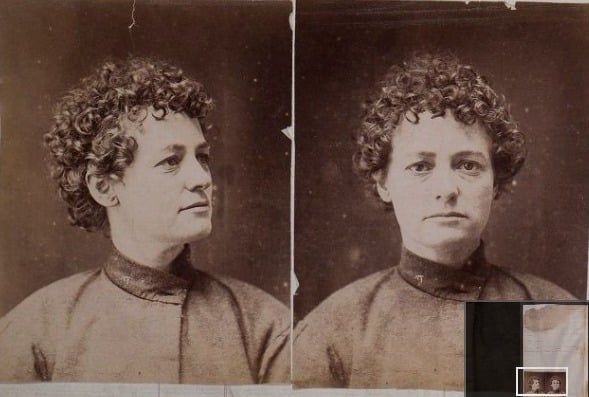

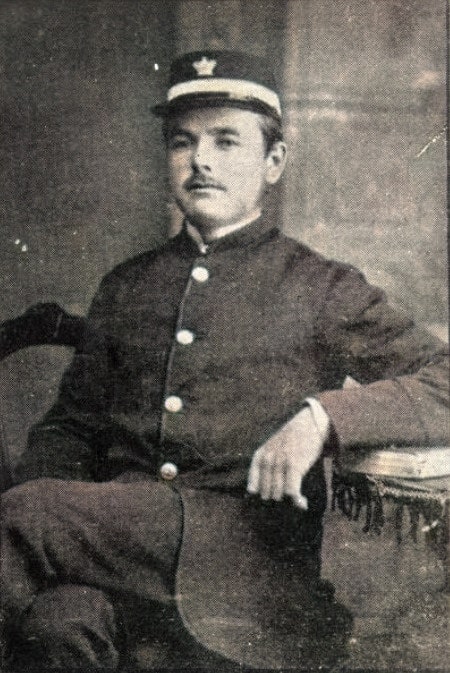
Martha Needle: Public Record Office Victoria, VPRS 516/P0000, Central Register of Female Prisoners, register nos. 5926–6415 (1891–1896).

⬅ See all events from 4 October

Spread the word on your favourite platform!

O.J. Simpson, the former football star, stood accused of murdering his ex-wife Nicole Brown Simpson and her friend Ronald Goldman outside her Los Angeles home in June 1994. The trial became a media spectacle, dominating television and public debate across the United States and beyond. The defense seized on a single moment: prosecutors had Simpson try on the bloody glove found at the scene, and it appeared too tight to fit. Defense attorney Johnnie Cochran turned the moment into a rallying cry, “If it doesn’t fit, you must acquit,” and on October 3, 1995, the jury returned a not guilty verdict after less than four hours of deliberation.

If It Doesn't Fit, You Must Acquite
If It Doesn’t Fit, You Must Acquite

⬅ See all events from 3 October

Spread the word on your favourite platform!

Edgar Allan Poe vanished for nearly a week before he turned up outside a Baltimore, Maryland tavern being used as a polling place, incoherent and wearing clothes that were not his own. He was taken to Washington College Hospital, where he drifted in and out of consciousness for four days.

Witnesses said he repeatedly called out the name Reynolds in his final hours, a man no one has ever identified. Poe died on 3 October 1849 at age 40, and no doctor ever agreed on what killed him, leaving one of American literature’s most famous authors with one of its strangest unsolved endings.

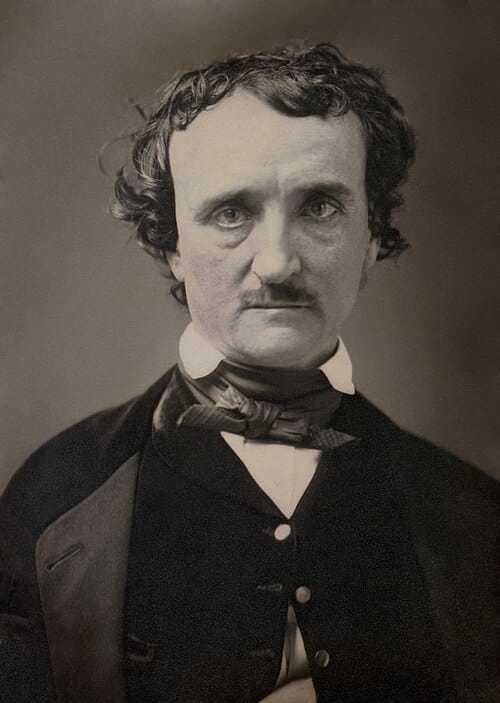
Restored portrait photo of Edgar Allan Poe circa 1849

⬅ See all events from 3 October

Spread the word on your favourite platform!

Within hours of his execution, the body of bushranger George Melville was handed to his widow, decorated with ribbons and laid out in the window of their oyster shop in Little Bourke Street. The Argus called it a disgusting and inhuman act, presuming it was staged simply to draw in customers.

Melville had been hanged at Melbourne Gaol alongside William Atkins and George Wilson for the Private Escort gold robbery near Kalkallo, an ambush that left four mounted troopers shot, one of them fired on again as he lay wounded on the road. All three had been identified after an accomplice turned informer to the police before taking his own life with a razor.

None of the condemned made a clear confession. Wilson used his final moments on the scaffold to forgive the witnesses who had convicted him, while Melville, claiming the crowd could not hear him, simply said he could not make himself heard and wished them all a very good morning.

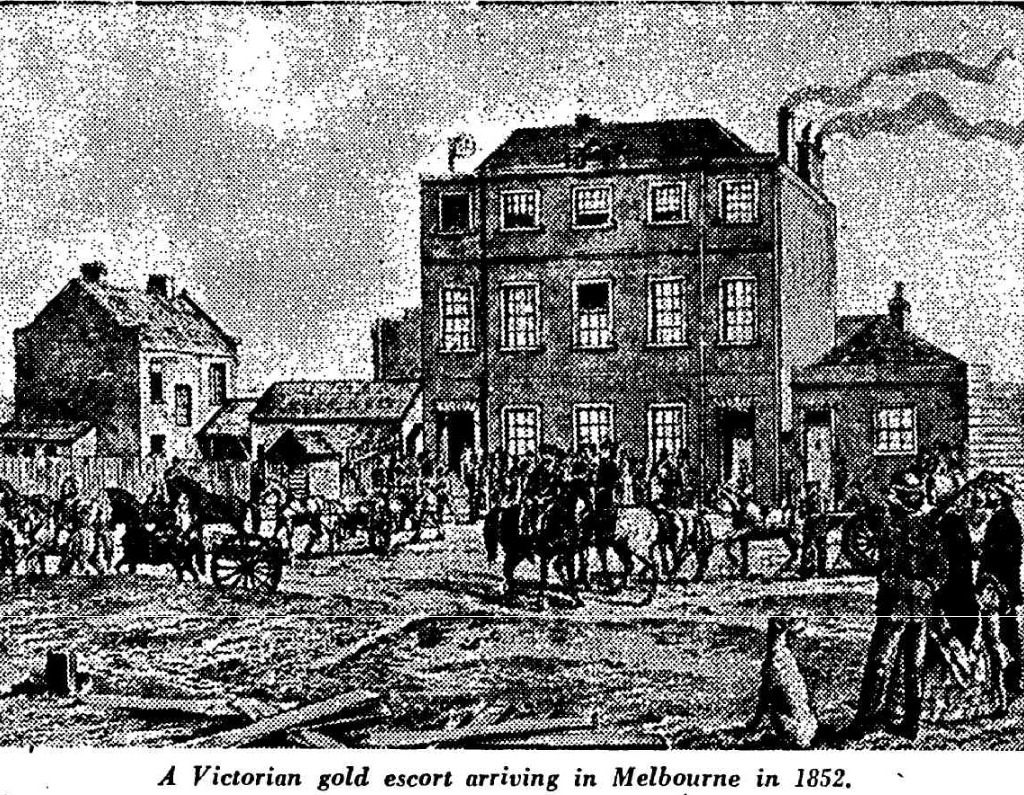
Victorian gold escort arriving in Melbourne 1852.

⬅ See all events from 3 October

Spread the word on your favourite platform!
On This Day in True Crime History

Subscribe to Dark Stories

True crime stories, dark history and tour news, straight to your inbox.