Archives: Dark Stories: On This Day In True Crime History - Page 3
1977: The Last Blade Falls: the Final Guillotine Execution in France
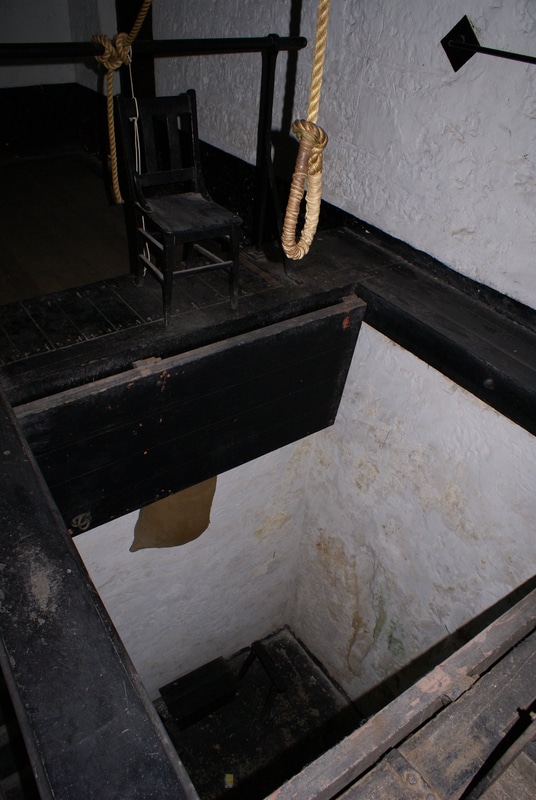
Hamida Djandoubi went to the guillotine in France on this day in 1977, the last person ever executed by the device and the last person executed in France at all. He had been convicted of the murder of 21-year-old Elisabeth Bousquet, a crime that closed out nearly two centuries of the guillotine’s use as the instrument of French justice.
His execution marked a quiet historical hinge: within a few years France would abolish capital punishment altogether, in 1981, making Djandoubi’s death the final chapter of a punishment first adopted during the French Revolution.
Close-up of a guillotine in dark foggy setting execution concept
1931: Stabbed Like His Hero Julius Caesar: the Assassination of a Mafia Boss
Salvatore Maranzano, nicknamed Little Caesar for his fascination with Julius Caesar and the Roman Empire, had built a criminal empire in Brooklyn behind the front of a real estate brokerage, running bootlegging, prostitution and narcotics rackets. Born in Castellammare del Golfo, Sicily, and married to Elisabetta Minore, he was sent to New York to seize control of Mafia operations for his Sicilian backers.
In 1930, he went to war with rival boss Joe Masseria, sparking the Castellammarese War. Maranzano secretly convinced Masseria’s own lieutenant, Lucky Luciano, to betray him, and after a lunch at a Coney Island restaurant on April 15, 1931, Masseria was gunned down.
Maranzano emerged as capo di tutti capi, the boss of all bosses, and reorganised New York’s underworld into the Five Families. His triumph lasted only five months. After plotting to have Luciano killed, Maranzano discovered too late that Luciano had moved first. On September 10, 1931, four gunmen posing as government agents entered Maranzano’s Manhattan office and shot and stabbed him to death, dying in a manner fittingly similar to the fate of his idol, Julius Caesar.
Angry mobsters firing a submachine gun near an antique car
1754: Born to Mutiny Twice: Captain William Bligh, Survivor of the Bounty and the Rum Rebellion in Sydney
Born on 9 September 1754, William Bligh rose to Vice-Admiral of the Blue and served as Governor of New South Wales from 1806 to 1808, but he is remembered above all for surviving not one but two uprisings against his command.
The first came on 28 April 1789 aboard HMAV Bounty, when Master’s Mate Fletcher Christian led a mutiny in the South Pacific. Bligh and 18 loyal crew were cast adrift in a 23-foot open launch so overloaded its gunwales sat only inches above the water, given four cutlasses and barely a week’s food, with a compass and quadrant but no charts. The ship’s clerk, Samuel, defied threats from the mutineers to smuggle aboard vital navigation instruments, while the gunner’s own pocket watch became the only means of keeping time. Fleeing hostile islanders at Tofua, the party lost quartermaster John Norton, killed on the beach, before Bligh navigated the tiny boat some 3,618 nautical miles to safety at Timor.
Nearly two decades later, as governor of Sydney, Bligh faced a second rebellion when officers of the NSW Corps deposed him in the colony’s Rum Rebellion, a rare case of a British officer surviving both a shipboard mutiny and a colonial military coup.
Sydney Rum Rebellion Arrest of Governor Bligh historical illustration
1944: The Acid Bath Murderer: John Haigh Dissolves His Former Boss in a Barrel of Sulphuric Acid
John Haigh, a convicted fraudster, murdered his former employer William ‘Mac’ McSwan and dissolved his body in a barrel of sulphuric acid. Haigh later claimed the killing was driven by a compulsion he called blood lust, but McSwan had money and property, and the murder looks less like madness than a calculated escalation of Haigh’s earlier fraud schemes.
Tellingly, whatever ‘compulsion’ Haigh described did not resurface until the cash from the McSwan killing had run out, suggesting the acid barrel was less about bloodlust and more about a ruthless, practical solution to funding his lifestyle.
Portrait of john george haigh – acid bath murderer. Public Domain.