Archives: Dark Stories: On This Day In True Crime History - Page 24
1866: The Wild Scotchman Jailed for 25 Years After Queensland Mail Robberies
Bushranger James Macpherson, known as the Wild Scotchman, entered the St Helena Island penal settlement in Moreton Bay, Queensland, on 14 September 1866 to begin serving a 25 year sentence for mail robbery.
He did not serve his time quietly. On 11 April 1870, Macpherson took part in a mass escape attempt, breaking free of the stockade with six other prisoners and hiding in the scrub around the island. He was shot in the wrist during his recapture and returned to custody.
Despite the harsh sentence and the failed breakout, Macpherson was eventually released by executive clemency in 1874.
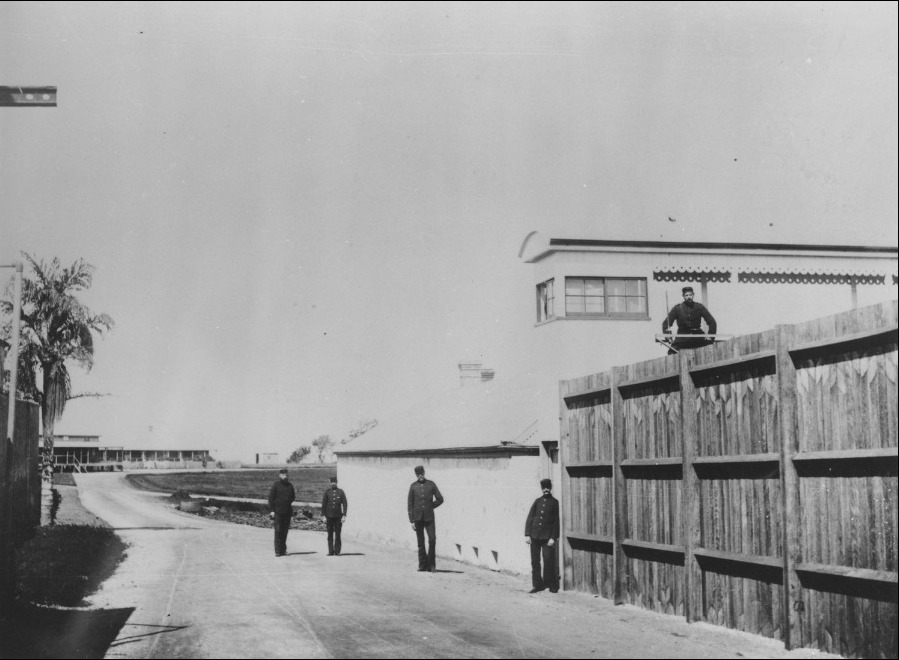
Prison guards on St. Helena, ca. 1893. State Library of Queensland, negative number 60065.
On Friday 13th September 1973, 20-year-old David McGreavy was left babysitting the three Ralph children in Worcester while their parents were out. He killed all three.
McGreavy then took a pick-axe to the bodies before impaling the remains on the wrought iron fence spikes of the house next door, where they were discovered by neighbours. The killings, carried out on the date now inseparable from bad luck and horror folklore, later fed the case’s grim nickname as Britain’s real life Friday the 13th murders. McGreavy was convicted and given three life sentences.
1866: The Wild Scotchman Handed a Harsh 25 Years for Mail Robbery
Bushranger James Macpherson, known as the Wild Scotchman, was found guilty at Maryborough of robbing the local mails and sentenced to two concurrent 25-year terms. The presiding judge made clear the sentence was deliberately severe, intended as a warning to deter other would-be bushrangers from following his example.
The punishment stood out for its length even by the standards of colonial Queensland justice, reflecting how seriously authorities viewed the ongoing threat of mail robbery to the colony’s roads and communications.
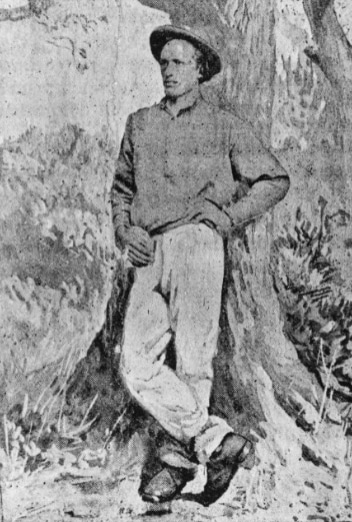
Portrait of bushranger James MacPherson 1866: The Wild Scotchman
1897: “My Poor Boy, My Charlie”: A Mother’s Anguished Cry Before Her Son Was Hanged for Murder
Charles John Hall murdered his wife Minnie at Eaglehawk, near Bendigo, on 11 February 1897. The crime shocked a district where Hall had been well known for very different reasons. A talented and athletic footballer nicknamed “John Bull,” he had been, according to one contemporary newspaper, “the idol of the hour” only a year earlier. He was convicted of Minnie’s murder and sentenced to death at Bendigo Gaol on 13 September 1897.
The night before, his parents were allowed a final visit, a scene warders later described as worse to witness than the hanging itself. His mother collapsed, shrieking through the gaol, “My poor boy, my Charlie,” before being carried to a cab and put to bed at home. Hall himself broke down during the visit. On the morning of his execution, he walked firmly to the scaffold and looked steadily at the hangman as the noose was fixed. Asked for his final words, Hall replied quietly, “I commit my soul to God.”
Outside the gaol a large crowd gathered, mostly women and children, with harsh feeling directed at Hall but deep sympathy for his grieving parents.
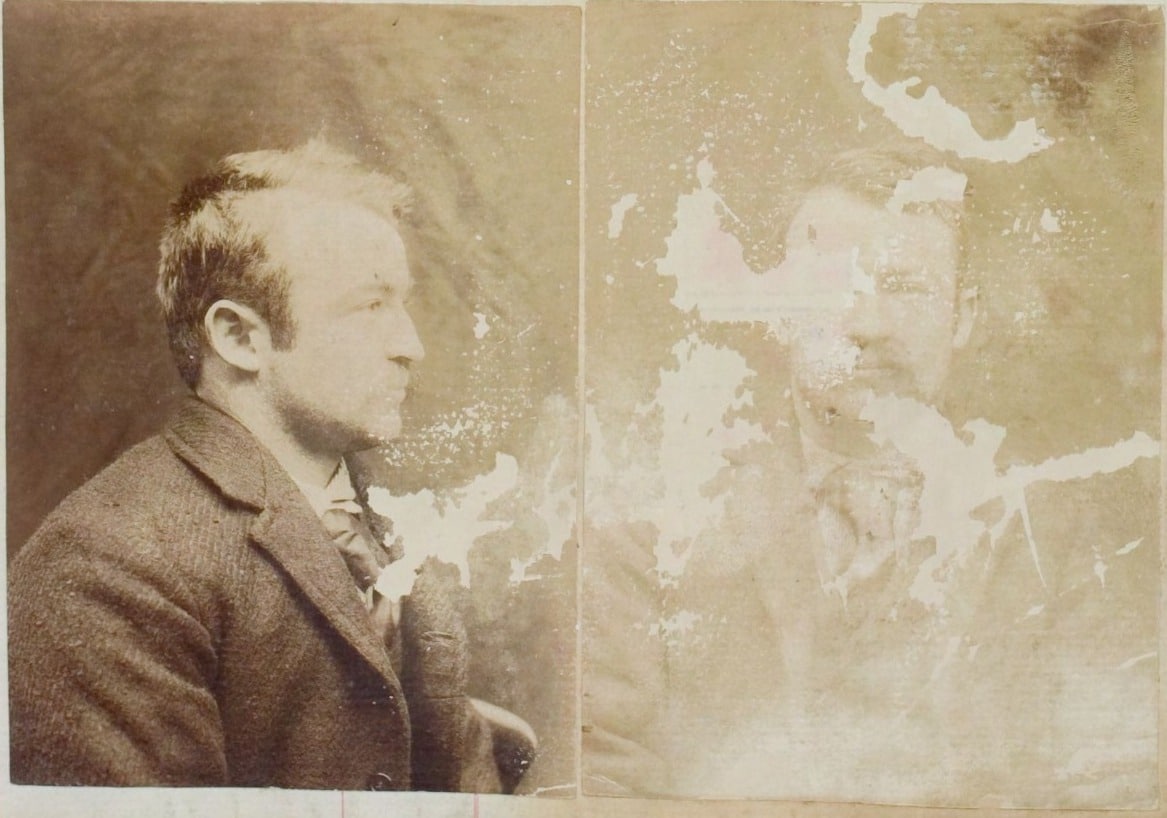
Charles John Hall, prisoner no. 27965, 1897. Public Record Office Victoria, VPRS 515/P0000, Central Register of Male Prisoners, Volume 51, p. 208. Out of copyright.