One night in May 1803, two masked men forced their way into the Hawkesbury home of Charles Palmer and his wife, clubbing both with the handle of an axe until Palmer lay senseless for two hours. They ransacked the house for money, bound the family and a child, and warned they would throw them into the river if the cash they insisted did not exist was not handed over.

Stolen clothing later surfaced in the household of a woman who said it had been given to her to mend for Thomas McLaughlane the elder and his son. Both men were convicted and sentenced to death, but only the elder went to the gallows at Hawkesbury; of eight men condemned that session he was the third actually hanged, the rest reprieved into transportation for life.

At his trial the elder McLaughlane claimed the stolen goods had come from an informer already giving evidence in another case, a claim the informer flatly denied. On the scaffold he said nothing more, meeting his end, witnesses noted, with quiet decency.


Hand of a drowning man reaching above the sea surface

⬅ See all events from 7 October

Spread the word on your favourite platform!

Caroline Grills earned the nickname Aunt Thally for the thallium she slipped into the tea and food of relatives and neighbours, a slow, trusted poisoner convicted in Sydney in 1953 after several deaths in her circle were finally traced back to her cheerful hospitality.

Sentenced to life, she was sent to the State Reformatory for Women, where she settled into prison life with the same warm, motherly manner that had once made her so welcome at other people’s tables. She kept making tea for fellow inmates right up until her death on 6 October 1960.

She never publicly expressed remorse for her crimes, dying as she had lived behind bars: smiling, sociable, and giving no hint of guilt.

Learn to make your own tea.

⬅ See all events from 6 October

Spread the word on your favourite platform!

In October 1965, Ian Brady picked up seventeen-year-old Edward Evans at a Manchester railway station, telling him he had been invited home for a drink. At the house on Wardle Brook Avenue, Brady had Myra Hindley fetch her brother-in-law David Smith under the pretext of sharing miniature wine bottles. Smith arrived in time to witness Brady strike Evans with a hatchet and strangle him with electrical cord, screams tearing through the house as Hindley called out for help.

Smith helped move the body to a spare room before fleeing home, where he was sick and told his wife everything. He contacted police the next morning armed with a screwdriver and bread knife in case Brady came after him. Officers found Evans’ body behind a locked door, and as he dressed for arrest, Brady offered a chillingly understated explanation: he and Evans “had a row and the situation got out of hand.” The killing exposed what became known as the Moors Murders.

Shocked male witness after fatal late night accident

⬅ See all events from 6 October

Spread the word on your favourite platform!

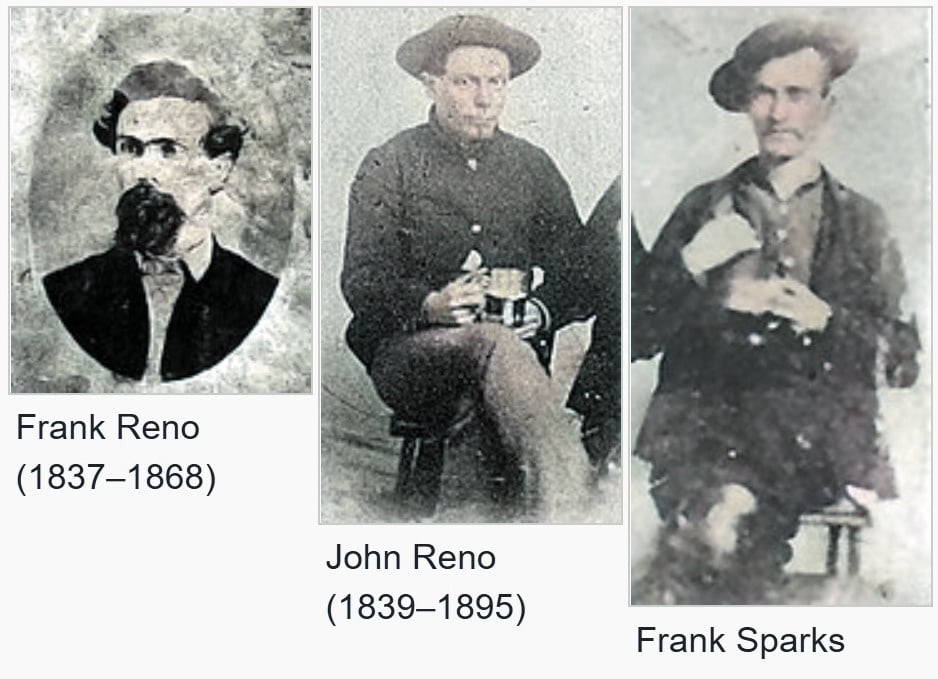
On the night of October 6, 1866, three members of the Reno Gang boarded an Ohio and Mississippi Railway train as it pulled out of Seymour, Indiana, overpowered the express guard and cracked open a safe holding roughly 16,000 dollars. They then shoved a second, heavier safe off the moving train for the rest of the gang to finish the job, but could not break it open before a posse closed in and they fled. It was, as far as anyone could tell, the first train robbery in American history.

The job, pulled off by brothers Frank, John, Simeon and William Reno, became the blueprint for a wave of copycat train robberies across the Midwest. Within two years the brothers paid for it dearly: dragged from jail cells by masked vigilantes and hanged, most of the gang’s stolen fortune never recovered.

Portrait of the Reno Brothers members of the Reno Gang train robbers

⬅ See all events from 6 October

Spread the word on your favourite platform!
On This Day in True Crime History

Subscribe to Dark Stories

True crime stories, dark history and tour news, straight to your inbox.