Archives: Dark Stories: On This Day In True Crime History - Page 10
John Wayne Glover, later known as the Granny Killer, followed 86-year-old Doris Cox along Spit Road in Sydney‘s Mosman to her retirement village in 1989, then dragged her into a secluded stairwell and smashed her face into a brick wall.
Cox survived, one of the few to live through an attack that would later be linked to a string of killings targeting elderly women. But she had Alzheimer’s, and her account of the assault was so confused that detectives were steered toward hunting a much younger suspect, a misdirection that bought Glover more time before he was finally caught.
In memory note on paper held in wrinkled hands under dramatic light
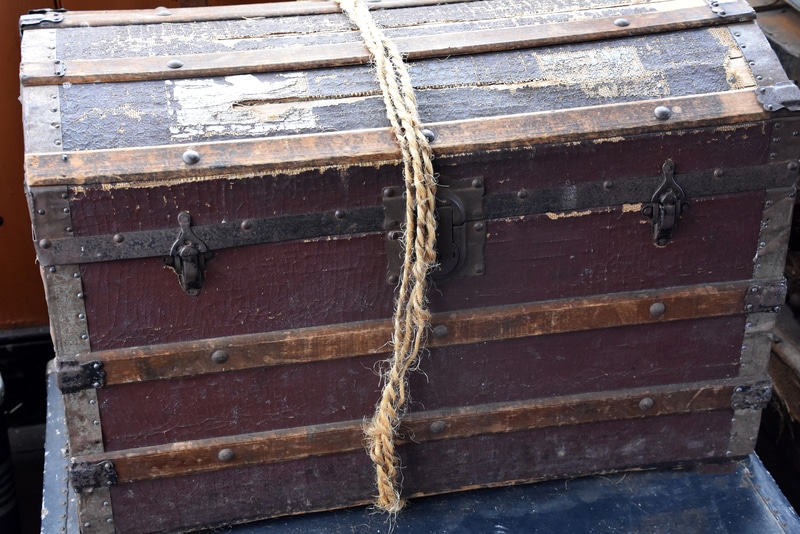
In 1979, Philadelphia police searching Ira Einhorn’s apartment found a locked steamer trunk shoved into a closet; inside were the mummified remains of his former girlfriend, Holly Maddux, missing for more than a year. Einhorn, a charismatic countercultural figure known as the Unicorn Killer, fled the country before trial and spent nearly two decades hiding in Europe before he was finally captured in France.
Extradited to the United States, Einhorn stood trial in 2002 and took the stand in his own defense, insisting CIA agents had killed Maddux and framed him. The jury took just two hours to convict him of first-degree murder, and he was sentenced the following day to life in prison without the possibility of parole.
Vintage steamer trunk with secrets locked up tight.
He had survived gang wars, bribery and a carefully built image as a Robin Hood of the Chicago slums, but it was not a murder charge that finally caught Al Capone. Federal prosecutors built a case not on bootlegging or bloodshed but on unpaid taxes, a paper trail he had never bothered to hide.
When the original jury pool was found to have been tampered with, the judge swapped it out entirely on the morning of the trial, stripping away whatever quiet deals Capone’s men had arranged in advance. The replacement jurors heard days of complex financial testimony, then took just nine hours to convict. On 17 October 1931, Capone was sentenced to 11 years in federal prison, the longest tax evasion sentence ever handed down to that point, ending the public myth with a ledger rather than a gun.
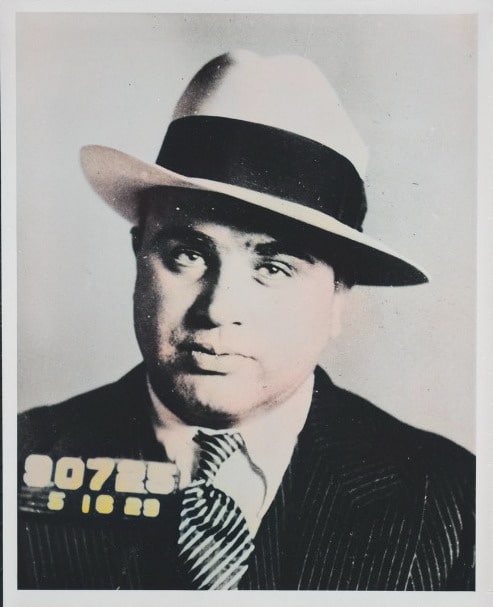
Al Capone, Philadelphia, 16 May 1929. U.S. National Archives, NAID 24520406. Use unrestricted.
Richard Bibby was a hutkeeper at a station in the Victoria district when he decided to kill Billamarra, an Aboriginal man camped near his own hut, so near that he was said to be under Bibby’s protection. He announced his intention the night before, loaded his pistol, and before dawn woke his sleeping victim only to shoot him dead. Bibby claimed Billamarra had stolen lambs, but witnesses showed the missing lambs had simply been mauled by native dogs; another man watching in secret saw the whole killing.
Tried and condemned at the Quarter Sessions, Bibby became the first white man executed in Perth, and in the colony, for murdering an Aboriginal person. Strong appeals were made for mercy, but his cold, premeditated planning and a past conviction for robbery with violence counted against him. The hanging itself was botched, the rope poorly adjusted, and he struggled visibly on the rope before dying.
Bibby privately confessed his guilt to the prison chaplain, yet on the scaffold, asked if his sentence was just, he answered that if the truth had been told he would not have been there.
Disused shed with kiln and chimney stack in dry Australian bush