1789: The Birth of Policing in New South Wales

On 8 August 1789, Governor Arthur Phillip authorised the formation of a nightwatch at Sydney Cove, drawing eight of the best-behaved convicts from the colony’s population. The Royal Marines, originally tasked with policing duties, had proved unwilling to discipline their fellow convicts, forcing Phillip’s hand. A free settler named John Smith had earlier been appointed as the colony’s first constable, becoming the first recorded police officer in Australia.

The Night Watch was joined by a Row Boat Guard, also composed of selected convicts. The Night Watch was replaced by the Sydney Foot Police in 1790 and evolved into an organised force that endured until the amalgamation of all New South Wales colonial police forces in 1862.
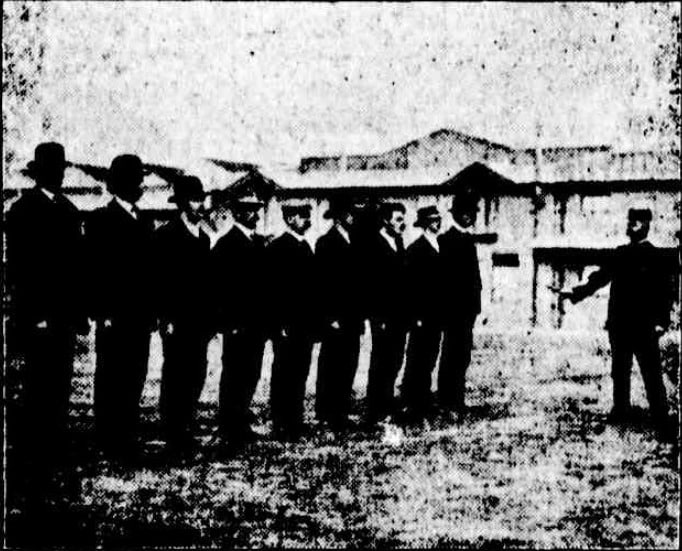

NSW Police Force recruits training with horses revolvers drill and gear

⬅ See all events from 8 August

Spread the word on your favourite platform!

1796: First Fleet Convict John Finlow Hanged in Sydney for Murder

John Fendlow (c.1768-1796), a tinsmith convicted at the Old Bailey in 1783 for highway robbery, arrived in Sydney with the First Fleet in January 1788. After time on Norfolk Island, he received a 30-acre land grant at Mulgrave Place in November 1794 and worked as a settler in the Hawkesbury region with his partner Eleanor Byrnes.

On 4 July 1796, Fendlow shot dead his servant David Lane after Lane attempted to assault Byrnes. Byrnes testified that all three had been drinking on a boat that evening, and that Lane had come after her in the house. Fendlow was hanged in Sydney on 8 August 1796.

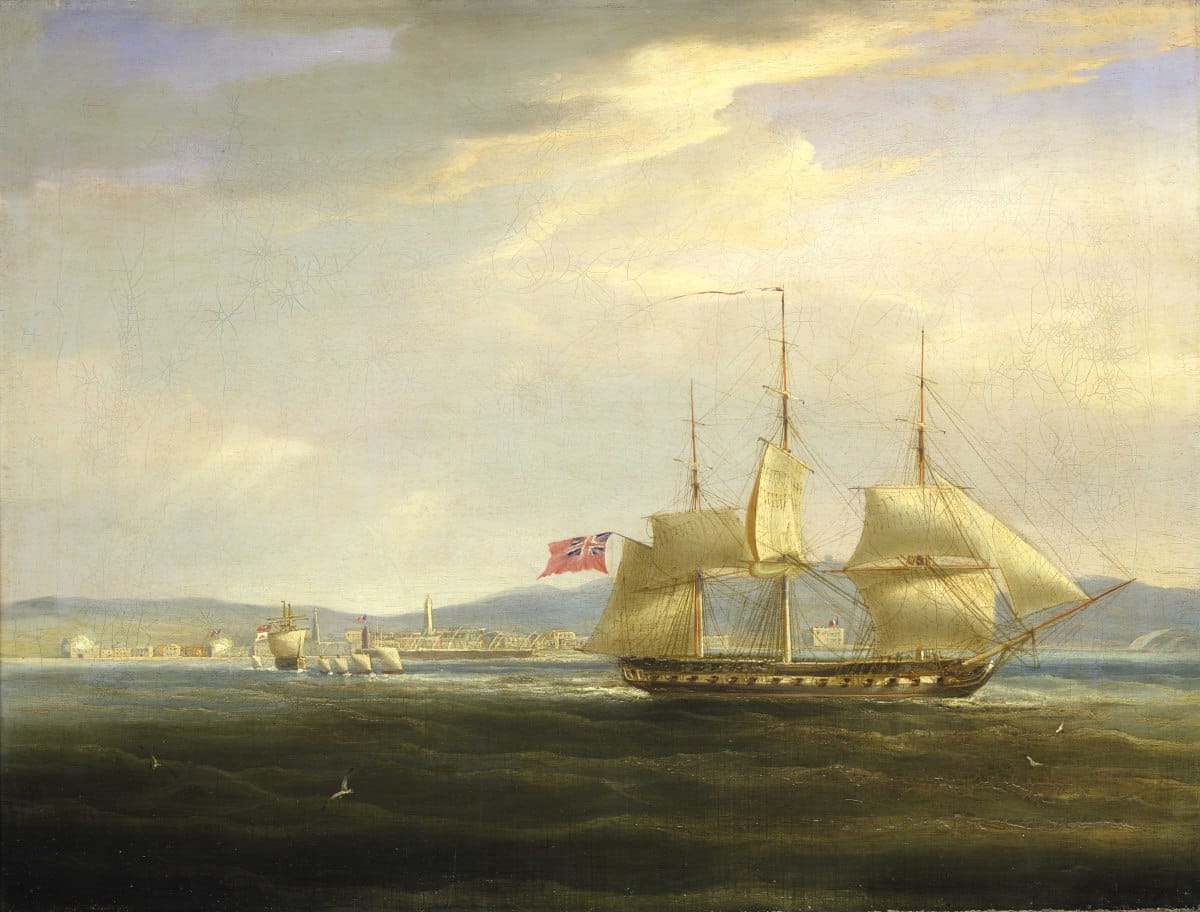
HMS Mercury after 1809. By William Huggins. National Maritime Museum, Greenwich, London

⬅ See all events from 8 August

Spread the word on your favourite platform!

1944: The Cowra Breakout: Bloodiest Mass Prison Escape of World War II

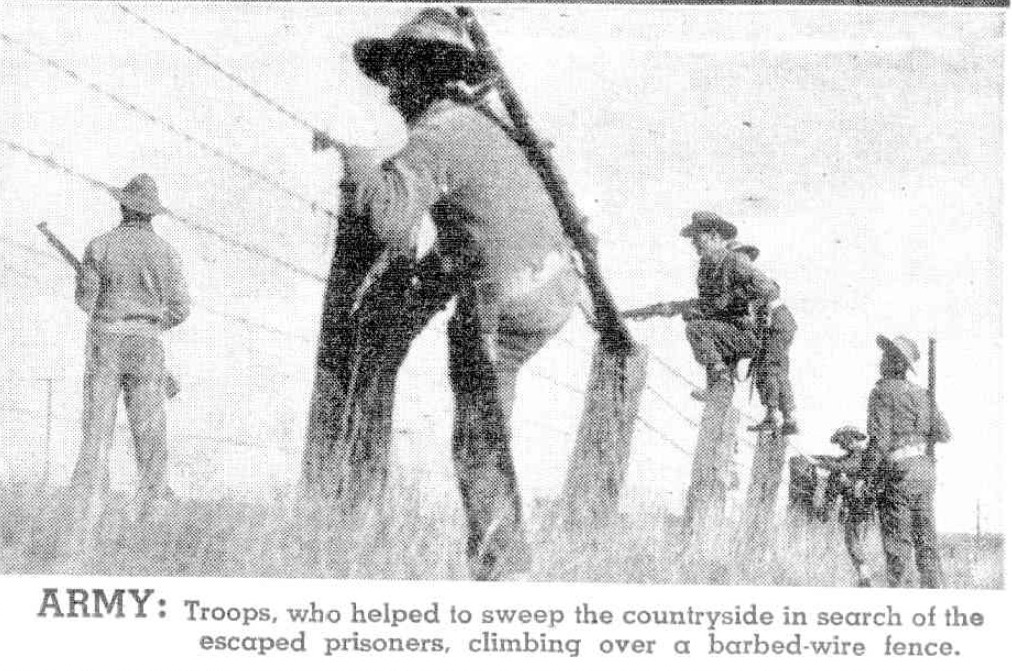
In the early hours of 5 August 1944, more than 1,000 Japanese prisoners of war held at the 12th Australian Prisoner of War and Internees Camp near Cowra, New South Wales, launched a mass breakout. Climbing over dead bodies and barbed wire, the escapees stormed the perimeter in what many had accepted as a suicide mission, a final bid to reclaim lost honour in the face of capture. It remains the largest mass escape of World War II and one of the bloodiest in history.

By the time the chaos subsided, 234 Japanese prisoners were dead and 108 wounded. Three Australian guards were killed, and a fourth officer was stabbed to death during the subsequent manhunt. Over 300 men were recaptured across the following nine days. The Cowra camp, opened in 1941, had grown to hold some 4,000 POWs and internees by 1944, including Italians, Formosans, Koreans, and Japanese non-commissioned officers, all held under Australia’s National Security Act 1939.

Police and troops search for Cowra POW camp escapees August 1944

⬅ See all events from 5 August

Spread the word on your favourite platform!

1798: John Raynor Hanged in Sydney for House-Breaking

In July 1798, the court of criminal judicature convened in Sydney specifically to try John Raynor, described by contemporaries as an incorrigible offender whose fate had long been predicted. Convicted of house-breaking, Raynor was hanged at Sydney Cove on 31 July 1798.

Before his execution, Raynor left a written letter enumerating the many offences he had committed over his criminal career, while also denying several charges that had been laid against him.

Burglar breaking into a house

⬅ See all events from 31 July

Spread the word on your favourite platform!
On This Day in True Crime History

Subscribe to Dark Stories

True crime stories, dark history and tour news, straight to your inbox.