Avert your eyes. On This Day in True Crime History – 2nd November – meet the Death Row Granny, discover Bathurst’s Ribbon Gang Rebellion, along with Manly Council’s decision to legalise daylight ocean bathing and more!
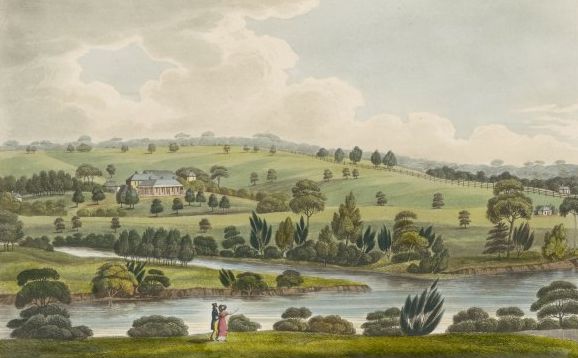
1788: 🌿 Ten Criminals Establish a Settlement Rose Hill (Parramatta)
On this day in 1788, a historic moment unfolded as a party of 10 criminals, accompanied by marines, embarked on a pioneering journey to establish a farming settlement at Rose Hill, later known as Parramatta.
These ten individuals with criminal backgrounds were pivotal in laying the foundation of a self-sufficient agricultural community in the early days of Australian colonization. 🏞️🌾
1789: 🏛️ The French State Seizes Church Property
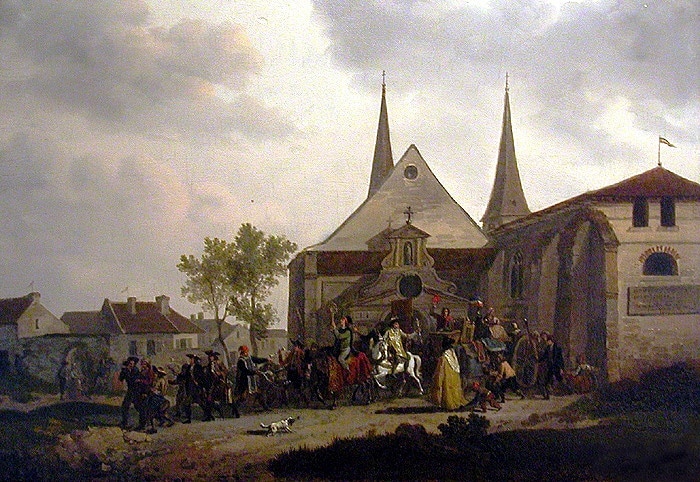
On this day in 1789, the French state took a momentous step by seizing/stealing the church’s property. This action was part of a series of events during the French Revolution to restructure the relationship between the state and the Catholic Church.
The state’s decision to confiscate church property was a pivotal moment in the French Revolution’s attempts to limit the power and influence of the church while redistributing its wealth.
This historical event involved the extensive confiscation of church assets, including land, buildings, religious artifacts, artworks, and valuable possessions, which were later sold to fund revolutionary initiatives. ⛪💰🏛️
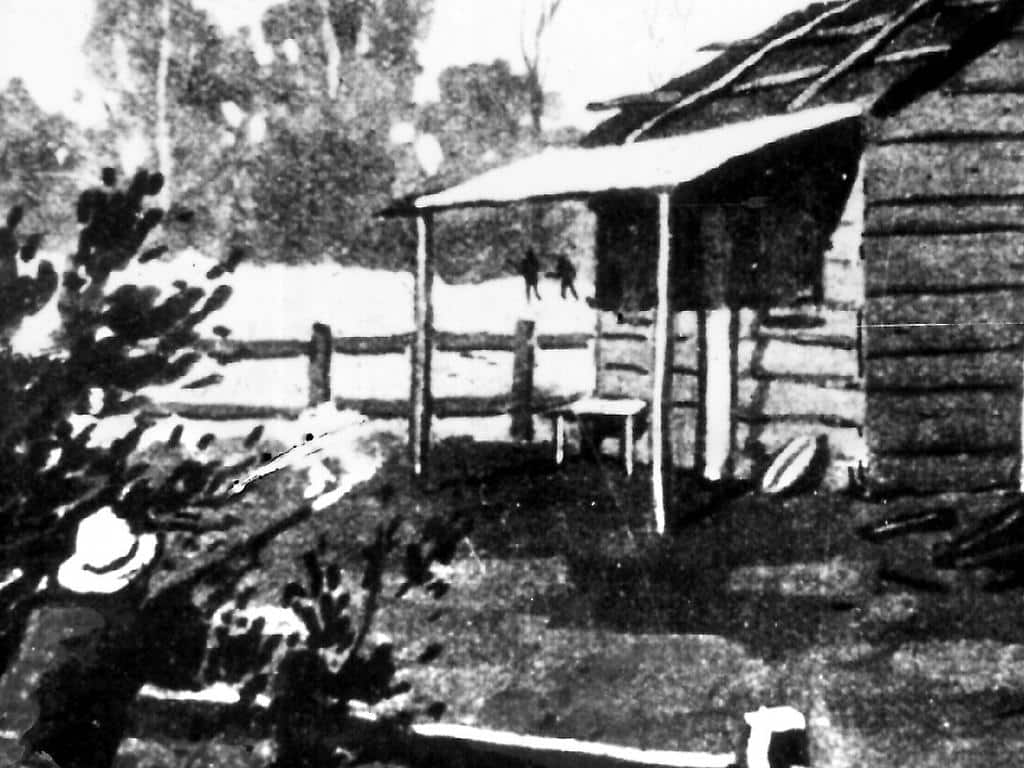
1830: 🌲 The Ribbon Gang in Bathurst – From Skinny Dipping to the Gallows
On this day in 1830, the notorious Ribbon Gang, led by Ralph Entwistle, faced the gallows at Bathurst. They met their fate for their involvement in a series of crimes that included murder, bushranging, and horse thieving.
The grim event marked the culmination of the Bathurst rebellion of 1830, an outbreak of bushranging near Bathurst in the British penal colony (now the Australian state) of New South Wales. This rebellion had its roots in various grievances, including the harsh conditions of penal servitude, economic hardship, and social injustices faced by convicts and ex-convicts.
Notably, the rebellion had an unusual beginning when, in November 1829, Entwistle and another assigned servant were charged with “causing an affront to the Governor” after a skinny-dipping incident in the Macquarie River. This incident, though seemingly minor, was part of the broader backdrop of discontent.
The rebels, led by Ralph Entwistle, became known as the Ribbon Gang, with Entwistle famously wearing “a profusion of white streamers about his head.” 🌲⚖️
1903: 🌊 Manly Council Lifts the “Crime” of Daylight Ocean Bathing
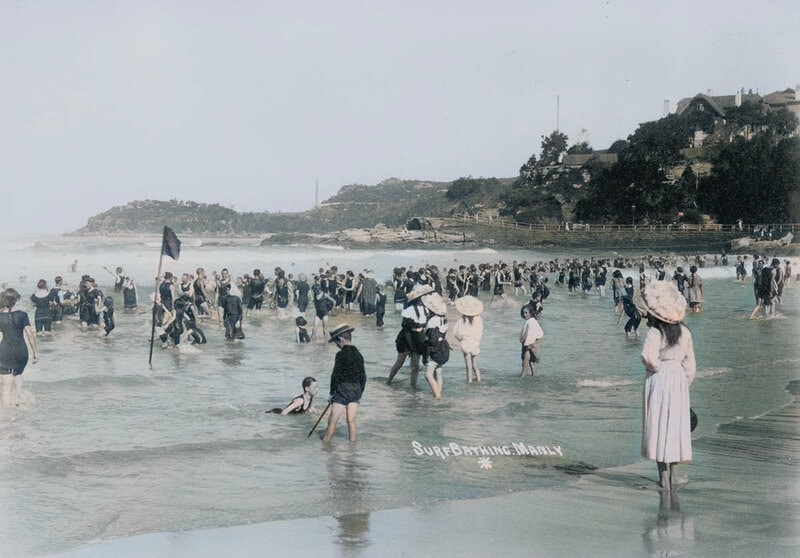
On this day in 1903, the Manly Council in Sydney, Australia, rescinded its by-law that deemed ocean bathing during daylight hours a crime.
During this era, women’s swimming costumes covering the body from neck to knee were considered indecent by the standards of the time, especially when mixed swimming occurred. In contrast, it was not uncommon for men to swim nude in some locations. As such, the Council had imposed limitations on when people could engage in the popular activity of ocean bathing. 🌊🏊♀️🏄♂️
1959: 📺 Quiz Show Fraud Unveiled by Beloved Contestant
On this day in 1959, a scandal shook the world of television as a beloved quiz show contestant, Charles Van Doren, made a shocking confession revealing that the show had been fixed, with answers provided in advance, leading to significant legal consequences for those responsible.
“21” was a quiz show that captivated audiences with its intense competition and charismatic contestants. Several individuals involved in orchestrating the cheating faced criminal charges, with some ultimately serving time in prison. 📺🧠🕒
1960: 📚 Landmark Verdict: “Lady Chatterley’s Lover” Declared Not Obscene
On this day in 1960, a British jury delivered a groundbreaking verdict, declaring D.H. Lawrence’s novel “Lady Chatterly’s Lover”(first published in 1928) not obscene.
The novel had been banned for obscenity in several countries owing to its explicit descriptions of sex, use of four-letter words, and its portrayal of a forbidden relationship between an upper-class woman and a working-class man.
1963: 🔫 Assassination of South Vietnamese President Ngo Dinh Diem
On this day in 1963, South Vietnamese Catholic President Ngo Dinh Diem was assassinated during a coup led by high-ranking military officers. Non-communist military leaders had become discontented with Diem’s rule, fueled by a combination of factors, including his authoritarian governance, corruption within his administration, lack of popular support and religious discrimination against the Buddhist majority, which led to instances of self-immolation protests.
The Vietnam War would continue to escalate, and the murder of the president did not lead to a resolution of the war. The war in Vietnam continued until 1975, when North Vietnamese forces captured Saigon, leading to the reunification of North and South Vietnam under communist control. 🔫📅
1984: ⚖️ Velma Barfield – The Death Row Granny’s Execution
On this day in 1984, Velma Barfield became the first woman to be executed in the United States since 1962.
Velma Barfield, often referred to as the “Death Row Granny,” was a serial killer convicted of poisoning multiple people, including her husband and her mother, with arsenic.
Her motives were often linked to financial gain, as she sought life insurance benefits from her victims. She would eventually confess to six murders in total and seven counts of writing bad cheques. ⚖️🔒
That’s all for the 2nd November in history. What obscenities will you encounter on this strange day of moral puritanism in history?
For True Crime History Tour dates and times, be sure to check out Dark Stories True Crime Tour soon!
Spread the word on your favourite platform!