1881: President James A. Garfield Dies 79 Days After an Assassin’s Bullet, Washington D.C.

James A. Garfield, the 20th president of the United States, was shot on July 2, 1881 at a Washington D.C. railway station by Charles Guiteau, a disgruntled and mentally unstable office seeker who had been refused a political appointment.

The wound itself was not immediately fatal, but the president lingered for 79 days as infection set in, worsened by doctors repeatedly probing the injury with unsterilised fingers and instruments in the years before antiseptic surgery was widely practised in America. Garfield died on September 19, 1881, becoming the second American president assassinated in office after Abraham Lincoln.

Guiteau stood trial and was hanged the following year, reportedly declaring at his execution that he had acted for the good of the nation and that his death would be a great loss to politics.
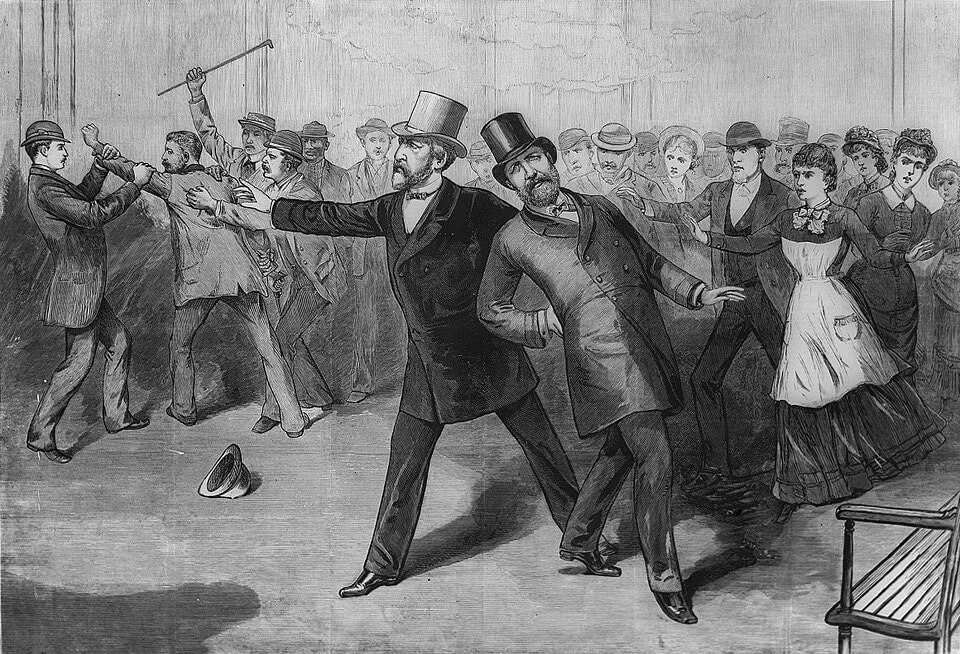

Engraving of the assassination of President Garfield

⬅ See all events from 19 September

Spread the word on your favourite platform!

1934: The Lindbergh Baby Kidnapping: Bruno Hauptmann Arrested Two Years After America’s Crime of the Century

In March 1932, twenty month old Charles Lindbergh Jr, son of aviator Charles Lindbergh, was taken from his nursery in Hopewell, New Jersey, via a homemade ladder left beneath the window. A ransom of 50,000 dollars in gold certificates was paid, but the child’s body was found in nearby woods weeks later.

On September 19, 1934, police arrested Bruno Richard Hauptmann, a German born carpenter, after one of the marked gold certificates surfaced at a petrol station and was traced back to him. Searchers found thousands of dollars of the ransom money hidden in his garage, and timber from the ladder was matched to a board missing from his attic floor.

Hauptmann was tried at Flemington, New Jersey, convicted of murder, and executed in the electric chair at Trenton State Prison in April 1936.

Hauptmann maintained his innocence to the end, reportedly refusing an offer to commute his sentence in exchange for a confession, and went to his death still denying any role in the kidnapping.

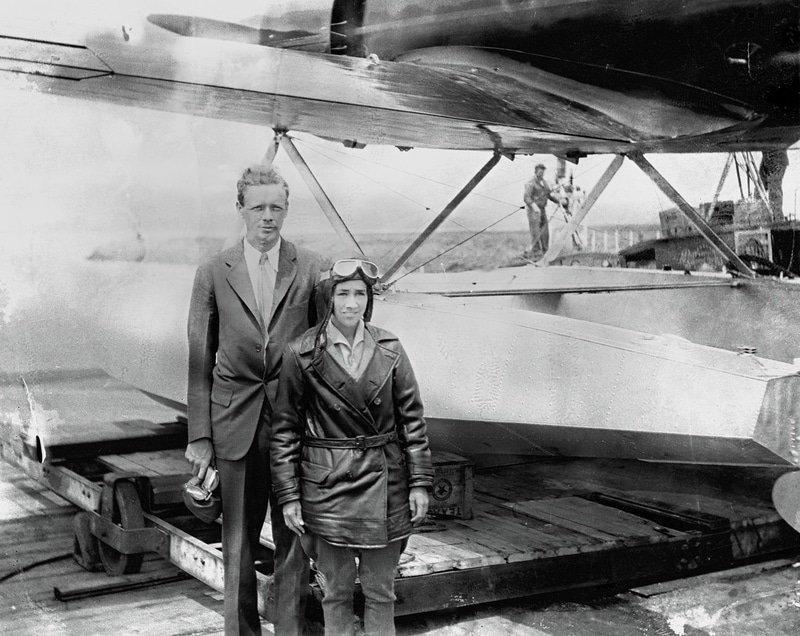
Charles A. Lindbergh , American Aviator. Famous American Aviator, Charles A. Lindbergh and wife, Anne Morrow Lindbergh at North Beach Airport ,Queens, NYC on June 8, 1931. HISTORIC PHOTO © PICTUREMAKERS LLC | ID 60332383 © Picturemakersllc | Dreamstime.com

⬅ See all events from 19 September

Spread the word on your favourite platform!

1811: No Reprieve: The Killers Confession Ignored as a Convicted Man Is Hanged Two Days Late

John Dunn was convicted at the Parramatta Court of Criminal Jurisdiction of murdering Mary Rowe, largely on the testimony of a sixteen year old accomplice, John Welch, whose evidence also saw Welch’s father, Thomas Welch, convicted as an accessory after the fact.

Dunn was due to hang at Parramatta two days beforehand, on Monday 16 September 1811, but as the execution was about to proceed the boy, John Welch, suddenly retracted everything he had sworn at trial. He declared Dunn innocent and claimed that he and his father were the true killers. The Acting Provost Marshal, unable to consult anyone and acting on what observers called motives of humanity, respited the hanging on the spot.

The reprieve lasted only two days. Dunn was finally executed at Parramatta on the Wednesday following, as near as possible to the site of the murder itself, amid what one witness described as far gloomier circumstances than the original sentence would have produced.

After he was cut down, Dunn’s body was delivered to the medical officer at Parramatta General Hospital, where it was dissected and anatomised before burial. The scaffold retraction left lingering public doubt over Dunn’s guilt, with contemporary accounts noting the boy’s claim that Dunn was innocent and that he and his father were the real perpetrators.

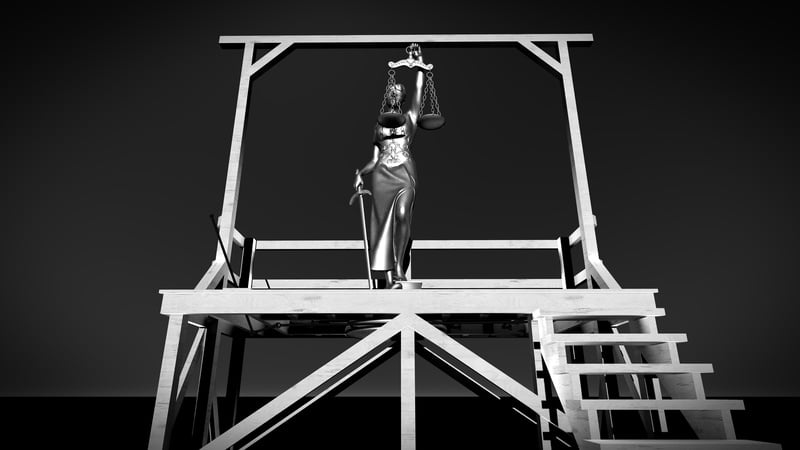
Lady Justice Themis statue on gallows with scales and sword

⬅ See all events from 18 September

Spread the word on your favourite platform!

1826: Nine Hanged in a Single Day at Hobart, All for Sheep Stealing and Burglary

On September 18, 1826, nine convicts went to the gallows together in Hobart under Lieutenant-Governor George Arthur’s ruthless enforcement of Britain’s Bloody Code, the doctrine that made property crime a capital offence equal to murder. Not one of the nine had killed anyone: George Farquharson, Robert Cable, Thomas Savell, John Davis and John Cruitt were hanged for sheep stealing, John Penson, Timothy Swinscow and William Wickens for burglary, and James Rowles for theft.

The hangings were part of the largest cluster of executions recorded in Van Diemen’s Land that year, twenty three people put to death over a single fortnight in mid September 1826. Earlier hangings that month, on September 13, had targeted actual killers; those on September 15 and 18 were reserved entirely for non-violent property offenders, a deliberate signal from Arthur to a colony economically dependent on settler flocks and stores.

Sheep stealing in particular was treated by the colonial administration as an existential threat to the fledgling economy of the penal settlement, and the September 18 executions were designed as a public deterrent to convicts tempted to raid the herds and homes of free settlers.

1826 in the Hobart Colony

⬅ See all events from 18 September

Spread the word on your favourite platform!
On This Day in True Crime History

Subscribe to Dark Stories

True crime stories, dark history and tour news, straight to your inbox.