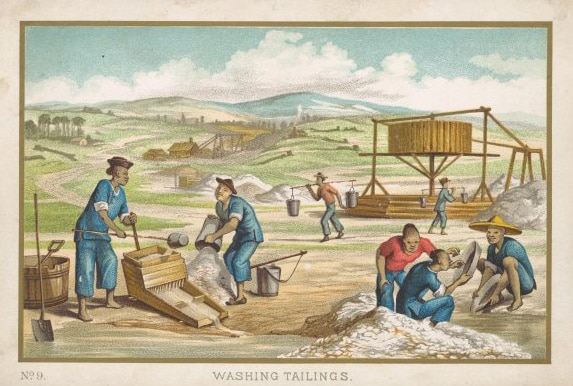
In June 1875, a Chinese miner was found dead at a hut near the goldfields of Vaughan, central Victoria. An Gaa, who shared the hut with the deceased, was found calmly eating rice by candlelight when Constable King and a Chinese interpreter arrived to investigate.
The scene was disturbing: the body lay on its side, a used opium pipe in the hand, blood soaked through the straw bunk and into the wood beneath, and a wet towel stained with blood and water nearby. An Gaa claimed to know nothing of how his housemate had died.
Tried before Justice Sir Redmond Barry in July 1875, An Gaa was convicted of murder. He was hanged at Melbourne Gaol on 30 August 1875.
After five hours of delivering his reasons in a judge-alone trial, Justice Ian Harrison found former rugby league footballer Chris Dawson guilty of murdering his wife, Lynette Dawson, who vanished from their Bayview home near Sydney on or about 8 January 1982. Lynette had been planning to meet her mother the following day; she never arrived. Chris did not report her missing for six weeks, and two days after her disappearance, a teenage student he had groomed moved permanently into the family home.
Two coronial inquests had already concluded Lynette was murdered, but prosecution was twice refused due to insufficient evidence. A podcast revival of the case and sustained public pressure finally brought Dawson to trial. Justice Harrison rejected all alleged sightings of Lynette as wholly unreliable and found a compelling body of evidence that she had not abandoned her family. Dawson was sentenced to 24 years in prison, with a non-parole period of 18 years.
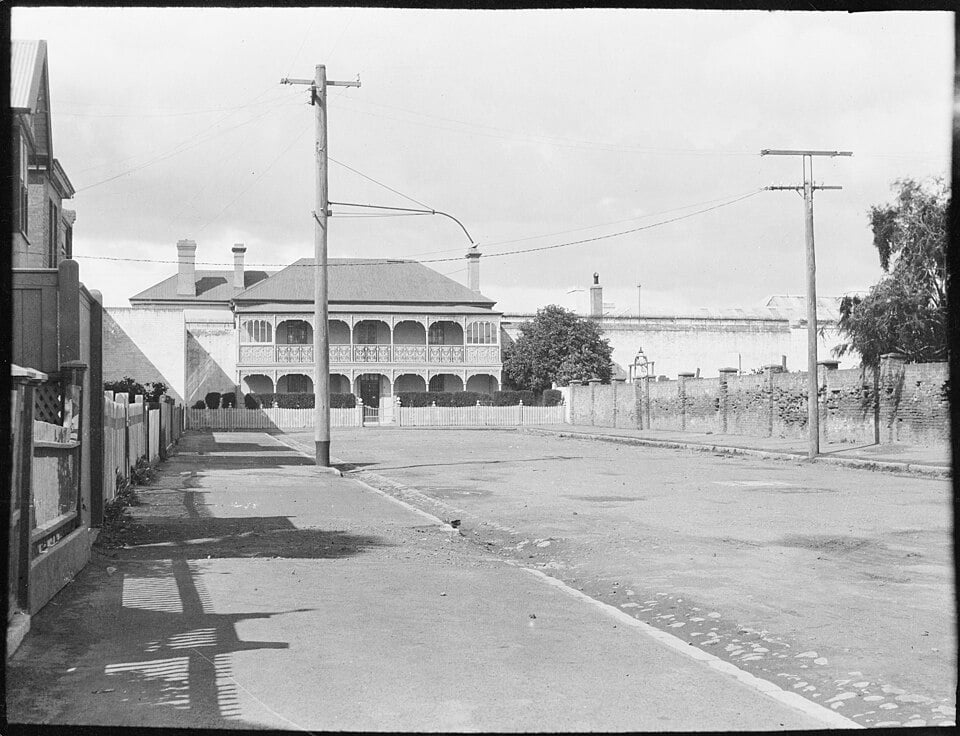
On 29 August 1843, notorious bushranger Martin Cash was captured in Hobart after venturing into the town in search of his former partner, Bessie, who had taken up with another man. Cash, a wanted escapee with a substantial government reward on his head, was spotted by two plain-clothes constables in Harrington Street, close to Bessie’s address and only about 100 yards from the watch-house. He fled through the streets, firing at his pursuers, and in attempting to reach the Domain mistakenly ran into a dead end near the Campbell Street Gaol. Forced to turn back, he lost ground; the spot later became known as Martin’s Mistake. Near the Old Commodore Inn, Constable Peter Winstanley tried to seize Cash and was shot at close range. Cash was eventually wrestled to the ground and captured after a violent struggle. Winstanley died two days later, on 31 August. Cash was convicted of his murder and sentenced to death, but received a last-minute reprieve and was transported for life to Norfolk Island. Cash ultimately survived his years as a bushranger and convict, dying in Tasmania in 1877. He also left behind his own account of his life, dictated to James Lester Burke and published in Hobart in 1870 as The Adventures of Martin Cash, one of the best-known first-person accounts of Australian bushranging and the convict era.
Residence of the Governor of the Hobart Gaol, at the end of Melville Street, known colloquially as Martin’s Mistake.
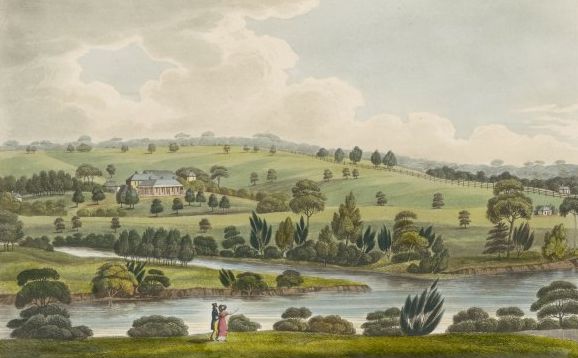
Stockmen, Richard Broughton and John Cheeseman, conspired to steal two head of cattle from their employer’s flock at Hawkesbury in April 1808.
Cheeseman paid off Broughton for the two heads of cattle, which were then driven through Parramatta and on to a farm near the Brickfields in Sydney. A king’s evidence witness revealed he had overheard the deal being struck and later spotted the cattle in a herd at the Nepean River.
Broughton and Cheeseman were tried, found guilty and hanged in Sydney. A third accused, Joseph Tilson, was found to have been an unwitting hired drover and escaped the same fate.