The Christmas Day Tragedy of 1893

On Christmas Eve 1893, a group of Christmas carollers took to the streets on a borrowed horse carriage. It was lent to them by popular, 33-year-old and well-to-do local businessman Henry Oxley. In the small hours of Christmas morning, they returned the carriage to Mr Oxley’s Sturt St, Adelaide home. The good cheer was apparent on all sides as the group chatted with Mr Oxley in his front yard before the merrymakers left around 5 am in the morning.

The Oxley family led an enviable life. They were very active in church matters and had received a personally signed letter from the local Anglican Churchman expressing the hope that they would provide similar labour in the future. Mr. and Mrs. Oxley had been married for 11 years and were parents to 3 children (a boy and two girls). Their bank account held a comfortable amount of savings to the tune of £1300 (approx. $200,000 in today’s currency). Also, Mr. Oxley had just finalized the purchase of a new fruitier business. The future looked bright for the Oxleys. So, as soon as the carollers departed, Mr. Oxley began implementing his Christmas plans.

It would be only a short while later, at 7:30 am that same morning, when the groom for the horses arrived at the Oxley’s backyard. Finding no one about it, he called out to draw the household’s attention. The only reply was an ominous, deathly silence. This was Christmas morning in a household with three young children, and it was expected that the excitement of the day – with the corresponding shrieks of delight – should be reaching a crescendo.

Christmas Morning

His suspicions aroused, and the groom gained entrance to the house and entered the first bedroom. “Are you going to get up today?” he asked. The boy on the bed did not reply. It was a terrible sight, the dead little Oxley boy lying on his right side, a vicious gash to the left side of his skull, surrounded by walls and floors that were covered with blood.

Truly disturbed now, the groom checked the adjoining room, which contained a large bed occupied by Mr. Oxley and his wife. From the angelic expression on her face, it appeared that Mrs Oxley had died in her sleep and would slumber eternally evermore. A horrible gash had been inflicted on her skull, and one of her large arteries had been cut. Mrs. Oxley received the fatal blow from a tomahawk that lay nearby, covered in her blood. 

Mr. Oxley himself was lying next to his wife on the bed with a razor tightly clasped in his right hand; on his throat were seen the results of its work. Within that same room, on another bed, lay the two little Oxley girls. Both had awful wounds to their heads and yet they were still breathing.

It was hard to believe that only a few short hours previous, in that same neighbourhood, the Christmas carollers had sung their lilting tunes, but now there was a scene of tragedy and desperation as the Oxley daughters were rushed to the hospital. Grave fears were held for their recovery, but at least they had a chance, whereas the remainder of the unfortunate family was beyond any earthly help. Sadly, the poor young girls died later that morning.

It was a shocking Christmas Day and one that would be long remembered in the local community. It didn’t take long for that one-word question to form on the lips of everyone in the community – why?

Broken Christmas

A long-time friend of the Oxleys stated that she had never met a happier family and that Oxley was the best of fathers who idolized his children. However, she went on to relate the contents of a more ominous conversation with Mr Oxley from a few days earlier. Aside from complaining about the heat, he also stated, “This day a year ago, I was the happiest man in the world, and this month, I’m the poorest man in the world.”

Mrs. Oxley also told her in secret that her husband was ill and that he was carrying a massive weight on his shoulders that he could not bear. He could not shake off his despondency and kept repeating that he had been deceived and was disappointed. He told his brother-in-law, “The fact of the matter is I have been swindled from beginning to end. I am a ruined man”.

Only a few days after starting the new fruiterer business – an event that should have been the next chapter of a mostly successful life, Mr Oxley’s manner had changed dramatically and for the worse. What could have gone wrong?

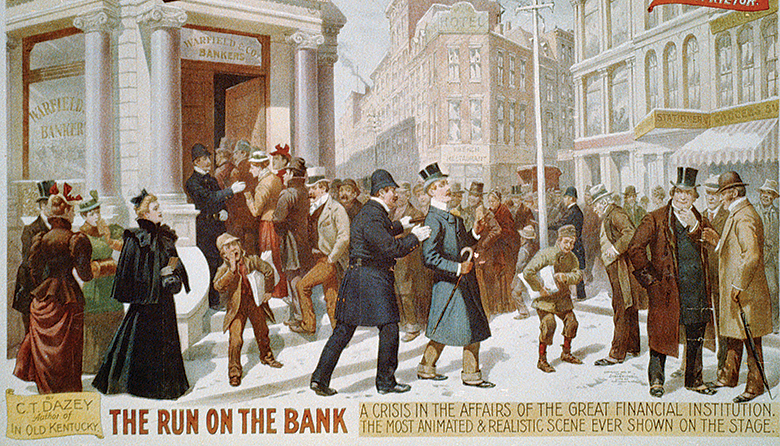
In 1893, Australia was suffering from a financial crisis. Many commercial banks collapsed owing to the bursting of a speculative boom in the property market. Does it sound familiar to anyone? On this occasion, the banks suspended trading to avoid customer-led bank runs, which would lead to bankruptcy. This caused significant financial hardship to many people as they could not withdraw their money. Mr Oxley had been particularly unfortunate because he had deposited his entire £1300 fortune into the Commercial Bank one week before it suspended trading.
His last hope came in the purchase of the fruiterer. He spent his final cash reserves on a horse carriage, fittings, goodwill, and the former owner’s services for a full fortnight to introduce Mr Oxley to existing customers.

Mr. Oxley finalized possession of the business a week before Christmas, but it did not take long for him to realize his error. The business returns proved to be so disappointingly small that he was driven into the depths of despair. The little store, his last hope, the fruits of many years of hard work and self-denial, was a failure.

Nominally a rich man, he was, in practice, penniless and unable to support his family. Mr. Oxley himself believed that he was ruined beyond any hope of recovery. Bereft of the means of keeping his family in the comfort in which he desired they should enjoy, his mind became unhinged. 

The verdict of the Christmas Day incident was that Harry Oxley had carried out the murders of his wife, son, and daughters before committing suicide during a fit of insanity.

The banking crisis of 1893 resulted in the ruination of many people. It caused incalculable pain for all impacted, but in the case of the Oxleys, it led to their total destruction at a time when they seemed to have so much to celebrate.  Although a joyous time of year, a story such as the Oxley’s serves to highlight that many persevere through life, battling their own dark stories and demons. For them, the festive season may not be experienced as joyously as one would hope.

But on a far brighter, more positive note, allow me to take this moment to wish you, the reader, a very Merry Christmas and a hopeful, prosperous and happy new year from everyone in the Dark Stories team.

All of our tours will continue to operate over the Christmas and New Year period. If we haven’t seen you on one of them yet, we, with vast amounts of bias, believe true crime tours are the best walking tours around! Join us if you can:-

Maitland’s True Crime Tour

Newcastle’s True Crime Tour

Brisbane’s True Crime Tour

Sydney’s Razor Gangs True Crime Tour

Sydney’s True Crime Tour

Merry Christmas and a Happy New Year!

Discuss On Substack

Spread the word on your favourite platform!

The Friday 13th Killer

It was a typical day, just like any other – Friday the 13th. Perhaps it was just a horrible coincidence that the following events were to occur on such an inauspicious day.

On most Fridays, the 13th comes and goes, but in the more innocent times of 1973, on this specific Friday the 13th, a monster was born. A crime without any seeming motivation is now recalled as one of the most shocking crimes that the nation had ever witnessed.

The man forever afterward would come to be known by several names; The Real Friday the 13th Killer and sometimes as The Monster of Worcester. Before that, he operated under the much more familiar moniker of David McGreavy.

In 1973, David was just 20 years of age, and things were not going too well. He had suffered a string of job losses, a broken-off engagement, and found that he was no longer welcome to live with his parents.

He needed assistance, and it was his friend Clive that came to his rescue. Clive invited McGreavy to live with his family, which included his heavily pregnant wife Elsie and their two other children, 3-year-old Paul and 1-year-old Dawn.

Friday the 13th

McGreavy paid the weekly rent and sometimes cooked Sunday roast dinners. And loved the children, frequently playing with them, and generally acted like a father. On occasions, he was even interested and involved in discussions about child discipline. It seemed a happy arrangement that worked for everyone.

Elsie soon gave birth to her third child, Samantha, and shortly afterwards returned to the workforce. Both couples were working and earning money, and the need for McGreavy to perform regular babysitting duties increased.

On this Friday, the 13th in 1973, McGreavy had been drinking heavily that evening at the local pub and had quickly downed 5-7 pints of beer and had even gotten himself involved in a minor flare-up. Clive collected him from the pub and drove him back home to act as a babysitter while he went to pick up his wife from work.

Between the timeframe of 10:15 pm and 11:15 pm, McGreavy became disturbed and aggravated by the constant crying of one of the children, and something about the baby’s non-stop crying caused McGreavy to snap. The man who loved children vanished, and in his place stood the Monster of Worcester.

Young Family

Clive and Elsie returned home late that evening only to discover that police were already present on the scene, with no sign of McGreavy. The couple was taken to the local police station and informed of the fate of their children.

All three children met their end in three different ways. 9-month-old Samantha was the first victim and succumbed to a skull fracture, 4-year-old Paul was strangled with wire, and two-year-old Dawn had her throat slit.

As if the murders alone had not been tragic enough, what was to follow was even more baffling. McGreavy would desecrate the bodies. Firstly, he mutilated the bodies via the use of a pick-axe, and in the final act of madness, he impaled the children on the wrought iron fence of a neighbour’s house.

It was an act that reverberated around the country, and the neighbourhood with the innocuous-sounding name of Rainbow Hill, Worcester, would never be the same.

Arrested

McGreavy left the house, and the police found him walking the streets in the early hours of the next morning. His initial denials did not last long, and he began answering questions, confessing that “It was me, but it wasn’t me. All I could hear was kids, kids, f… kids”.

The Real Friday the 13th Killer would go on to be sentenced to multiple life terms, with a minimum imprisonment of 20 years, and had to spend most of his time behind bars in protective custody. The earliest he could be released was 1993.

Repeated parole requests had been turned down, but after 46 years in custody, McGreavy’s release was finally approved and took effect in June 2019. According to reports, he is a much-changed man who now accepts responsibility for all he has done. Nevertheless, the terms of his release mean he will be subject to exclusion zones for the rest of his days, and his acts on Friday the 13th ensure that he will go down in history for all the wrong reasons.

Stay tuned for further On This Day in Crime series articles coming soon. In the meantime, on this Friday, the 13th, the Dark Stories True Crime Walking Tours will naturally be running throughout Sydney, Newcastle, Brisbane, and Maitland.  Stay safe today and be sure to avoid black cats, don’t walk under ladders and be careful not to break any mirrors!

Discuss On Substack

Spread the word on your favourite platform!

How to Recruit a Hangman

Every country has had one, but rarely does anyone stop to consider how a person gets hired for the position of national hangman. If you ever happen to come on a Dark Stories True Crime Walking Tour in Sydney, or elsewhere for that matter, there’s a reasonably high chance that you will hear a story about a hanging.

But did you ever imagine yourself, back in your school days, dreaming of becoming the head executioner in your state? How would your career advisor help you reach that goal? What electives could you take? What university should you attend? Then, after graduation, where would you apply? Is there some hangman recruitment agency to whom you could email your resume? Or conversely, what if you were looking to hire someone for the job; where would you even begin to search?

Governor Phillip faced this exact problem at the very beginning of Sydney’s fledgling colony life. Precisely one month and one day after the First Fleet arrived in Australia, there was an execution – the first in Australian history (we’ll even walk past the spot as we meander through on one of our walking tours in Sydney). However, the hangman was a last-minute recruit and not a permanent appointee; it was a one-off contract.

Hangman

The position needed permanent filling, but no one wanted the job. The officers despised the role of hangman and refused to do it, and the convicts saw the position as the lowest of the low. So what was the Governor to do? Discipline at this early stage of the colony’s life could have easily broken down, so he needed to find an executioner, and he needed to do it quickly to ensure that he wouldn’t lose face or control.

Then, in late February 1788, Governor Phillip found the solution to his problem.

The worst crime one could commit in the new colony concerned the government stores of food. The settlers had no way of knowing if or when resupplies might arrive or whether the crops they were planting would even survive (spoiler alert, they didn’t). They made it all around the world only to be immediately put on rations. Therefore, stealing food from government stores was considered an offence worse than murder, and such crimes demanded severe repercussions. So when four convicts were found guilty of theft from the government stores, they were condemned to die that very same day; justice was swift and severe.

But Governor Phillip still didn’t have a hangman! Nevertheless, the execution ritual began, and the four men advanced under guard to the hanging tree. The first man was granted a reprieve and given lashes instead. Then, the second man, James Freeman, was marched to the tree, and the hanging rope fastened around his neck. At the moment James expected to be launched into eternity, he received the offer of a full pardon, but only on the condition that he agree to take on the duty of executioner for as long as he remained in the country.

governor_arthur_phillip

James Freeman paused for a few moments, mustered his dignity, and agreed to accept the role. He was given a full pardon on condition of taking the position for the remainder of his original 7-year sentence and became a “free man” from that moment. Governor Phillip’s strategy was successful, and he granted the remaining two men a reprieve, meaning James Freeman could take some time to get used to his new job. 

On May 2nd, 1788, James Freeman executed his first man without any complaint from the unwilling customer. His first performance was a killer, and Governor Phillip’s innovative new HR Recruitment strategy had proven to be successful.

Discuss On Substack

Spread the word on your favourite platform!

Mother Hogan’s Brothel Guide

Crime history in Australia has a tradition of strong, dominating women ruling over small enclaves of inner-city a brothel and other vice-related activities.

Characters ranging from the famous Molly Morgan of Maitland to Sydneys Razor Gangs War with the infamous arch-rivals Kate Leigh and Tilly Devine, yet Brisbane also had its own high priestess of the night. She plied her trade in the heart of old Brisbane town from the 1870s up until her passing in what was colloquially known as Mother Hogan’s Brothel.

Madam

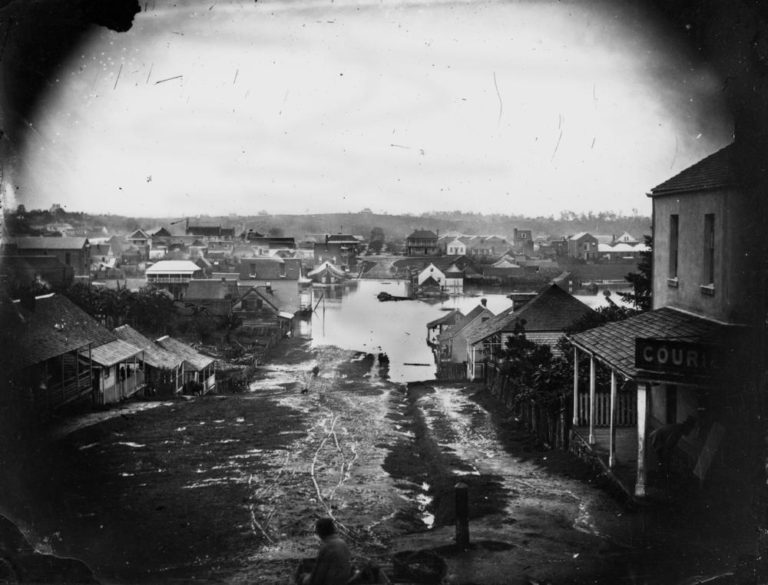
Throughout the 1800s, an area of the Brisbane CBD named Frog Hollow – an apt name as the swampland played host to a large population of frogs – quickly gained a reputation as the seediest part of town. Because the district swiftly flooded during storms, subsequent rents were the cheapest available in the city, leading to it becoming the first red-light district in Brisbane.

Numerous brothels sprung up in this part of town, and by far, the most ill-famed of them all was Mother Hogan’s brothel – an unofficial name that you wouldn’t find in any directory listing. It opened in the 1870s and was around for at least 50-60 years, even surviving the eventual passing of Mother Hogan herself. So, who was Mother Hogan?

As far back as the 1860s, she was a bright young thing going by the name of Mary and living in the town of Wagga. She was once pure and innocent; she once had a fond mother who watched over her and protected her from harm. Yet for 30 years of her life, she conducted one of the most immoral houses to be found on the face of the Australian Continent. Her house was almost as well known as the House of Parliament and had higher attendance than local churches and cathedrals.

Originally in her hometown of Wagga, she completed the pact of marriage, and for a time, her virtuous star shone in a pure blue sky. Then along came Mr. John Hogan – and introduced her to the world of infamy and vice of the most disgraceful kind, and she liked it.

TILLY AND KATE in 1948_color

The couple soon became inseparable, arrived in Brisbane together, and they went into business in the Frog Hollow district of the Brisbane CBD. John used to bring along the young lads of the upper-class villas, and Mary’s job was to trot out the wine, woman, and song.

In the year 1889, she became enamoured with an actor from the theatre, and she escaped her seemingly happy life and bolted with him to London, taking with her about £3000. As long as the cash lasted, she revelled in sin and luxury, but as soon as the money ran out, the actor departed and abandoned Mary to her own devices in the grimy streets of London. She was forced to return to her profession in Petticoat Lane to earn some good old-fashioned English coin.

For some inexplicable reasons, John Hogan felt lonely without his Mary and sent her the money that brought her back to Brisbane and once more set her up as the Queen of Mother Hogan’s Brothel.

It was rumoured to be an evil place where one would blush to tell about the things that happened there. Only a few men could describe the racy incidents that occurred from time to time. During its existence, some thousands of girls careered to ruin within its portals, and a number of men were said to become physical and moral wrecks through its agency.

For all her seeming faults, Mother Hogan was considered an honest woman, and no man was ever robbed of a penny when staying in the Hogan Household. Men were beaten and plundered in the Frog Hollow district, but dignity and honour made it difficult for these men to report these crimes lest their reputations suffer.

Mother Hogan’s end came in March 1904 when, at last, she went to meet her God, and as one person put it at the time – hers was a life wasted, having chosen the oldest profession in the world and lived a life of sin and shame.

The funeral itself was a gorgeous affair, with the hearse, the coffin, and the mourning coaches being up to the mark required for a Governor-General.

No local priest would attend the burial, so the services of a missionary man had to be recruited. There were girls in the cortege shedding tears, and a stranger would have thought the body of some pure, virtuous woman was undergoing sanctification rituals on her deposit into the earth. Many pundits thought only that here was a woman who fled with another man from her husband, then started a brothel and lived on its proceeds to the end.

Frog Hollow - Brisbane CBD

Mother Hogan’s brothel survived her passing and continued to remain in business and, according to locals, remained one of the worst examples of immorality to be found on the face of God’s earth – and was still in vigorous operation through to the 1920s and beyond.

A more in-depth look into Australia’s true criminal history reveals numerous examples to prove that the lucky country has more than had its fair share of tough female crime bosses in the days when it was thought to be impossible.

For more stories like this, then join the Dark Stories True Crime Tour in your town. The Brisbane True Crime Tour incorporates many parts of the old town. For those in the Hunter Valley, the Maitland True Crime Tour will give a good account of its uniquely dark history and Molly Morgan’s incredible influence on the town. For more information about the Razor Gang Wars and the rivalry between Tilly Devine and Kate Leigh, you will want to book your ticket on the Sydney Razor Gangs True Crime Tour.

Discuss On Substack

Spread the word on your favourite platform!
On This Day in True Crime History

Subscribe to Dark Stories

True crime stories, dark history and tour news, straight to your inbox.