1897: “My Poor Boy, My Charlie”: A Mother’s Anguished Cry Before Her Son Was Hanged for Murder

Charles John Hall murdered his wife Minnie at Eaglehawk, near Bendigo, on 11 February 1897. The crime shocked a district where Hall had been well known for very different reasons. A talented and athletic footballer nicknamed “John Bull,” he had been, according to one contemporary newspaper, “the idol of the hour” only a year earlier. He was convicted of Minnie’s murder and sentenced to death at Bendigo Gaol on 13 September 1897.

The night before, his parents were allowed a final visit, a scene warders later described as worse to witness than the hanging itself. His mother collapsed, shrieking through the gaol, “My poor boy, my Charlie,” before being carried to a cab and put to bed at home. Hall himself broke down during the visit. On the morning of his execution, he walked firmly to the scaffold and looked steadily at the hangman as the noose was fixed. Asked for his final words, Hall replied quietly, “I commit my soul to God.”

Outside the gaol a large crowd gathered, mostly women and children, with harsh feeling directed at Hall but deep sympathy for his grieving parents.
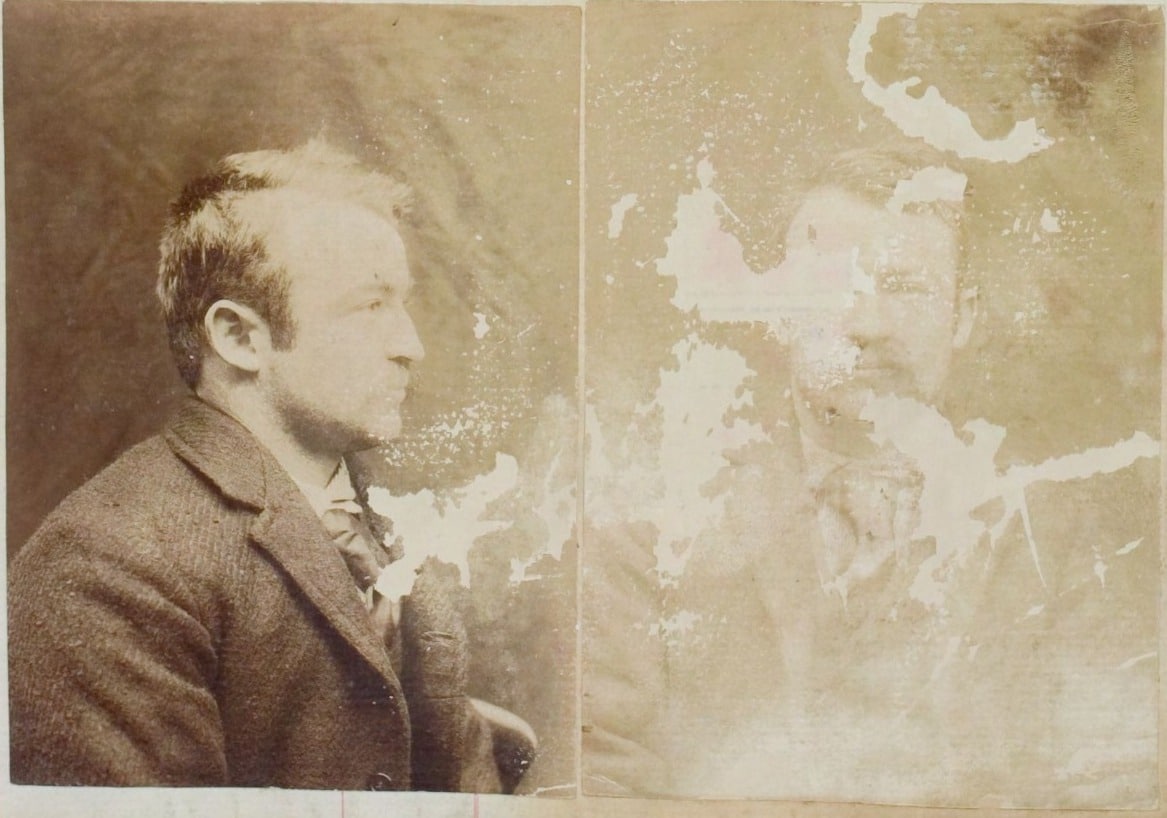

Charles John Hall, prisoner no. 27965, 1897. Public Record Office Victoria, VPRS 515/P0000, Central Register of Male Prisoners, Volume 51, p. 208. Out of copyright.

⬅ See all events from 13 September

Spread the word on your favourite platform!

1865: He Meant No Harm, Said the Man He Stabbed: Thomas Bushell Hanged at Fremantle

Thomas Bushell, an Imperial convict working in the bake-house at the Convict Establishment in Fremantle, took a 12-inch dough-knife from the bake-house on Sunday 9 July 1865. During the muster of prisoners for church service on C and D landing, he struck warder George Hollis on the head, then stabbed him in the back as Hollis passed, prompting Hollis to cry out, “Secure Bushell, for he has stabbed me.”

At his trial before Chief Justice Burt on 6 September 1865, the wounded warder himself testified that he did not believe Bushell had meant to kill him. The jury convicted him anyway of maliciously wounding with intent to murder, and he was sentenced to death and hanged just days after the verdict.

Bread Knife
Bread Knife

⬅ See all events from 12 September

Spread the word on your favourite platform!

1721: Executed at Twenty: The Soldier Who Claimed He Was Defending His Honour

William Casey, a young Guardsman only about twenty years old, was hanged in London on 11 September 1721 after being convicted of robbing a man named John Stone in a city park. Casey never accepted the charge; he insisted the confrontation had nothing to do with theft and everything to do with Stone making indecent advances toward him, a claim that, if true, cast the entire prosecution in a very different light.

At the gallows Casey did not simply protest verbally. He left behind a written statement formally proclaiming his innocence of the robbery, a deliberate act by a condemned soldier determined that his version of events would outlive him.

“He maintained until death that the confrontation arose because Stone had made indecent advances toward him” and went to his execution still denying the crime for which he was hanged.

William Casey: The Soldier Accused of Robbery in the Park

⬅ See all events from 11 September

Spread the word on your favourite platform!

1721: The Housebreaker Who Could Not Stay Away: Hanged at Tyburn for Returning from Transportation

John Meff was a housebreaker who had already cheated the gallows once, having been convicted and then transported to the colonies rather than executed. But transportation was meant to be permanent exile, and Meff broke its terms by making his way back to England, a crime that under the law of the day carried the same penalty as the original offence: death.

He was arrested, tried, and sentenced to hang for illegally returning from transportation. On 11 September 1721 he was taken to Tyburn and executed at the age of forty, going to the gallows alongside James Redding, who had been condemned separately for robbery.

For Meff the return to Tyburn marked the end of a second chance he could not keep: having once escaped the noose through transportation, the simple act of coming home proved fatal.

Life of John Meff_featured

⬅ See all events from 11 September

Spread the word on your favourite platform!
On This Day in True Crime History

Subscribe to Dark Stories

True crime stories, dark history and tour news, straight to your inbox.