1692: Pressed to Death: the Only Person in America Executed by Stone for Refusing to Plead

Giles Corey, an 81 year old farmer in Salem, Massachusetts, refused to enter a plea when charged with witchcraft during the hysteria of 1692. By standing mute he prevented a trial from proceeding under the law of the time, which instead prescribed peine forte et dure: the accused was stretched on the ground and heavy stones piled onto his chest to force a plea.

Corey endured the ordeal for two days without submitting. Sheriff’s men reportedly used a stick to push his tongue back into his mouth when it protruded under the weight. His last words are said to have been a simple demand for more weight: “more weight”.

By refusing to plead, Corey ensured he was never convicted, which meant his property could not be seized by the colony, an outcome believed to be his deliberate motive in choosing this brutal death over a trial. He remains the only person in American history known to have been executed by pressing.
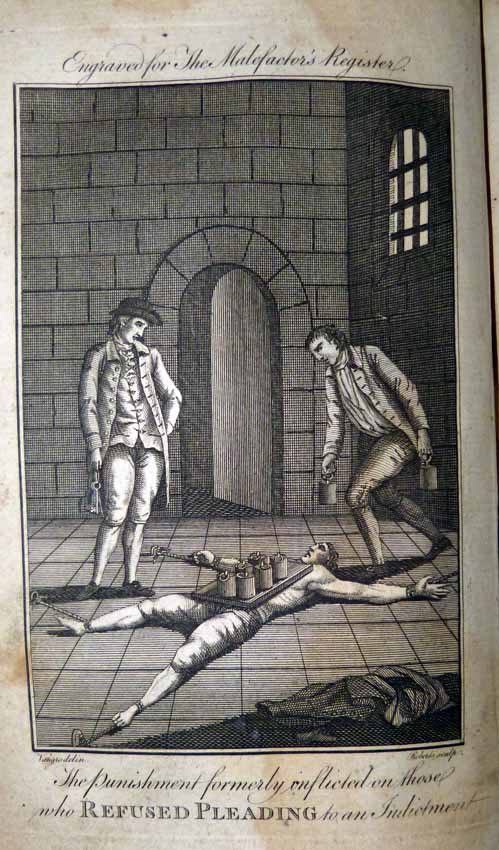

Peine forte et dure - Punishment for refusing to plead in court.
Peine forte et dure – Punishment for refusing to plead in court.

⬅ See all events from 19 September

Spread the word on your favourite platform!

1792: Sydney’s First Grave: The Convict Buried Beneath What Is Now the Town Hall

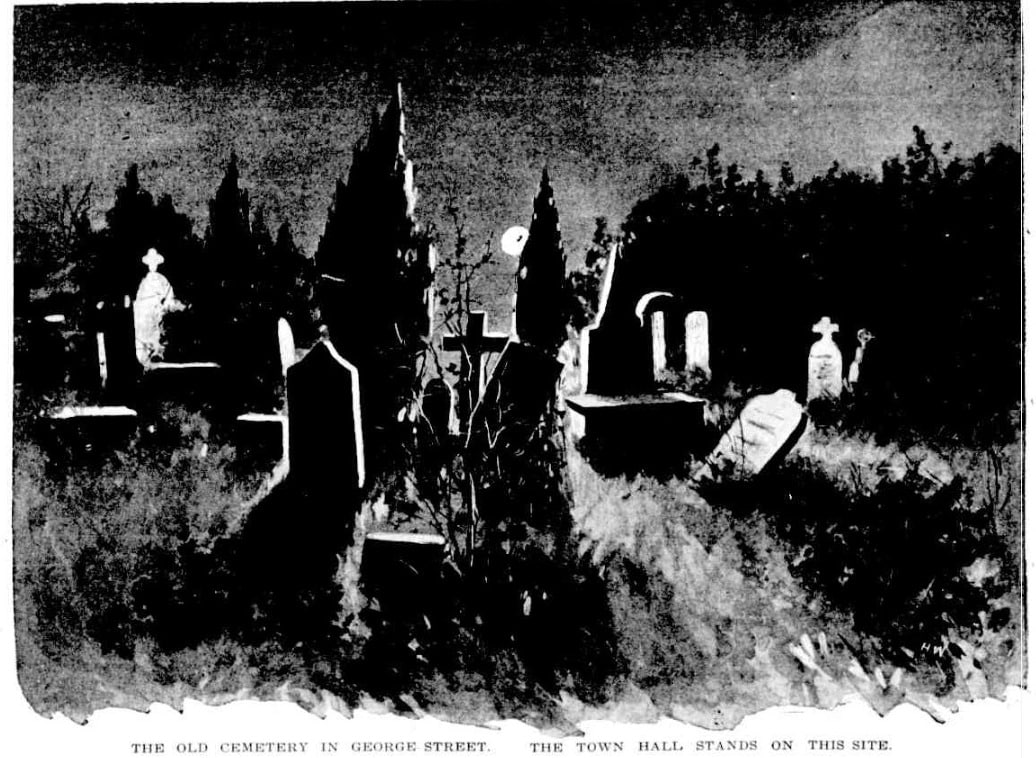
When Governor Phillip and the Reverend Richard Johnson chose a quiet spot on the outskirts of town for a burial ground in September 1792, the first person laid to rest there is believed to have been a convict named Michael Dunn. The site, later known as the Old Sydney Burial Ground or the George Street Burial Ground, now lies beneath Sydney Town Hall.

For 27 years the cemetery operated with almost no formal oversight: it was never gazetted, no trustees were appointed and no burial register or plan was kept. The Reverend William Cowper later admitted that “the dead of all communions were interred indiscriminately”, though social distinctions persisted among the military, with non-commissioned officers of different regiments buried in separate corners of the ground.

Once the cemetery closed in 1820 and burials moved to Brickfield Hill, now the site of Central railway station, the old ground fell into grim disrepair. Headstones were vandalised, pigs, goats and horses wandered among open graves, and grave robbers were blamed for prising up leaden coffins. A committee report even noted men using the abandoned cemetery to relieve themselves, and in hot weather the stench became unbearable.

Despite public opposition to disturbing the dead, the City of Sydney eventually cleared the site to build its Town Hall, ending nearly a century of neglect over the city’s first burial ground.

Old Sydney burial ground historic cemetery illustration

⬅ See all events from 8 September

Spread the word on your favourite platform!

1861: Hanged Where They Killed: Two Men Executed for the Murder of a Shepherd in Colonial South Australia

In September 1861, two men were tried and executed for the murder of a shepherd, Theodore Gustavus Burggoist, near Fowler’s Bay in South Australia.

Before their execution, the two men acknowledged their guilt. Officials erected the gallows on the exact spot where the killing had taken place, guided there by the two men themselves, who calmly pointed out the bush where the shepherd had been sitting, the place where he was attacked as he tried to flee, and the spot where he later died of his wound.

Members of the community gathered to witness the execution, alongside the local station owner, the ship’s captain who had carried the official party, and several station hands. When it came time to take the bodies down, onlookers fled in evident terror, refusing to help remove them. The two men were buried at the site of the execution, laid to rest beneath the very ground where the shepherd had died.

Shepherd at work.
Shepherd at work.

⬅ See all events from 7 September

Spread the word on your favourite platform!

1830: A Daring Escape and a Public Hanging in Colonial New South Wales

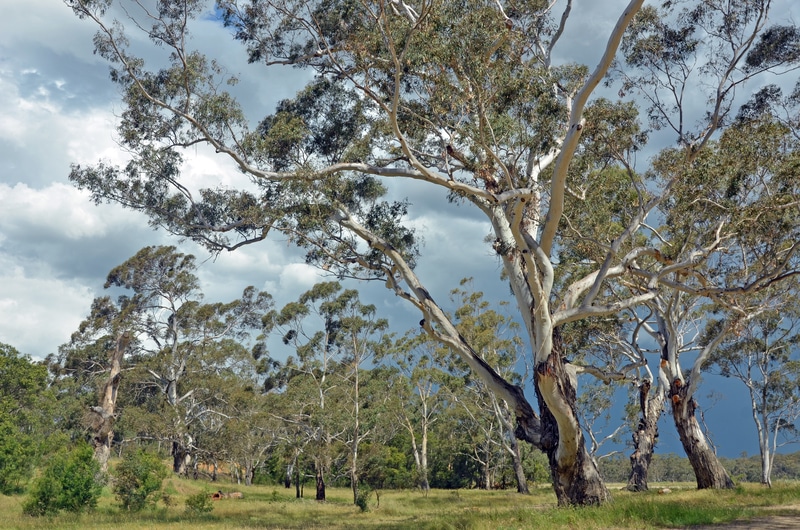
In February 1829, a man from the Shoalhaven region of New South Wales killed English sawyer John Rivett in the Kangaroo Valley, claiming self-defence after a dispute over a trade and a personal grievance. He and his accomplice evaded capture for months, using their knowledge of the densely forested hilly terrain to outrun colonial authorities.

Arrested in May 1829, the accused made a bold escape aboard a ship bound for Sydney, stealing the keys to his chains from a sleeping guard before jumping overboard with his companion. Recaptured and tried, he was found guilty of wilful murder and publicly executed by infamous hangman Alexander Green on 30 August 1830.

White bark gumtrees by Shoalhaven River under storm clouds

⬅ See all events from 30 August

Spread the word on your favourite platform!
On This Day in True Crime History

Subscribe to Dark Stories

True crime stories, dark history and tour news, straight to your inbox.