1866: He Was Fed Breakfast, Then Declared Himself a Bushranger and Shot His Host

Henry Facey Hurst, the pioneer settler after whom Hurstbridge in Victoria was later named, was feeding a hungry stranger at his station near Diamond Creek on the morning of 4 October 1866 when his sister spotted a revolver hidden under the man’s coat. Hurst quietly loaded his own gun and confronted him. Offended at what he called an insult, the stranger leapt up and announced, “I am a bushranger”: Robert Burke. Burke tried to fire first, but the cap misfired; Hurst got his shot away, and Burke then fired three rounds of his own, one tearing into Hurst’s stomach and lodging in his own leg.

Though mortally wounded, Hurst clung to Burke until a friend, Joseph Abbott, wrestled the bushranger down and tied him with a halter. Hurst bled to death that evening. Burke was convicted of wilful murder, though the jury recommended mercy on the grounds that Hurst had fired the first shot. He was hanged at Melbourne Gaol.
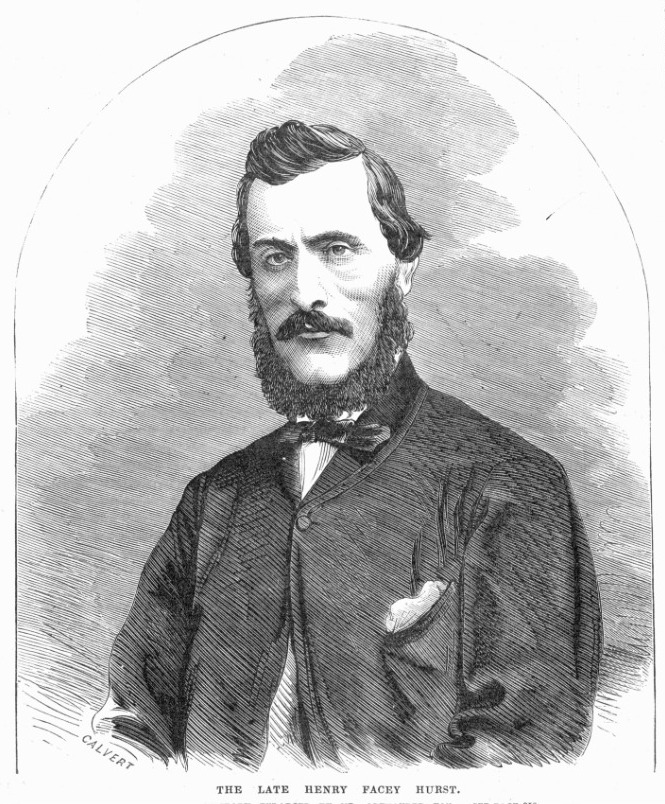

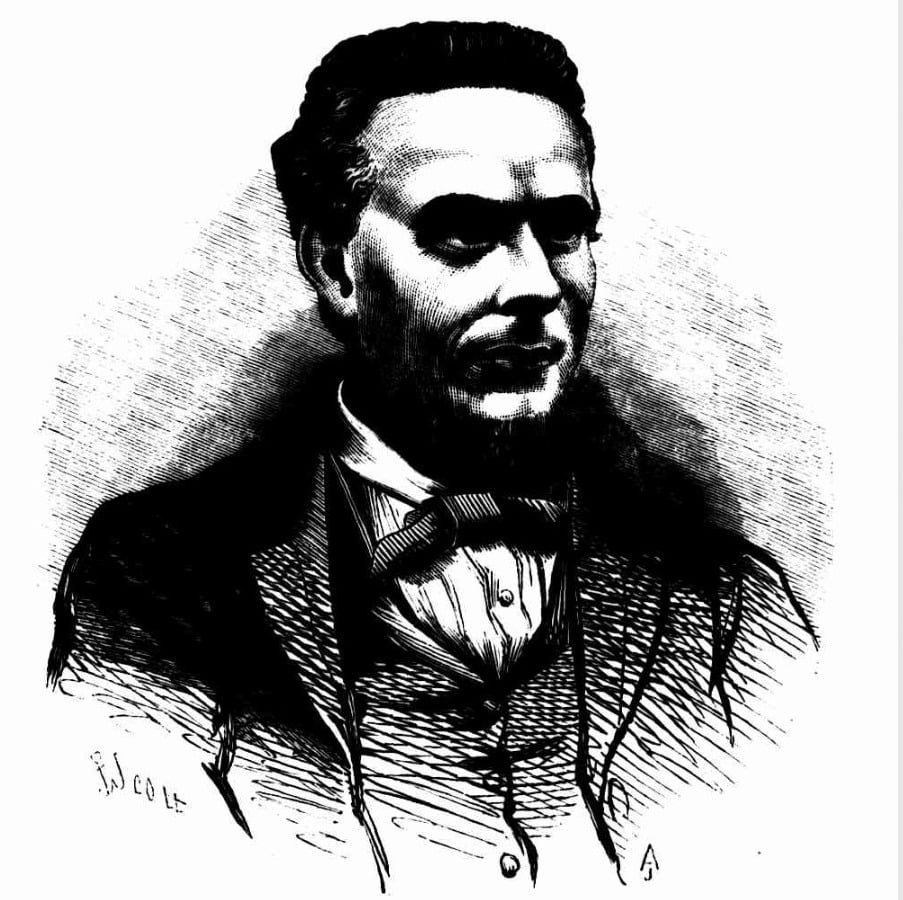
The late Henry Facey Hurst, engraving by Samuel Calvert, 27 October 1866. State Library Victoria, IMP27/10/66/356.

⬅ See all events from 4 October

Spread the word on your favourite platform!

1875: “I Come From a Race That Will Not Take an Insult”: Hanged at Melbourne Gaol for a Double Murder

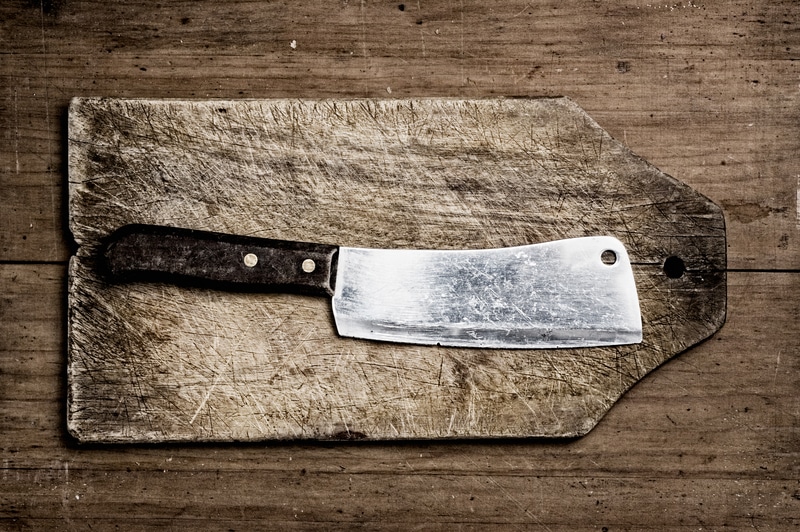
Henry Howard ran the Frankston Hotel, near Melbourne, in partnership with widowed licensee Elizabeth Wright. When she hired a barman named Thomas Harman to keep an eye on the books, Howard convinced himself the pair were lovers, though Harman had a wife of his own and, as the judge later noted, there was no evidence of any affair. On the night the hotel’s contents were sold off, Howard stabbed Wright to death with a freshly sharpened butcher’s knife, then killed Harman as he ran to her screams.

He was found sitting calmly beside Wright’s body with the bloody knife at his feet, and when told Harman had also died, witnesses said he smiled. Arrested on the spot, he told police only, “Prove it.” At his trial his single explanation was, “I come from a race that will not take an insult, even if it brings them to the gallows.” He was hanged at Melbourne Gaol on 4 October 1875, the hangman’s badly set noose leaving him convulsing for several minutes before he died.

On the scaffold he confessed to murdering Wright but insisted he had never meant to kill Harman.

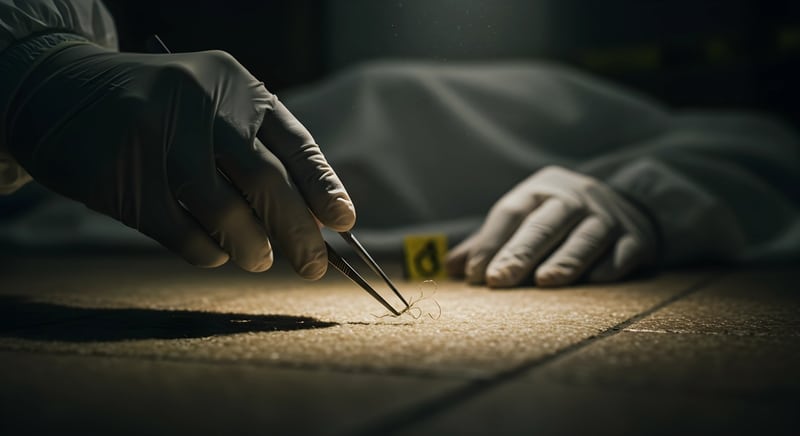
Butcher knife on cutting table close-up

⬅ See all events from 4 October

Spread the word on your favourite platform!

1889: The Devoted Wife Who Poisoned Her Husband in Melbourne, Then Killed Three More

Henry Needle was a robust carpenter until 1889, when he began suffering violent, unexplained vomiting at the family home in Richmond, near Melbourne. His doctor once found untouched broth and jelly by his bed, and noted Henry had grown strangely wary of food prepared by his wife, Martha. He died on 4 October 1889; his death was recorded as hepatitis, no post-mortem was ordered, and no suspicion touched the devoted nurse at his side.

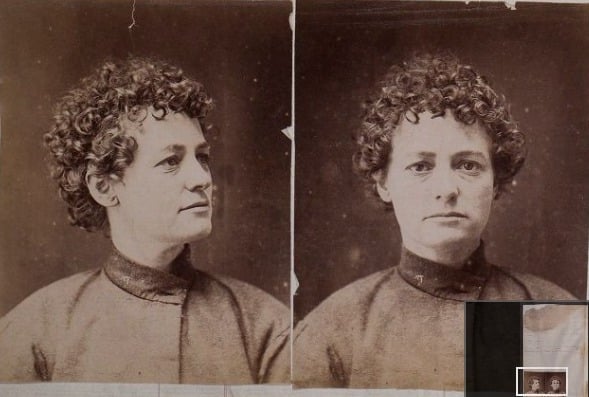
The truth emerged five years later, after police caught Martha handing a laced cup of tea to another man and Henry’s body was exhumed and found packed with arsenic, along with the bodies of the couple’s three young children, all of whom had died in her care under equally mysterious circumstances. Martha Needle was hanged at Melbourne Gaol in October 1894 for the poisoning of her fiance’s brother, the last of at least five family members she is believed to have killed.

Martha Needle: Public Record Office Victoria, VPRS 516/P0000, Central Register of Female Prisoners, register nos. 5926–6415 (1891–1896).

⬅ See all events from 4 October

Spread the word on your favourite platform!

1853: A Hanged Bushranger’s Corpse Put on Display in a Melbourne Shop Window

Within hours of his execution, the body of bushranger George Melville was handed to his widow, decorated with ribbons and laid out in the window of their oyster shop in Little Bourke Street. The Argus called it a disgusting and inhuman act, presuming it was staged simply to draw in customers.

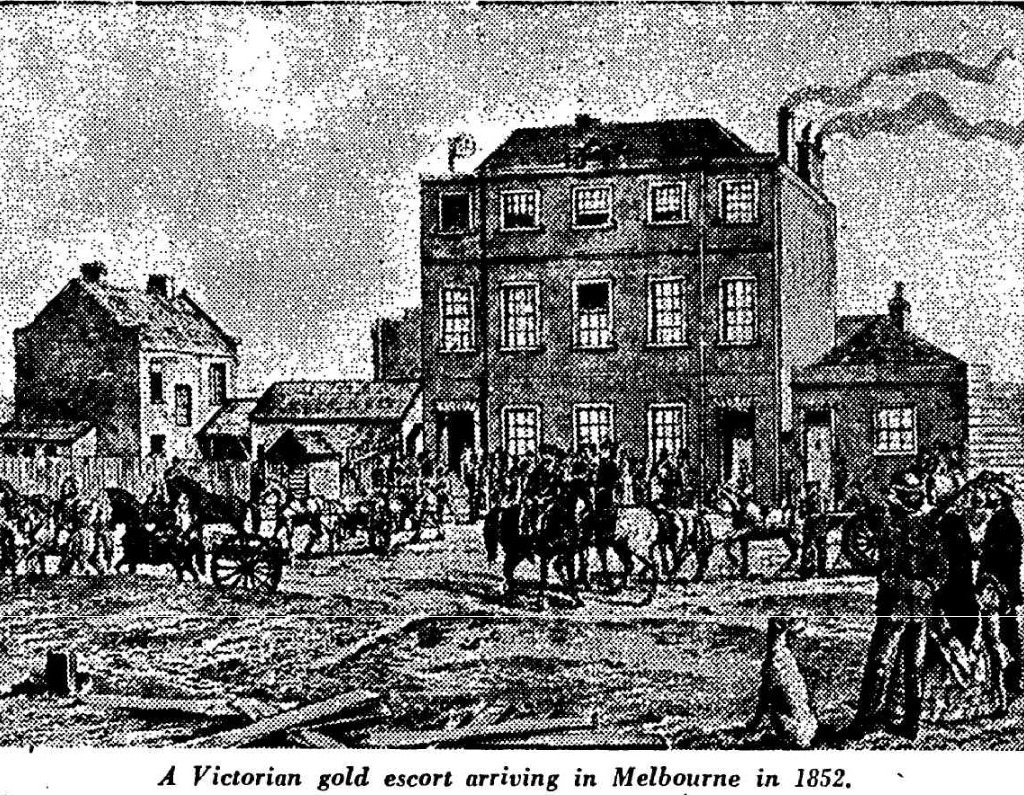
Melville had been hanged at Melbourne Gaol alongside William Atkins and George Wilson for the Private Escort gold robbery near Kalkallo, an ambush that left four mounted troopers shot, one of them fired on again as he lay wounded on the road. All three had been identified after an accomplice turned informer to the police before taking his own life with a razor.

None of the condemned made a clear confession. Wilson used his final moments on the scaffold to forgive the witnesses who had convicted him, while Melville, claiming the crowd could not hear him, simply said he could not make himself heard and wished them all a very good morning.

Victorian gold escort arriving in Melbourne 1852.

⬅ See all events from 3 October

Spread the word on your favourite platform!
On This Day in True Crime History

Subscribe to Dark Stories

True crime stories, dark history and tour news, straight to your inbox.