Archives: Dark Stories: On This Day In True Crime History - Page 8
1989: The Same Calendar Date, Six Years Apart: Harold Shipman Killed Two Elderly Patients in Hyde
Serial killer Dr Harold Shipman had a chilling habit of striking on the same date across different years. On 26 September 1989, he killed 82 year old Elizabeth Mary Burke in Hyde, the Greater Manchester town where his medical practice was based.
Exactly six years later, on the same date in 1995, he killed 87 year old Dora Elizabeth Ashton, another patient from Hyde. Despite the eerie coincidence, Shipman was never charged with either woman’s death; he was only later convicted for a separate group of murders, though he is suspected of killing far more patients over his career as a trusted family doctor.
1883: “I Have Cooked Eight”: the Whispered Confession Only the Hangman Heard
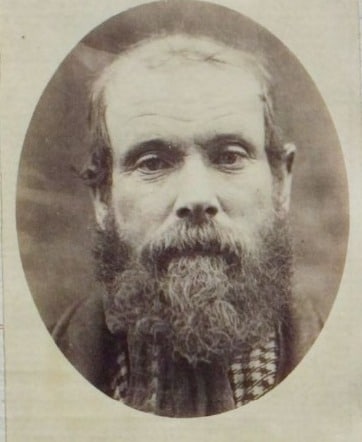
Robert Francis Burns walked out of a Melbourne courtroom in August 1882 an acquitted man, and was arrested for a different murder before he had left the building. The first charge concerned a fellow railway navvy, last seen heading off with Burns and a gallon of whiskey. A headless body was found in the bush, but the Crown could not prove whose it was.
The second charge held. Michael Quinlivan, “a quiet saving man”, had been great mates with Burns, the only two Irishmen in their work gang. In June 1880 he withdrew 15 pounds from the bank, left a roadside hotel with Burns and was never seen alive again. Weeks later his body was found in a sheep paddock with a fractured skull.
The first jury could not agree after more than six hours; the second convicted in 45 minutes. On the gallows at Ararat Gaol, before about 30 spectators, the hangman was visibly nervous, and Burns plunged into eternity without any final words. Instead, he left a written statement thanking his gaolers, his lawyers and his priest, and admitting nothing.
Afterwards the hangman swore that as he pinioned the prisoner, Burns murmured: “I have cooked eight, five in Victoria and three in Sydney, and now you are going to cook me.”
Robert Francis Burns Mugshot: VPRS 515/P0000, Central Register for Male Prisoners 19384 – 19880
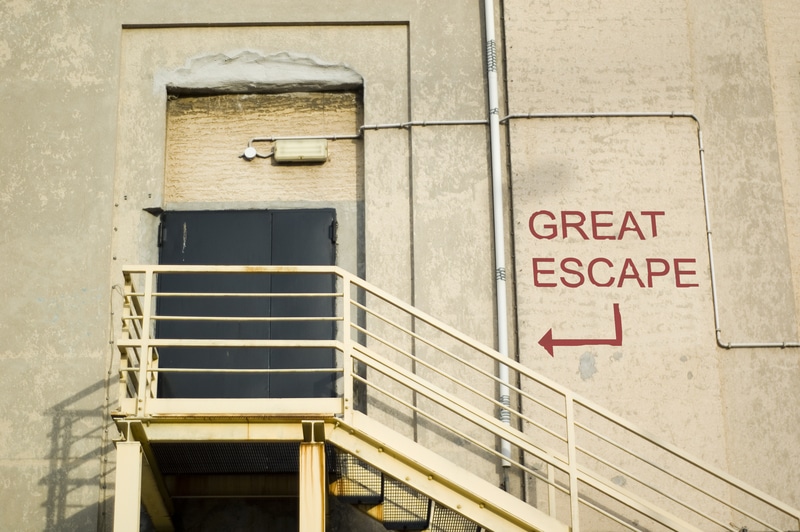
1983: The Great Escape: 38 IRA Prisoners Break Out of the Maze in Britain’s Largest Prison Breakout
On 25 September 1983, 38 IRA prisoners staged a mass breakout from the Maze Prison in County Antrim, Northern Ireland, the largest prison escape in British history. The men overpowered guards inside H-Block 7, some using smuggled handguns, and seized control of the wing before storming the front gate disguised in stolen prison officer uniforms.
In the chaos one prison officer was stabbed to death and twenty others were injured during the breakout. Several escapees hijacked a delivery lorry to get beyond the perimeter fences, and while a number were recaptured within days, others evaded capture for years, some fleeing abroad before eventually being caught or negotiating their return.
The escape became known among Irish republicans as the Great Escape, a name that stuck for decades and turned the breakout into one of the defining episodes of the Troubles.
1764: Born to Mutiny: Fletcher Christian, the Man Who Cast Captain Bligh Adrift
Fletcher Christian was born on 25 September 1764 in Cumberland, England, decades before he would become one of history’s most infamous mutineers. In April 1789, as master’s mate aboard HMS Bounty, he led a revolt against Captain William Bligh, seizing the ship in the South Pacific after months of tension during the vessel’s breadfruit-collecting voyage.
Rather than kill Bligh, Christian set him adrift in a small open boat with eighteen loyal crew members and minimal supplies. Bligh went on to complete an extraordinary 3,618-mile voyage to safety in Timor, a feat of navigation still studied today.
Christian and his fellow mutineers eventually settled on remote Pitcairn Island with a group of Tahitian men and women, burning the Bounty to avoid detection. The fate of the settlement descended into violence within years, and the exact circumstances of Christian’s own death remain disputed, with some accounts claiming he was killed by fellow settlers and others suggesting he secretly returned to England.
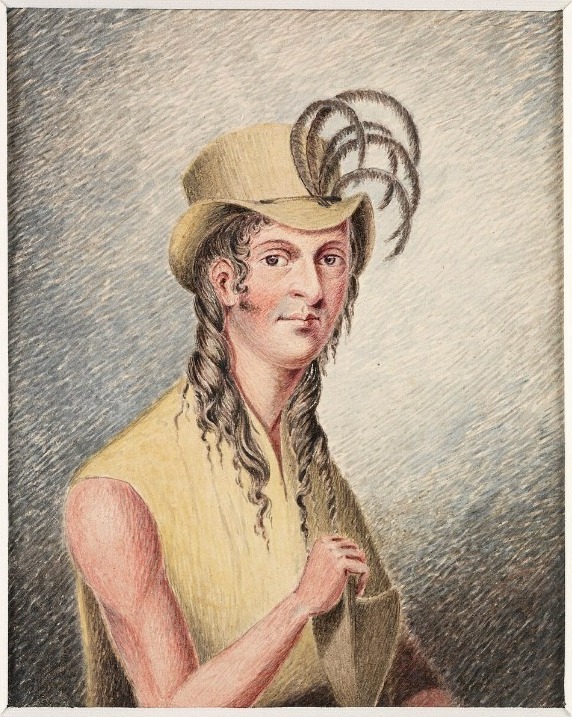
Portrait of Friday Fletcher October Christian son of Bounty mutineer Christian Fletcher 1814 by John Shillibeer