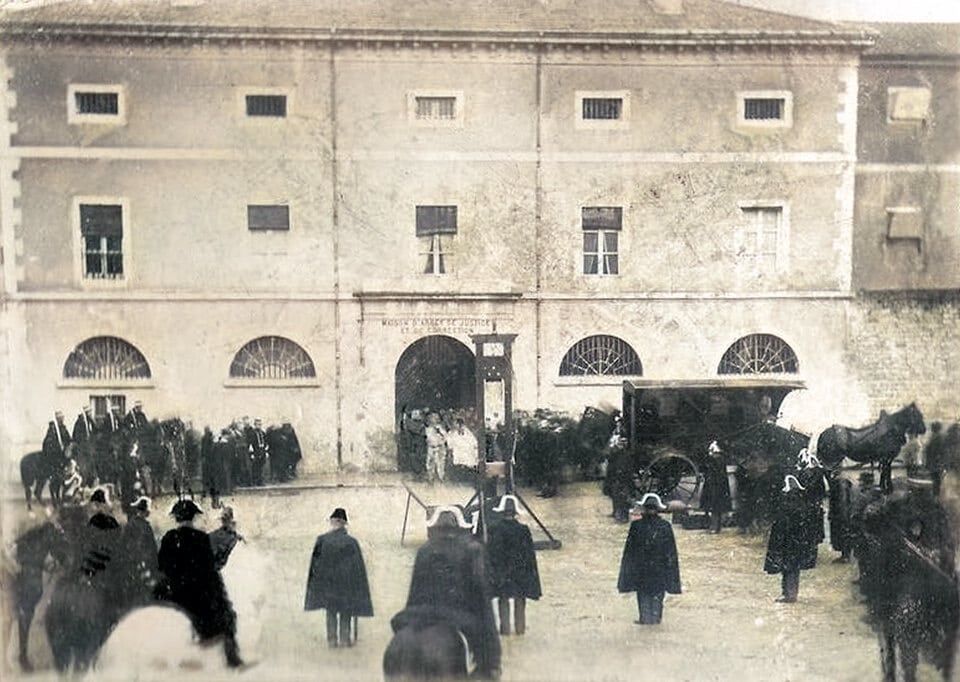
On August 15, 1963, Henry John Burnett was hanged at Craiginches Prison in Aberdeen by executioner Harry Allen, becoming the last person executed in Scotland and the first in Aberdeen since 1891. His crime: the murder of merchant seaman Thomas Guyan, shot in the face at close range after Burnett broke into the Guyan family flat on May 31, 1963, furious that his lover Margaret May Guyan had chosen to return to her husband.

Burnett had become obsessively controlling of Margaret, locking her in his flat at Skene Terrace when he went out. On the day of the murder, after she announced she was returning to Thomas, Burnett stole a shotgun from his brother’s home in the Bridge of Don area of Aberdeen, boarded a bus to Jackson Terrace, and shot Guyan dead. He was tried at the High Court in Aberdeen between July 23 and 25, 1963, convicted, and executed three weeks later. A crowd of around 200 gathered outside the prison gates.


Scotland flag
Scotland flag

⬅ See all events from 15 August

Spread the word on your favourite platform!

In August 1971, Stanford University psychology professor Philip Zimbardo launched a two-week simulation of prison life using 24 male college students, randomly assigned as either guards or prisoners. Recruited through a newspaper advertisement, participants were paid $15 a day. Within days, the guards, given uniforms designed to strip individual identity, began psychologically abusing the prisoners with escalating cruelty.

The experiment collapsed on the sixth day after psychologist Christina Maslach visited the site and confronted Zimbardo over the conditions she witnessed. He shut it down, later admitting he had become too absorbed in his own role as superintendent. The study became a landmark case in research ethics, prompting American universities to strengthen institutional review processes for human experimentation. Later critics, including researcher Thibault Le Texier, argued the guards had been coached to behave aggressively, and that Zimbardo’s conclusions were largely written before the experiment began.

Prisoner hands gripping steel lattice close up

⬅ See all events from 14 August

Spread the word on your favourite platform!

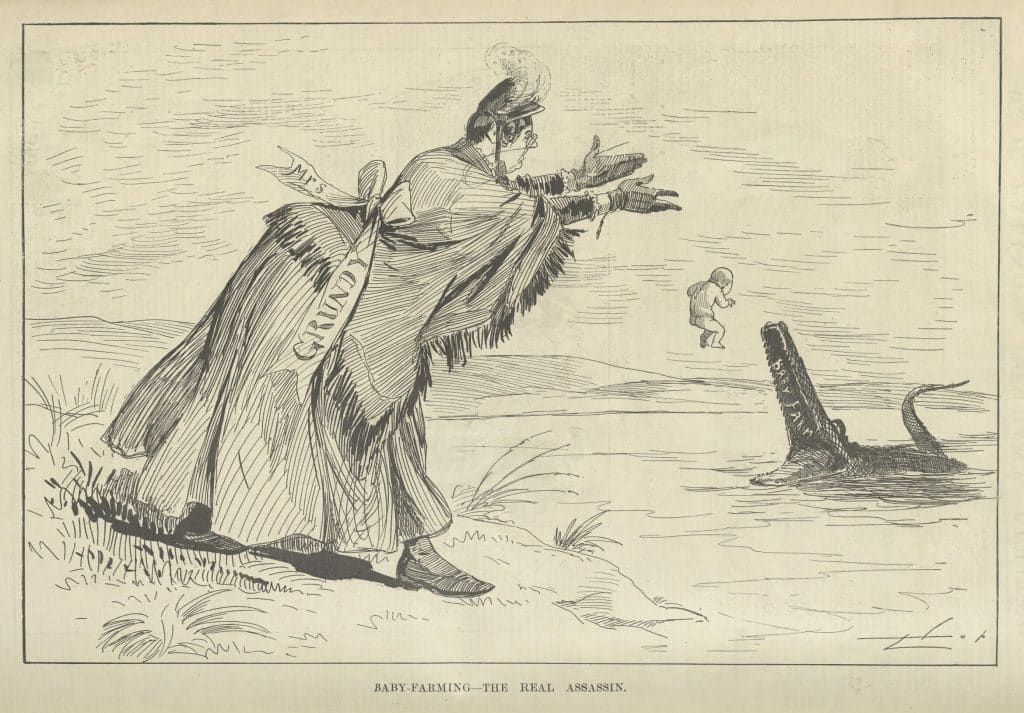
Rhoda Willis, also known as Leslie James, was a baby farmer convicted of murdering the illegitimate infant of Maud Treasure. She had undertaken to adopt and raise the child for six pounds, but the infant was found suffocated, wrapped in a parcel, in her bed at a Cardiff lodging house. Willis was sentenced to death at Glamorgan Assizes and executed by hanging at Cardiff Prison on 14 August 1907, carried out by brothers Henry and Thomas Pierrepoint. She was the only woman hanged in Wales in the 20th century and the last baby farmer to be executed in Britain.

Born in Sunderland in 1867, Willis was 40 years old on the day of her death. She had received a first-class education, spoke several languages, and had lived in Cardiff for years following the death of her husband. The night before her execution, she confessed to her solicitor that she had wilfully killed the baby on the train. She met her fate, according to witnesses, calmly and without incident.

In a letter written shortly before her execution, Willis expressed deep remorse, wrote that she had never before appreciated the singing of the birds or the beauty of sunshine as much as in her final days, and expressed confidence that God would pardon her sins.

Mrs. Grundy, an icon of Victorian respectability-Victorian baby farming era

⬅ See all events from 14 August

Spread the word on your favourite platform!

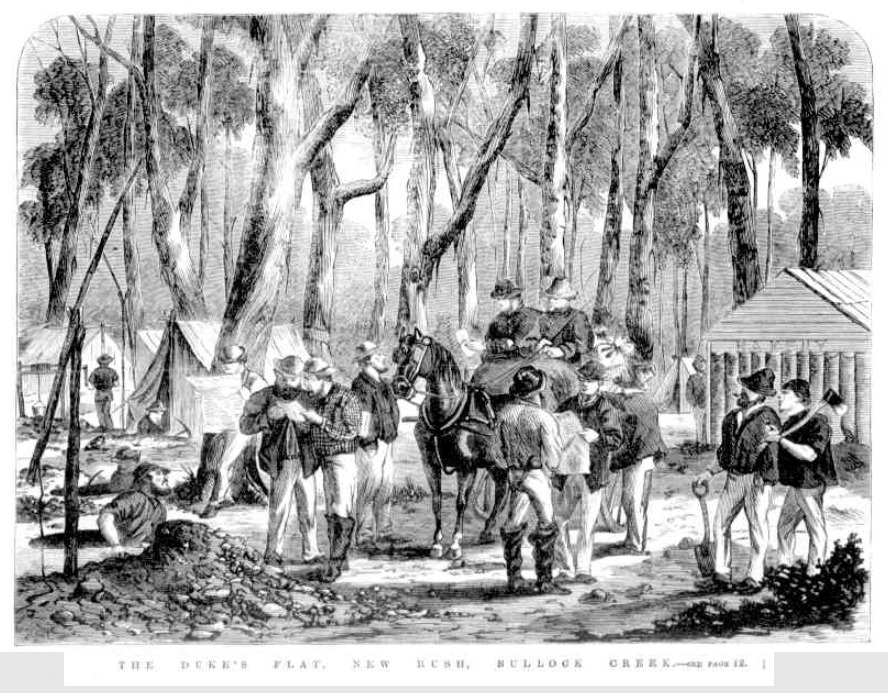
John Hogan, a 55-year-old man with a criminal past, met Martin Rooney at Duke’s Flat, Bullock Creek, and the two shared a tent. Rooney had recently arrived from New Zealand carrying deposit receipts worth around 200 pounds. While Rooney slept, Hogan beat him to death with a stonebreaker’s hammer and a tomahawk, fracturing his skull in several places. One of the receipts and Rooney’s purse were found on Hogan when he was arrested.

At the inquest, around 400 miners gathered outside and had to be warned against lynching by the coroner. Evidence placed Hogan selling his watch for tucker money just hours after the killing, while telling a storekeeper he had a mate with plenty of money he intended to rob. Hogan was tried, convicted, and hanged at Castlemaine on 14 August 1868.

Bullock Creek goldfields murder newspaper article image

⬅ See all events from 14 August

Spread the word on your favourite platform!
On This Day in True Crime History

Subscribe to Dark Stories

True crime stories, dark history and tour news, straight to your inbox.