In October 1965, Ian Brady picked up seventeen-year-old Edward Evans at a Manchester railway station, telling him he had been invited home for a drink. At the house on Wardle Brook Avenue, Brady had Myra Hindley fetch her brother-in-law David Smith under the pretext of sharing miniature wine bottles. Smith arrived in time to witness Brady strike Evans with a hatchet and strangle him with electrical cord, screams tearing through the house as Hindley called out for help.

Smith helped move the body to a spare room before fleeing home, where he was sick and told his wife everything. He contacted police the next morning armed with a screwdriver and bread knife in case Brady came after him. Officers found Evans’ body behind a locked door, and as he dressed for arrest, Brady offered a chillingly understated explanation: he and Evans “had a row and the situation got out of hand.” The killing exposed what became known as the Moors Murders.


Shocked male witness after fatal late night accident

⬅ See all events from 6 October

Spread the word on your favourite platform!

Harold Shipman was a trusted family doctor in Hyde, England, who killed his patients with lethal injections of diamorphine and then falsified their medical records to make the deaths look natural. He often urged grieving families toward cremation, quietly destroying the evidence a post-mortem might have found.

What he did not understand was his own surgery computer. The practice software secretly time stamped every entry, and when investigators compared those hidden timestamps to the dates on his altered files, the lie was obvious: he had been rewriting patient histories after his victims were already dead. He went on trial in 1999 charged with just 15 murders, though he is believed to have killed close to 250 patients over more than two decades, making him Britain’s most prolific serial killer.

Shipman never confessed and maintained his innocence throughout the trial. He was convicted on all counts and later took his own life in prison.

A Serial Killers Computer Log tracked everything.

⬅ See all events from 5 October

Spread the word on your favourite platform!

In October 1993, a local man out gathering firewood stumbled on human remains in a remote corner of Belanglo State Forest. The bones belonged to Deborah Everist and James Gibson, a Melbourne couple missing since 1989.

What unsettled investigators was that Gibson’s camera and backpack had already turned up years earlier, dumped by the roadside at Galston Gorge, more than 120 kilometres from where his body finally lay. Within weeks, a wider search of the forest uncovered four more young backpackers buried nearby, confirming Belanglo as the burial ground of a serial killer.

Belanglo State Forest
Dark History of Belanglo Forest

⬅ See all events from 5 October

Spread the word on your favourite platform!

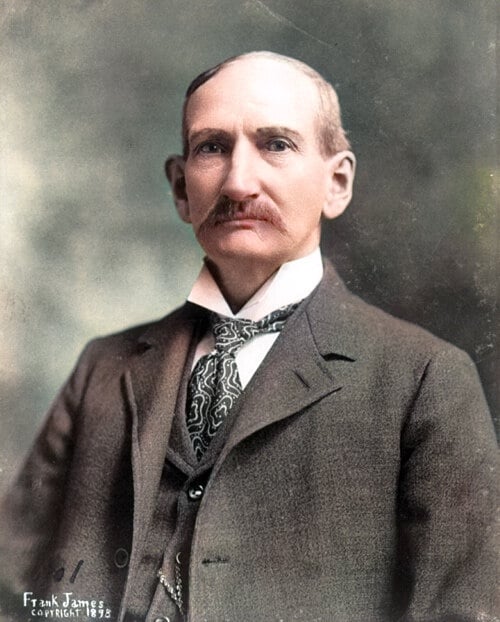
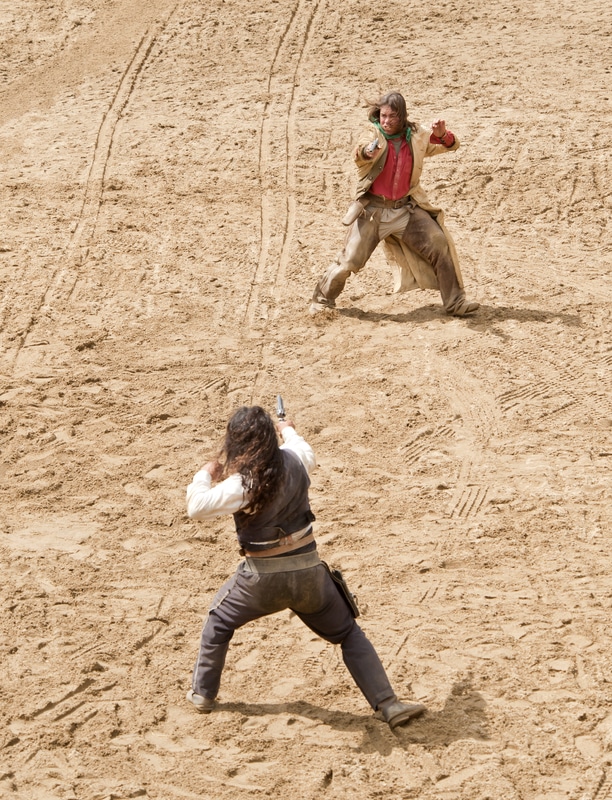
Five months after his brother Jesse James was gunned down in 1882, Frank James boarded a train to the Missouri state capital and laid his revolver in the hands of Governor Crittenden. “I have been hunted for twenty-one years,” he said, “have literally lived in the saddle… It was one long, anxious, inexorable, eternal vigil.” He added that he had never let another man touch his gun since 1861.

Tried for only two of the gang’s robberies and killings, in Missouri and Alabama, James was acquitted both times, helped by testimony from a former Confederate general. He was never extradited over the infamous Northfield raid and never spent a day in prison. He spent his remaining three decades as a shoe salesman, a racetrack official and a tour guide on the old family farm, where he died in 1915 at the age of 72.

Frank James outlaw and criminal figure

⬅ See all events from 5 October

Spread the word on your favourite platform!
On This Day in True Crime History

Subscribe to Dark Stories

True crime stories, dark history and tour news, straight to your inbox.