Richard Bibby was a hutkeeper at a station in the Victoria district when he decided to kill Billamarra, an Aboriginal man camped near his own hut, so near that he was said to be under Bibby’s protection. He announced his intention the night before, loaded his pistol, and before dawn woke his sleeping victim only to shoot him dead. Bibby claimed Billamarra had stolen lambs, but witnesses showed the missing lambs had simply been mauled by native dogs; another man watching in secret saw the whole killing.

Tried and condemned at the Quarter Sessions, Bibby became the first white man executed in Perth, and in the colony, for murdering an Aboriginal person. Strong appeals were made for mercy, but his cold, premeditated planning and a past conviction for robbery with violence counted against him. The hanging itself was botched, the rope poorly adjusted, and he struggled visibly on the rope before dying.

Bibby privately confessed his guilt to the prison chaplain, yet on the scaffold, asked if his sentence was just, he answered that if the truth had been told he would not have been there.
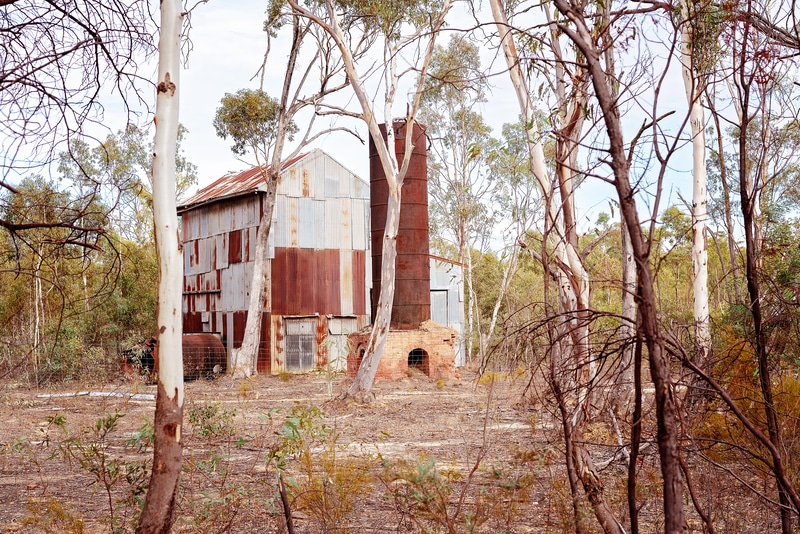

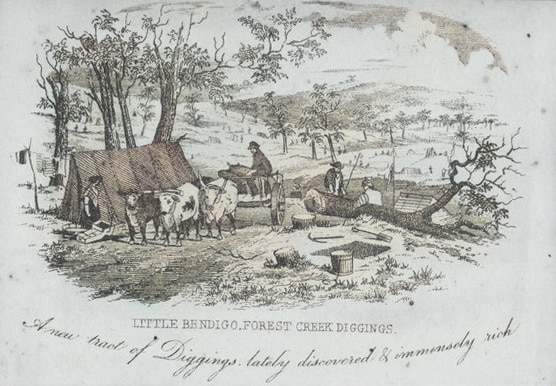
Disused shed with kiln and chimney stack in dry Australian bush

⬅ See all events from 17 October

Spread the word on your favourite platform!

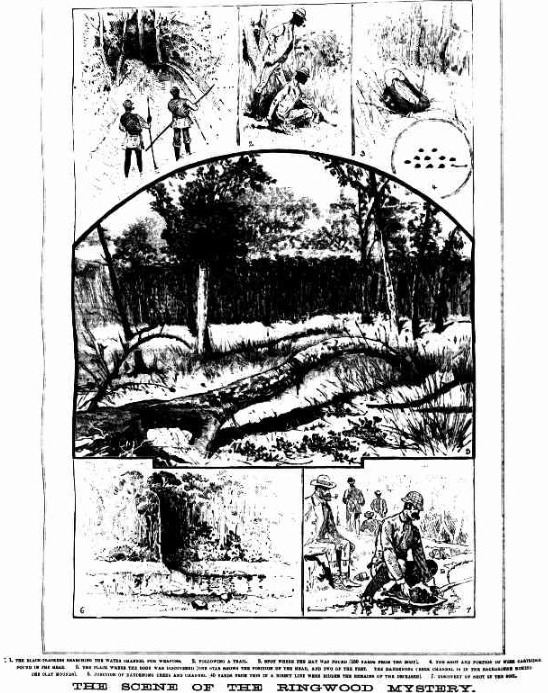
When civil engineer Peter Sherlock vanished in July 1889, his landlord Robert Landells claimed he had gone up country looking for work. About a month later, Sherlock’s body was discovered beneath branches near Ringwood, outside Melbourne, with a fractured skull and devastating gunshot injuries to his face.

Landells told the inquest Sherlock had been broke and depressed, a man likely to have taken his own life. Detectives found otherwise: Sherlock held 200 pounds in securities, and after his disappearance Landells had cashed his cheques and sold his gun to a grazier near Beaufort. Confronted, Landells confessed to shooting Sherlock while passing the loaded gun between them, insisting it was an accident, then panicking and burying the body. A jury did not believe him, and he was hanged at Melbourne Gaol on 16 October 1889 in an execution so botched the rope nearly severed his head.

Landells kept to his story of an accident to the end, refusing calls to confess. When the sheriff asked on the scaffold whether he had anything to say, he replied only, “No, sir.”

Sketch of Ringwood mystery crime scene near Dandenong Creek 1889

⬅ See all events from 16 October

Spread the word on your favourite platform!

John Hill, a butcher, had spent the day drinking with Simon Burn at Parramatta on 5 October 1794 when he turned on the woman he lived with, beating her until Burn stepped in to stop him. Hill stabbed Burn through the heart; dying within the hour, Burn had just enough strength left to name his killer before witnesses, declaring that the butcher had done it. Burn, a First Fleet convict who had earned his freedom and settled his own farm, was reportedly the first free man in the colony to be murdered by another colonist.

Hill tried to set up an alibi at his trial, but the wound and Burn’s own dying words undid him. He was hanged at Sydney on 16 October 1794, his body handed over for dissection as his sentence required.

Bloody Halloween killer dressed as butcher on dark blue background
Butcher and butcherer

⬅ See all events from 16 October

Spread the word on your favourite platform!

At a settler’s hut near Burwood, outside Sydney, bushranger Thomas Mustin levelled a loaded musket point-blank at a visiting neighbour, and pulled the trigger. It merely flashed in the pan; he drew a pistol, and that misfired too, and in the scuffle that followed Mustin and his companions escaped briefly into the bush.

Mustin, Daniel Watkins and John Brown were convicted over this attack and a string of armed robberies around Burwood and the Liverpool Road, including one household where the terrified wife recognised Brown as a former constable but was too afraid to say so.

On 16 October 1826 the three were marched from Sydney Gaol under military escort. All three acknowledged the justice of their sentence on the scaffold and prayed for mercy, offering no claim of innocence. They hanged together on a temporary gallows at Burwood, and their bodies were left on display throughout the day.

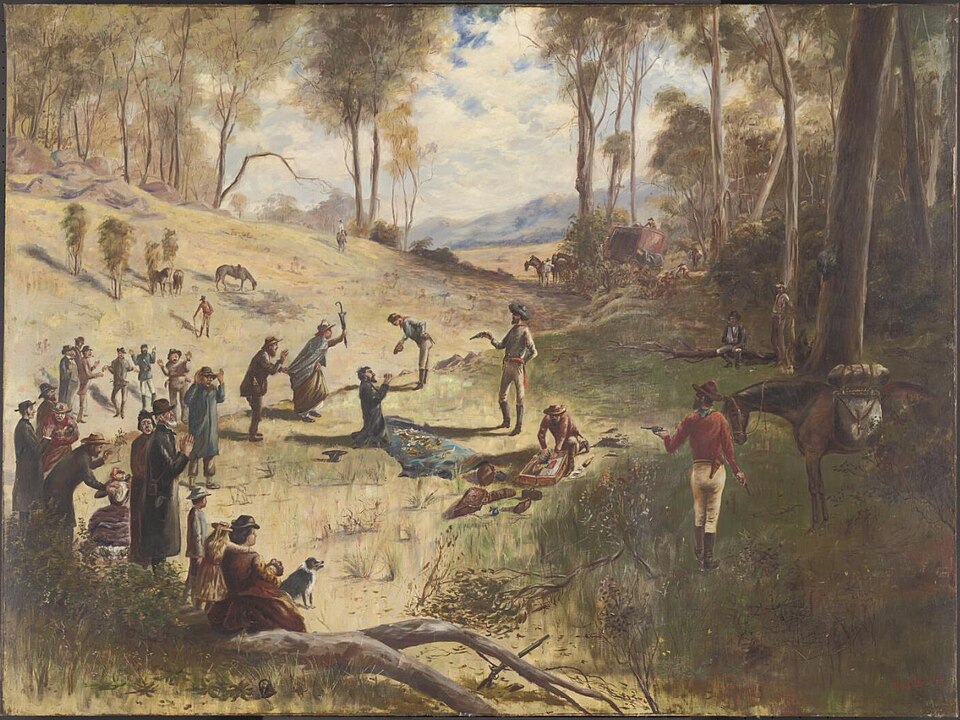
Bushrangers holding up coach passengers illustrated scene

⬅ See all events from 16 October

Spread the word on your favourite platform!
On This Day in True Crime History
1852·Mercy Recommended, Mercy Denied: John Riches Hanged in Melbourne Over a Deadly Camp Quarrel
1989·Twice in 24 Hours: the Granny Killer Claims Another Victim in Sydney
2005·The First Murder Convictions of the Melbourne Gangland War: Keith Faure and Evangelos Goussis Convicted
More Crime On This Day →

Subscribe to Dark Stories

True crime stories, dark history and tour news, straight to your inbox.