Alice Prestwich was just another house call for a family doctor trusted by an entire community. Harold Shipman gave the 69-year-old widow a lethal injection of morphine at her home in Hyde, Greater Manchester, on 20 October 1988, the same quiet routine he had already used on dozens of elderly patients before her. She became his 55th confirmed victim, and not one soul suspected a thing.

Shipman kept practising, and killing, for another ten years, forging wills and helping himself to his victims’ assets along the way, before a suspicious bequest finally exposed him in 1998. An official inquiry later concluded he had killed at least 215 patients, making him the most prolific serial killer in British history.


Dr Death - Harold Shipman
Dr Death – Harold Shipman

⬅ See all events from 20 October

Spread the word on your favourite platform!

Gerardo Mannella, 31, tried to run when two gunmen came for him outside his brother’s home in Melbourne, but they caught him in the street and shot him dead on this day in 1999.

The ambush was no isolated act. His brother Vince Mannella had already been murdered, and police believed the same killers were also responsible for shooting Dimitrios Belias, part of the string of tit for tat killings that became known as Melbourne’s gangland war.

No one has ever been convicted over Gerardo’s death, and it remains one of the unsolved murders from that bloody era.

Gangland: more than a dictionary definition in Melbourne, 1998–2010.

⬅ See all events from 20 October

Spread the word on your favourite platform!

Legend has it that King John of England was not felled by illness but by a monk’s revenge. Staying at Swineshead Abbey in Lincolnshire that October, John allegedly threatened to starve his own kingdom with crushing bread prices; a monk is said to have milked a toad for its venom, mixed it into a cup of ale, and drunk from it himself before serving the king, to prove the drink was safe. The monk reportedly died first in the abbey infirmary, and John followed him within hours.

The king, already infamous for the Magna Carta he was forced to sign and then tried to annul, died at Newark Castle on 19 October 1216 as a rebel army closed in on his crumbling kingdom. The poisoning story only surfaces in a chronicle written decades later for John’s old enemies, the barons; most contemporary accounts agree he died of dysentery, the far less dramatic verdict most historians still accept today.

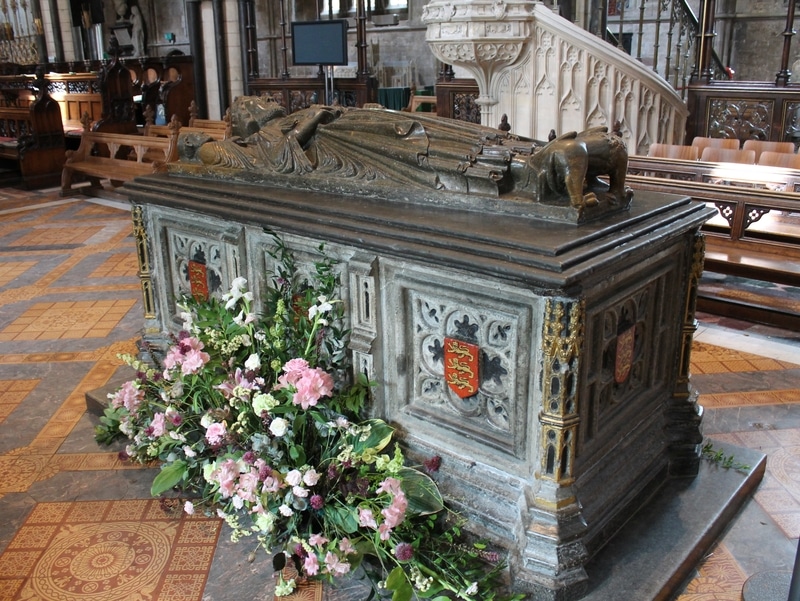
Tomb of King John of England in Worcester Cathedral

⬅ See all events from 19 October

Spread the word on your favourite platform!

Istvan ‘Steve’ Gulyas ran a dating agency out of Sunbury, on the outskirts of Melbourne, that police suspected was really a front for a brothel. He was also a friend of Nik Radev, a standover figure already gunned down in the city’s escalating underworld war.

That connection made Gulyas a marked man. On 20 October 2003 he and his de facto wife were found shot dead inside their home, both killed in what police treated as a deliberate execution rather than a robbery gone wrong.

The case became one of several unsolved or unresolved killings tied to the broader Melbourne gangland conflict of the late 1990s and 2000s, with no one ever convicted over the double murder.

Gangland: more than a dictionary definition in Melbourne, 1998–2010.

⬅ See all events from 19 October

Spread the word on your favourite platform!
On This Day in True Crime History

Subscribe to Dark Stories

True crime stories, dark history and tour news, straight to your inbox.