1929: The Vampire of Dusseldorf Kills Two Foster Sisters at a Fairground

Peter Kurten, known as the Vampire of Dusseldorf, murdered two young foster sisters at a fairground on 23 August 1929, in one of a string of attacks that terrorised the city throughout that year. Born in Cologne in 1883, the eldest of 13 children, Kurten endured a childhood of brutal poverty and domestic terror, and had already demonstrated violent and sadistic tendencies from boyhood, including drowning two playmates on the Rhine at the age of nine.

His killing spree in 1929 left Dusseldorf gripped by fear. He was eventually arrested, tried, and convicted of nine murders, though police suspected him in as many as 68 attacks. His victims were overwhelmingly women and girls. He was executed by guillotine in July 1931. Shortly before his death, he asked the prison psychiatrist whether he would still be able to hear his own blood gushing from his neck after the blade fell. When told his brain might function for a few seconds, Kurten replied: ‘That would be the pleasure to end all pleasures.’

Peter Kürten police mugshot, 1931. Photographer unknown; Wikimedia Commons, CC BY-SA 3.0.

⬅ See all events from 23 August

1895: The Wild Scotchman: Death of Queensland Bushranger James Macpherson

James Alpin Macpherson, known as the Wild Scotchman, was one of Queensland’s most notorious bushrangers before his capture and imprisonment. Released from prison in 1874, he lived out the remainder of his days quietly, working as a stockman and station overseer far from his outlaw past.

Macpherson died on 23 August 1895 at Burketown, Queensland, aged 53, after falling from a horse. The man who had once terrorised the bush met his end not in a blaze of gunfire, but in an ordinary accident on the land he had spent his later years working.

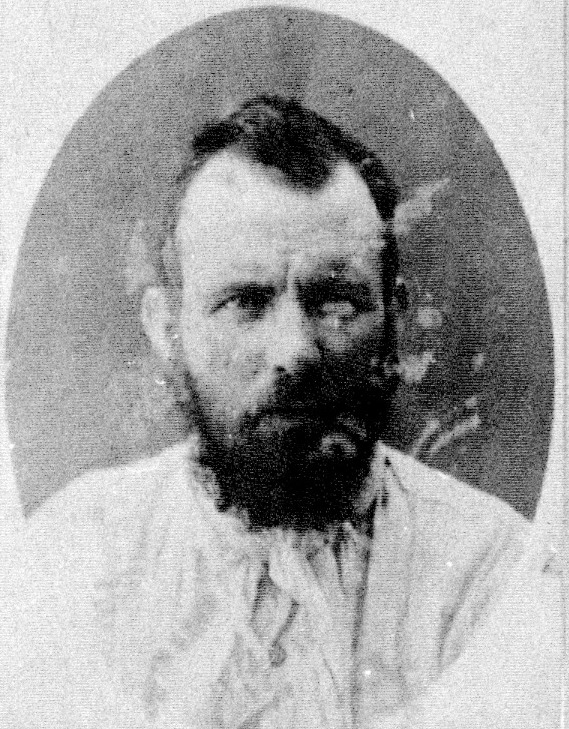
Portrait of bushranger James MacPherson 1866

⬅ See all events from 23 August

1853: Henry Turner Hanged at Melbourne Gaol for Robbery and Murder

At Melbourne Gaol on 23 August 1853, Henry Turner and his accomplice John Smith were hanged for the murder of John Warren at Fryer’s Creek. The two men had entered Warren’s hut demanding gold, and when he could not produce it, they shot him in the eye with a revolver at close range. Warren was found blind and bleeding in the bush, groping through the scrub; he died shortly after from a bone splinter that had penetrated his brain.

Turner was attended in his final days by the Reverend Mr Studdert of St. James’ Church, while Smith received the Catholic priests Fathers Shiel, Cunningham, and Hayes. Both men were executed before a considerable crowd, and neither had entertained any hope of reprieve.

Turner acknowledged the justice of his sentence before his death, as did Smith, who was brought to admit that the punishment he was about to suffer was just and merited.

View from below of historical gallows in Tombstone Arizona

⬅ See all events from 23 August

1305: William Wallace Hanged, Drawn, and Quartered at Smithfield

William Wallace, the Scottish knight and military leader who had defied English rule for nearly a decade, was captured in August 1305 and swiftly tried for treason and atrocities against English civilians. Brought before a tribunal in Westminster Hall, he denied the charge of treason on the grounds that he had never sworn allegiance to the English crown, but the verdict was a foregone conclusion.

On 23 August 1305, Wallace was dragged through the streets of London to Smithfield, where he was hanged, cut down while still alive, disembowelled, beheaded, and his body divided into four parts. His head was displayed on London Bridge; his limbs were sent to Newcastle, Berwick, Stirling, and Perth as a warning to those who would resist English rule. He became the most enduring symbol of Scottish resistance.

William Wallace statue outside Stirling Castle Scotland

⬅ See all events from 23 August

On This Day in True Crime History

Subscribe to Dark Stories

True crime stories, dark history and tour news, straight to your inbox.