1863: One Shot from the Bush: the Outlaw Whose Rescue Attempt Killed His Brother

Larry Cummins was 20 when a Goulburn jury convicted him of armed robbery and he was sentenced to fifteen years of hard labour, the first in irons. His accomplice in the hold-up, both men with blackened faces, had been his 18-year-old brother. And the charge everyone was talking about had already been dropped: the murder of that same brother.

Weeks earlier, police had found the younger Cummins hiding in the loft of his mother’s hut. He fired twice at the constables before surrendering, and they saddled one of the family’s own horses to take him to the lockup. Eight miles along the track a single shot rang out from the bush. It struck the prisoner behind the ear; he “gave one groan” and died. The constables never saw the gunman, only heard a horse galloping away. The shot was assumed to have been meant for the constable, and the man behind it to be Larry, trying to set his brother free. There was not enough evidence to try him for it.

Three years later Cummins escaped from Berrima Gaol by crawling through 120 yards of sewer, only to be recaptured within months. Released in 1876, he lived out his days in Victoria under another name, as a drover and whipmaker, and died in 1909.
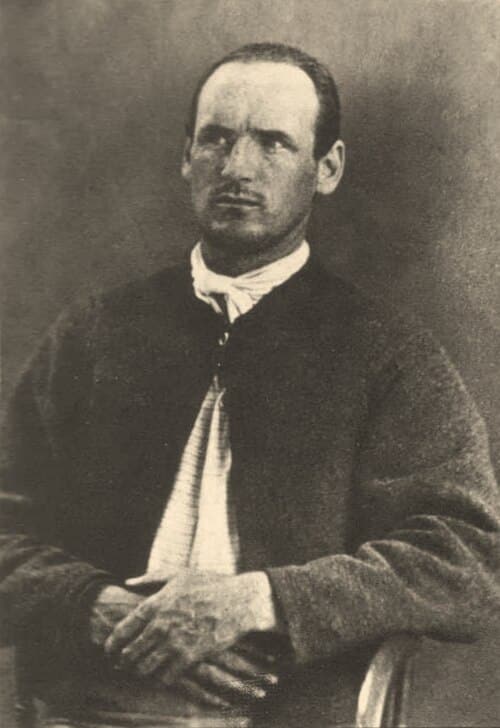

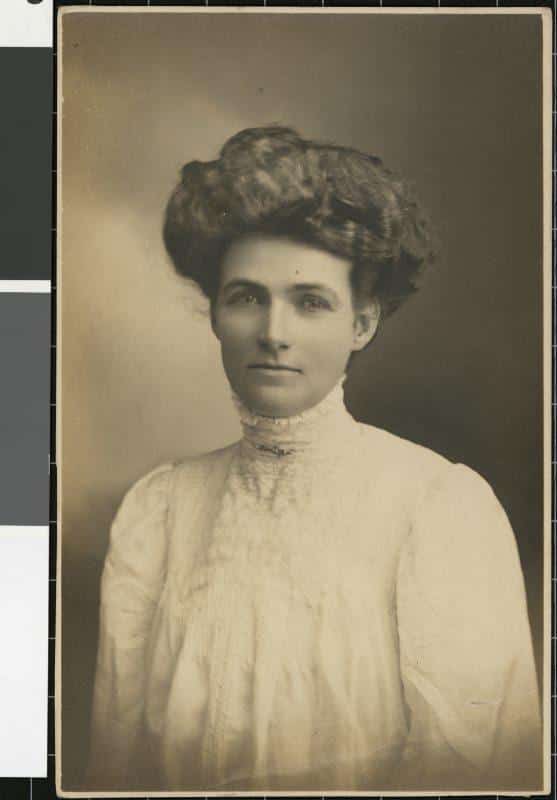
Sepia portrait of bushranger Larry Cummins 1843 to 1909

⬅ See all events from 24 September

Spread the word on your favourite platform!
True Crime Scene Tape

2020: The Claremont Serial Killer Convicted of Two Murders in Perth

After 24 years, the case that haunted Perth came down to a single judge and a 619-page verdict. Bradley Edwards, a 51-year-old former Telstra technician, was found guilty of two of the three Claremont murders and not guilty of the third.

All three women vanished after nights out in Claremont, then one of the busiest nightspots in the city. Sarah Spiers, 18, called a taxi from a phone booth at 2.06 am in January 1996; when it arrived three minutes later, she was gone. Her remains have never been found, and although Edwards was acquitted of her murder, the judge found it more likely than not that he was involved in her disappearance. Jane Rimmer, a 23-year-old childcare worker, was last seen on security footage that June and was found 55 days later in bushland by a family picking wildflowers. Ciara Glennon, a 27-year-old lawyer, disappeared in March 1997 and was found 19 days later in scrub north of the city.

The hunt became the biggest, longest and most expensive investigation in Western Australian history. Thousands of taxi drivers were fingerprinted and DNA tested, 110 “persons of interest” were sent a questionnaire asking “Are you the killer?”, and a public servant was pursued as the prime suspect for a decade before being cleared.

Edwards had no known link to the case until his arrest in December 2016. DNA found under the fingernails of his final victim matched a kimono dropped by an intruder fleeing a suburban house in 1988, and fibres on both bodies matched the Telstra-issue station wagon he drove at the time. Tried without a jury over seven months and more than 200 witnesses, he was sentenced to life with a 40-year minimum, the judge noting a “high likelihood” that he would die in prison.

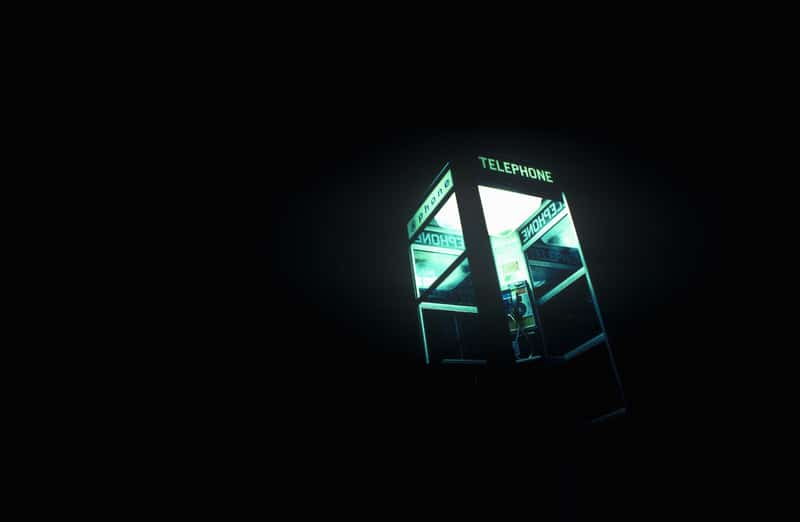
Telephone booth at night with interior lights

⬅ See all events from 24 September

Spread the word on your favourite platform!
True Crime Scene Tape

1974: Spared the Gallows, Paroled from Alcatraz, Caught at Last: the Arrest of the Want-Ad Killer

The Want Ad Killer,Harvey Carignan, was arrested in Minnesota on 24 September 1974, at the end of a ten-day rampage. A woman he had left for dead in a field survived and raised the alarm, two others escaped when he stopped for petrol, and an 18-year-old was found dead in a cornfield just four days before police caught up with him.

He should have been hanged in 1949. A soldier stationed in Alaska, he was sentenced to death for murdering a woman, but the conviction collapsed because an officer had promised he would not be executed if he confessed. With the confession thrown out, the murder charge was dismissed. He served time for a separate assault instead, part of it in Alcatraz, and was paroled in 1960.

By the early 1970s he was the prime suspect in two killings in Washington state, one of them a teenager who had answered his “help wanted” ad for a job at his service station. He was never charged, and moved on to Minnesota. After his arrest, his plea that God had ordered him to kill failed; he was convicted of two murders and died in prison in 2023, aged 95.

Help wanted classified ad printed in a newspaper

⬅ See all events from 24 September

Spread the word on your favourite platform!
True Crime Scene Tape

1986: Carved with a Scarlet Letter: The Unsolved Murder of Beth Barnard on Phillip Island

In the early hours of September 23, 1986, 23-year-old penguin parade worker Beth Barnard was found stabbed to death in a house on Phillip Island, Victoria. A blanket had been placed over her body, but beneath it her throat had been cut, her nightgown pushed up, and her body slashed and stabbed repeatedly, with defensive wounds on her hands. Cigarette butts and a knife lay near the body, and bloodied paper towels were stuffed around the bathroom sink.

Carved into her chest was a knife wound resembling the letter A, leading some to dub the killing the Scarlet Letter murder. Barnard had been having an affair with her married employer, Fergus Cameron, a founding shareholder of the Phillip Island Grand Prix. The night before her body was found, his wife, 36-year-old Vivienne Cameron, learned the truth and smashed a wine glass across his head and back before driving him to hospital.

Fergus spent that night at his sister’s house while Vivienne asked friends to mind their two young sons. She then vanished and was never seen again. A coroner later found that Vivienne had contributed to Beth Barnard’s death and concluded that she had taken her own life by jumping from the nearby San Remo Bridge, although her body has never been recovered.

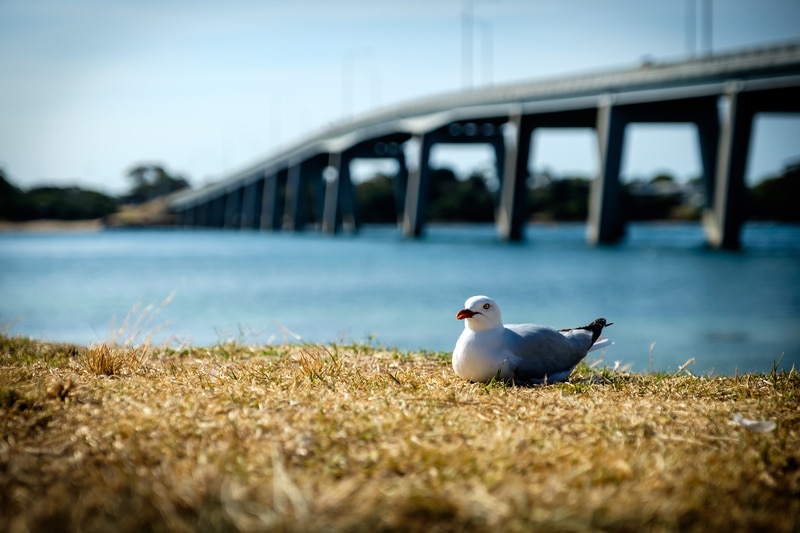
Seagull portrait on grass with San Remo Bridge blurred behind

⬅ See all events from 23 September

Spread the word on your favourite platform!
True Crime Scene Tape
On This Day in True Crime History
1851·He Prayed for His Own Son to Die: A Fatalist Hanged at Melbourne Gaol for Murder
1917·Told to Dig a Hole in the Dark: the Stepson Who Undid Eugenia Falleni in the "Man-Woman" Trial at Darlinghurst
More Crime On This Day →

Subscribe to Dark Stories

True crime stories, dark history and tour news, straight to your inbox.