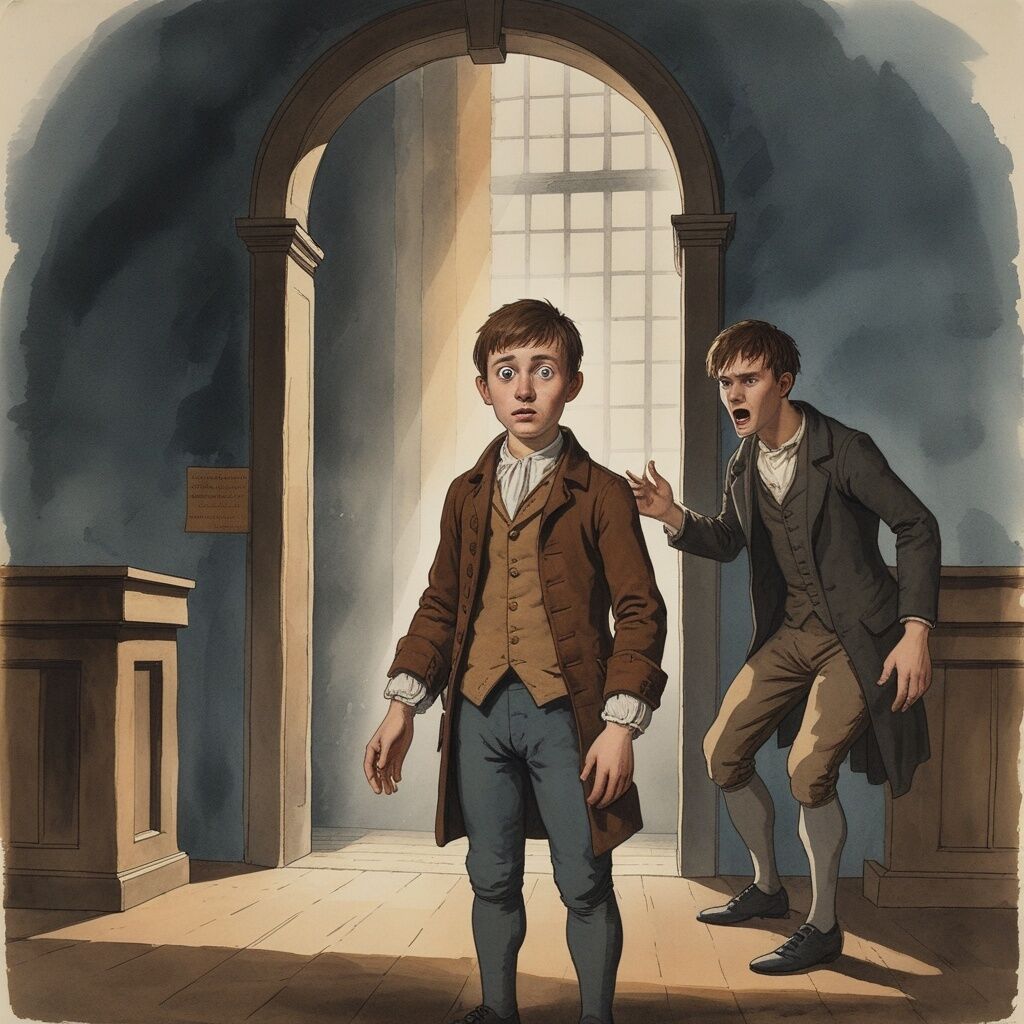
John Jones is a young man adrift in old England, cut off by his own family and carrying just eighteenpence to his name. With no trade, no prospects, and no one left willing to help, he wanders into Hyde Park to think: and that is where he meets the old schoolfriend who will change everything.
It starts with a handkerchief snatched during evening prayers and a silver snuff-box pocketed in the crowd. Within days Jones is deep inside a world of petty theft, guided by someone he trusts completely: a trust that will prove to be the most dangerous thing he owns.
Listen now and follow Jack Jones into the streets where one moment of loyalty costs more than any stolen pocket ever pays.
Follow the podcast so you never miss an episode:
FROM THE 1735 TEXT
He went out to take a walk in Hyde Park to divert his melancholy.
Dark Lexicon: Old words. Dark meaning.
The past speaks its own dialect; here is what to listen for in this episode.
Put him out upon liking: this meant placing a young person with a master on a trial basis, to see if the trade suited them before binding them as an apprentice. In old England it was a common way to match restless youths to work: Jones tried three or four and rejected them all.
Blind alehouse: not a pub for the visually impaired, but a drinking den tucked away out of sight, often unlicensed. In old England, these shadowy establishments were magnets for thieves and plotters who needed to talk without being overheard.
Pocket: today a pocket is sewn into your clothes, but in old England a woman's pocket was a separate pouch tied around the waist beneath the skirt. Snatching one meant physically ripping it free: violent, intimate, and very risky in a crowded street.
Capital in its nature: in old England, a crime described as capital carried the death penalty. Picking a pocket above a certain value qualified, which meant that even a prayer-book and a silver thimble could place your neck inside a noose.
Mob: today we picture organised gangs, but in old England a mob was simply a crowd of bystanders who surged after a thief in the street. Justice often began with this stampede, long before any constable arrived.
Sessions: the regular court sittings at the Old Bailey where prisoners awaited trial. In old England the sessions came around every few weeks, and the wait in gaol could be as grim as the verdict itself.
Buoyed himself up: Jones kept convincing himself a reprieve would come. In old England, condemned prisoners clung to rumours of royal mercy right up to the morning of execution: a hope that was sometimes rewarded, but more often not.
About This Series
Lives of the Most Remarkable Criminals (1735) is one of the earliest works of true crime in the English language. Each week this podcast retells one of its stories for today's listener, keeping the old book's most striking lines.


