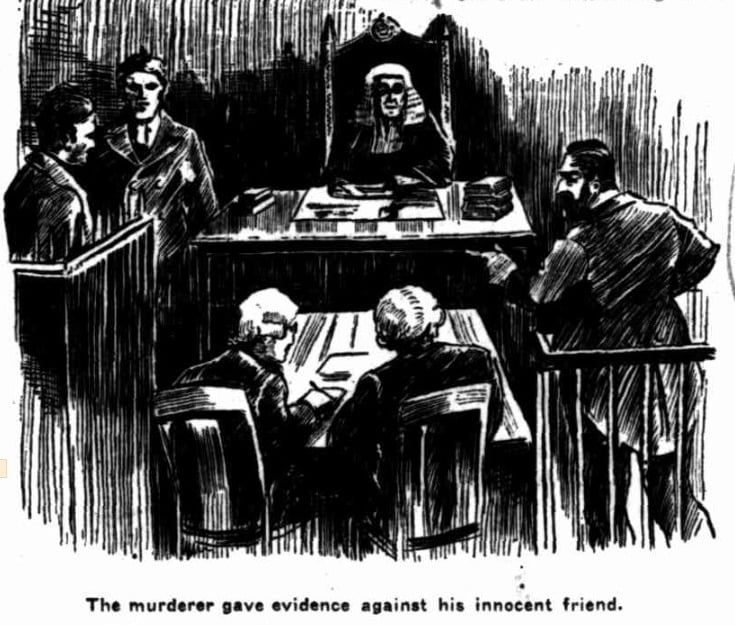
Thomas Reeves is raised with every advantage a tradesman’s son could hope for: an indulgent father, a respectable apprenticeship, and a clear path forward. But as Lives of the Most Remarkable Criminals tells it, the young tinman falls under the influence of men who mock religion and treat morality as nothing more than a convenient fiction.
It is a corruption of the mind before it becomes a corruption of the hands. This true crime account captures the precise moment a young man trades honest work for the company of thieves; his boldness quickly making him leader of a gang that prowls the darker edges of Georgian London.
What waits for a man who fears nothing; not law, not consequence, not even the state of his own soul; is a question the eighteenth century answers without mercy. The full story unfolds in this week’s reading from Lives of the Most Remarkable Criminals; settle in and let the past speak for itself.

Click the RSS feed link below to subscribe and get new episodes the moment they drop. Subscribe via RSS
Dark Lexicon: Old words. Dark meaning.
The past speaks its own dialect; here is what to listen for in this episode.
Footpad: Today we might say ‘mugger’ but in the eighteenth century the word footpad described a robber who worked on foot rather than horseback. Where the highwayman had a certain romantic swagger, the footpad was considered the lowest kind of street predator; no horse, no style, just violence in a dark lane.
Bred: Nothing to do with baking. In this context, bred means raised or trained in a trade. To say a man was ‘bred a tinman’ is to say his entire upbringing was shaped toward that craft; a path laid out for him before he could walk.
Priestcraft: A word dripping with contempt. It described what sceptics saw as the manipulation of ordinary people by clergy; religion not as truth but as a tool of control. The men who taught Reeves to think this way were not philosophers; they were thieves looking for an excuse.
Preferred him: Today ‘preferred’ means to favour one thing over another. Here it means elevated or promoted. Reeves was preferred to be leader; meaning his boldness pushed him to the front of the gang, not that anyone politely chose him.
Debauches: Bouts of wild, reckless indulgence; drinking, spending, living beyond any reasonable means. The word carries a heavier moral weight than ‘partying’ ever could; it implies a deliberate surrender to vice.
Fact: In eighteenth century legal language, a fact was not merely something true; it was a criminal deed, the act itself. To be convicted ‘for this fact’ means convicted for this specific crime. The word has narrowed dramatically since then.
Sensible: Today it means level-headed or practical. In this text it means aware or conscious of something. When Hartly appeared ‘less sensible,’ it does not mean he became foolish; it means he became numb, barely able to comprehend what was coming.
Intermediate state: A theological concept Reeves batted around with unsettling calm. It refers to a possible condition of the soul between death and final judgement; neither heaven nor hell but something in between. That he discussed it as idle curiosity rather than desperate hope tells you everything about the man.

About This Series
Lives of the Most Remarkable Criminals is one of the earliest works of true crime writing in the English language, nearly 300 years old, covering murderers, thieves, highwaymen, forgers, coiners and worse.
The book is entirely in the public domain and every word of it can be read today for free. But if you would rather listen, this podcast does exactly that: one criminal at a time, every week, read aloud.
True crime was not invented by podcasts or streaming services. Eighteenth century readers were just as fascinated by outlaws and killers as we are today. They just consumed their dark stories by candlelight.
The voice you hear is David Dark: crime researcher, theatre script writer, producer of live immersive experiences, and audiobook narrator and voice artist. This podcast uses an AI voice model trained on David’s own voice, built using the maximum available training data to faithfully represent how he actually sounds. To hear David’s real voice in human generated form, visit him on Audible, Online Stage, Voices of Today, Spoken Realms, and Internet Archive.