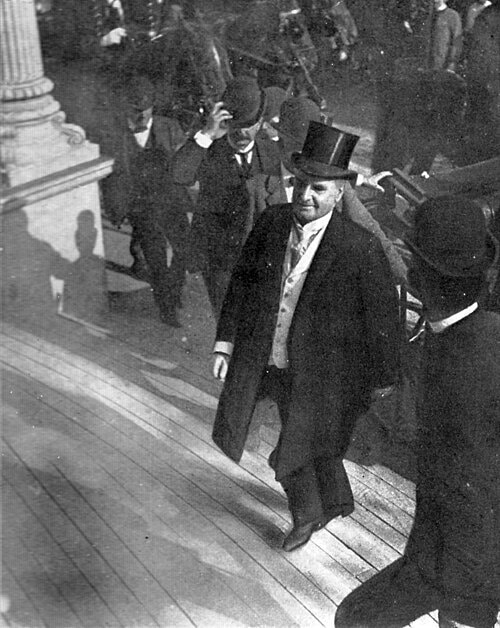
Theodore Roosevelt was sworn in as the 26th President of the United States on September 14, 1901, hours after President William McKinley died from gunshot wounds inflicted eight days earlier by anarchist Leon Czolgosz at the Pan-American Exposition in Buffalo, New York.
McKinley had been shaking hands with the public when Czolgosz approached with a concealed revolver wrapped in a handkerchief and fired twice at close range. Roosevelt, then just 42, became the youngest man to assume the presidency, taking the oath in a private Buffalo residence rather than the traditional halls of power in Washington.
Bulgarian dissident Georgi Markov was waiting for a bus on Waterloo Bridge in London when he felt a sudden sharp pain in his leg. He turned to see a man pick up a dropped umbrella and hurry away, offering a mumbled apology. Markov thought little of it until a small red mark and fever set in over the following days.
The umbrella had been rigged to fire a tiny pellet packed with ricin, a poison for which there was and is no antidote. Markov died four days later, on 11 September 1978, from the resulting blood poisoning, becoming one of the most infamous casualties of Cold War espionage.
His killer would not be identified for almost three decades. It was not until 2005 that leaked files named the assassin as Francesco Gullino, an agent working for the Bulgarian secret service, though he was never extradited or tried for the murder.
Born on 9 September 1754, William Bligh rose to Vice-Admiral of the Blue and served as Governor of New South Wales from 1806 to 1808, but he is remembered above all for surviving not one but two uprisings against his command.
The first came on 28 April 1789 aboard HMAV Bounty, when Master’s Mate Fletcher Christian led a mutiny in the South Pacific. Bligh and 18 loyal crew were cast adrift in a 23-foot open launch so overloaded its gunwales sat only inches above the water, given four cutlasses and barely a week’s food, with a compass and quadrant but no charts. The ship’s clerk, Samuel, defied threats from the mutineers to smuggle aboard vital navigation instruments, while the gunner’s own pocket watch became the only means of keeping time. Fleeing hostile islanders at Tofua, the party lost quartermaster John Norton, killed on the beach, before Bligh navigated the tiny boat some 3,618 nautical miles to safety at Timor.
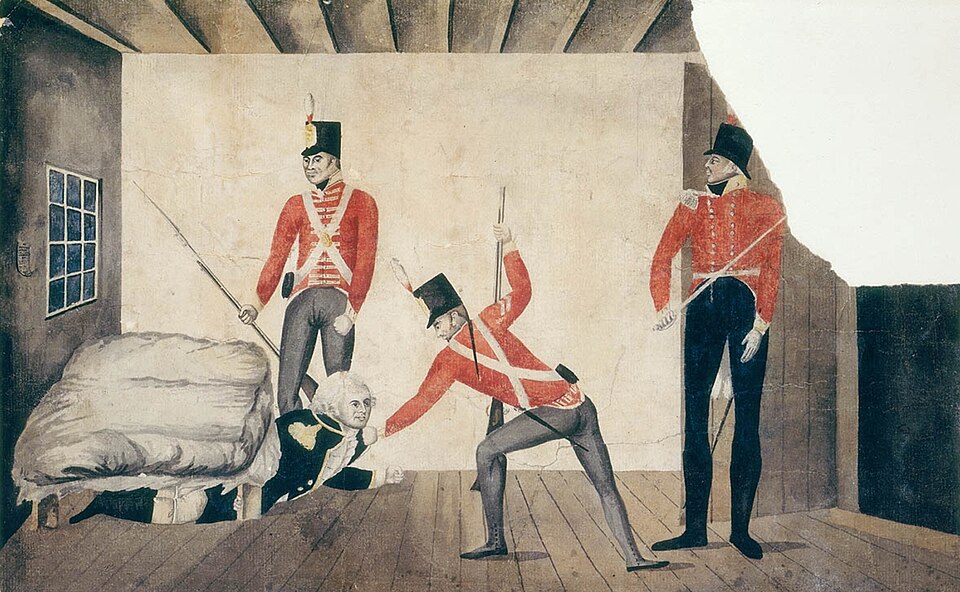
Nearly two decades later, as governor of Sydney, Bligh faced a second rebellion when officers of the NSW Corps deposed him in the colony’s Rum Rebellion, a rare case of a British officer surviving both a shipboard mutiny and a colonial military coup.
Sydney Rum Rebellion Arrest of Governor Bligh historical illustration
On September 8, 1974, President Gerald Ford granted former President Richard M. Nixon a full and unconditional pardon, covering any federal crimes he may have committed while in office during the Watergate scandal. The pardon came just a month after Nixon resigned the presidency on August 9, 1974, the first US president to do so, and it meant Nixon would never face criminal prosecution or trial over the affair.
Ford’s decision was hugely controversial, drawing accusations that a secret deal had been struck to spare Nixon accountability, and it is widely believed to have cost Ford the 1976 presidential election. No charges were ever brought against Nixon, and the pardon remains one of the most debated presidential acts in American history.