1866: The Sussex Street Mystery: A Dog Walk Leads to a Severed Head in Sydney

Eleven-year-old James Kirkpatrick was walking his dog behind Sussex Street in Sydney in September 1866 when he stumbled on a woman’s severed head half buried in a rubbish heap near Ebsworth’s tweed factory and Barker’s flour mills. Nearby lay her torso, its chest cavity completely emptied and the lower ribs charred. Despite police turning the rubbish heap over three times and combing the neighbourhood, no other body parts were ever recovered.

The case became known as the Sussex Street Mystery and gripped the colony as police pieced together the killing. It ended with the conviction and execution of a butcher, William Henry Scott, for the murder, making it one of colonial Australia’s most sensational and gruesome murder cases.
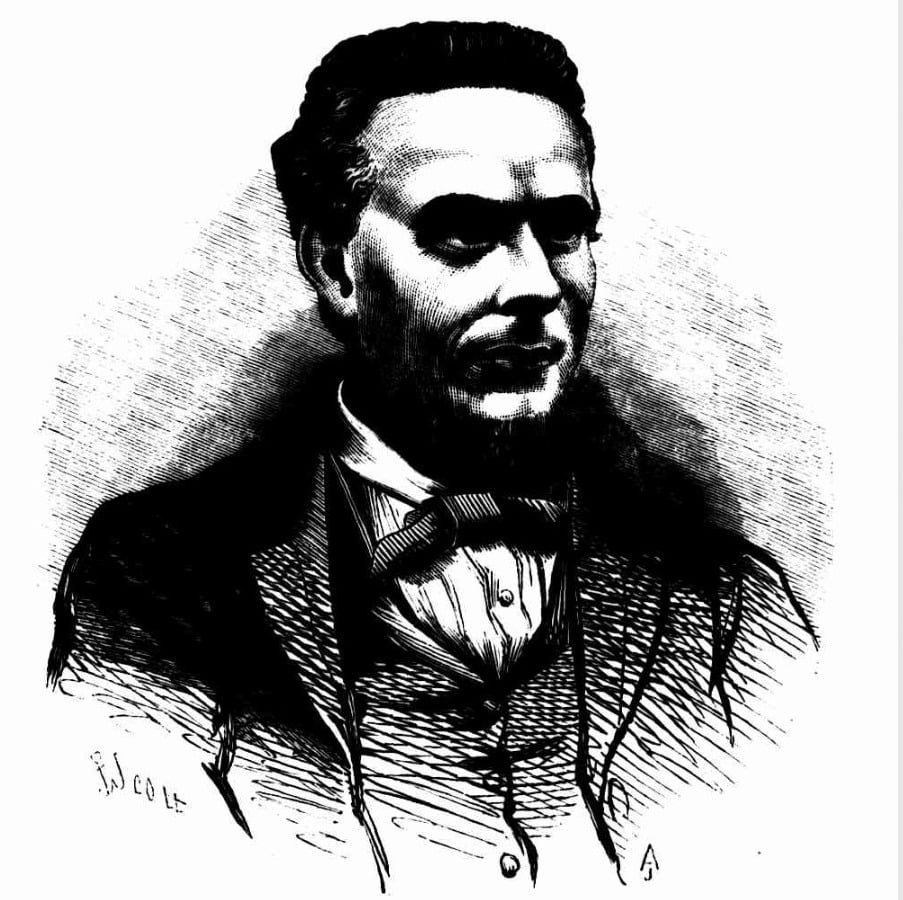

William Henry Scott under sentence of death 1867

⬅ See all events from 15 September

Spread the word on your favourite platform!

1861: Two Men Executed in the Wrong Place? A Widower Demands Answers

Two men were convicted of killing Margaret Ann Impett at Mount Wedge station in South Australia. Rather than being executed at the remote spot where the crime occurred, they were hanged at the Chiriroo police station near Venus Bay on Saturday, 14 September 1861, in front of a large gathering, where both men admitted their guilt.

Authorities had decided against transporting the condemned men the 20 to 30 miles to the actual murder site, citing a lack of available conveyance, a decision that left the execution taking place far from where Margaret Impett had died.

Her husband later wrote a furious public letter demanding to know why the men had not been executed on the spot, as he understood a recently passed law required. He branded the failure to enforce it a farce, asking who had dared to disregard the law of the land.

Sunset over Venus Bay, South Australia

⬅ See all events from 14 September

Spread the word on your favourite platform!

1909: Convicted Alone: Martha Rendell Sentenced to Death in Perth as Her Partner Walks Free

Martha Rendell, de facto wife of Thomas Nicholls Morris, was convicted in the Supreme Court of Western Australia at Perth of the wilful murder of her partner’s son, Arthur Joseph Morris, and sentenced to death by hanging. The court accepted that Thomas Morris had been unaware of what Rendell was doing until after the deaths of the children, and he was acquitted.

Acting Chief Justice Robert McMillan told the jury it was probably the most anxious case he had ever presided over, and voiced concern that newspaper coverage, might have prejudiced their judgement. Rendell maintained her innocence throughout, insisting she had only been treating the children for diphtheria.

Portrait of Martha Rendell

⬅ See all events from 14 September

Spread the word on your favourite platform!

1826: The Head Was Never Found: Three Men Hanged at Hobart for Murder

Alexander Simpson, a shopkeeper who lived and slept in two houses near Pittwater not far from Hobart, was last seen walking home at dusk. The next morning his body was found mutilated on rocks below the high-water mark, his head and much of his flesh removed and never recovered. A discoloured mark around his neck suggested he had been strangled with a cord before his body was carried to the water and cut apart, apparently to prevent identification. His shop had been completely rifled, yet the doors were found padlocked exactly as usual, suggesting the killers had taken his keys and relocked the premises after the robbery. Strangely, no footprints, blood or signs of a struggle were ever found.

Three neighbours who knew Simpson well, Thomas Dunnings, Edward Everitt and William Smith, stood trial for three days on largely circumstantial evidence, including stolen goods traced back to Simpson’s shop and their movements on the night of the killing. All three were convicted, sentenced to death on 2 September 1826 and hanged together at Hobart on 13 September 1826.

Each man gave a different account at the end. Dunnings insisted he had “had no hand in it”; Everitt admitted stealing goods from the house after Simpson’s death but denied any part in the murder; Smith maintained the evidence used to convict him was “entirely false.”

Vintage door secured with padlock and chain, lockdown security

⬅ See all events from 13 September

Spread the word on your favourite platform!
On This Day in True Crime History

Subscribe to Dark Stories

True crime stories, dark history and tour news, straight to your inbox.