Neighbours near Lydney Park on the Hunter River heard Mary Walsh begging “to spare her life” as the blows fell, then heard her husband Christopher Walsh order her to leave the house. She said she could not. By morning she lay dead on the floor, covered in bruises, a gun and blood-stained trousers found nearby.
At his trial, his own counsel argued that jealousy and drink should reduce the killing to manslaughter. The jury was not persuaded, convicting him of wilful murder after less than two hours. He was hanged at Maitland gaol before a crowd of some four hundred, including women and children.
On the scaffold he had a message read out: he claimed he had come home sober, only for suspicion of his wife’s infidelity to work him into a rage that drink then inflamed. He said he now believed her faithful, regretted his violence, and held no animosity.
Empty bottle on wooden background symbolizing alcoholism
James Cusack was tried before Justice Barry at the Victorian Criminal Sessions in August 1870 for the wilful murder of his wife, Ann Cusack, at Gooley’s Creek on the Upper Goulburn River.
A neighbour, Patrick Malone, testified to a history of brutal domestic abuse: over eighteen months he had repeatedly witnessed Cusack beating, kicking, and dragging Ann by the hair. On the night of 28 June 1870, Malone watched Cusack knock her down with his fist over a hidden bottle of gin. The violence that followed proved fatal.
Cusack was convicted and hanged at Melbourne Gaol on 30 August 1870, leaving behind four children, the eldest just six years old and the youngest twelve months.
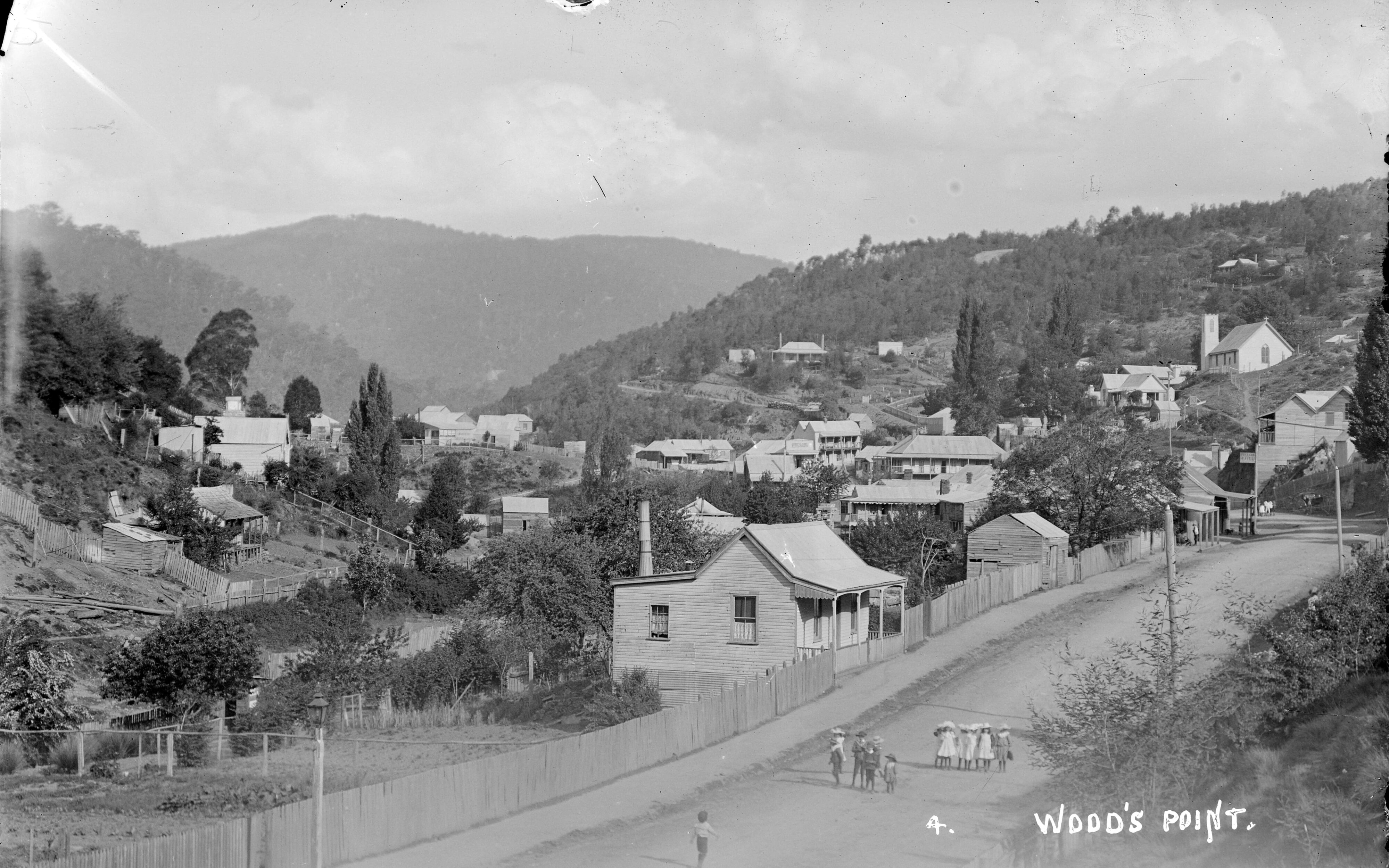
Woods Point, Charles William Dale, State Library Victoria, H36372.
Jane Griffin is a woman of sharp wit, good reputation and a violent temper she cannot govern. As Lives of the Most Remarkable Criminals tells it, she keeps a busy inn in Smithfield with her husband, drawing customers with her charm and driving them away with her rages; a figure who belongs as much to the annals of true crime as to any cautionary sermon.
She is well-bred, well-spoken and genuinely kind when calm; yet anger moves through her like weather, sudden and ungovernable. The domestic world she has built is real and prosperous, but it sits on a fault line that runs straight through her own character.
In the close quarters of a Georgian inn, temper and proximity are a volatile combination, and the question is never whether a spark will fall but when.
Hear the full account of Jane Griffin read aloud from Lives of the Most Remarkable Criminals; let this voice carry the weight of a story that has waited nearly three centuries to reach your ears.
Click the RSS feed link below to subscribe and get new episodes the moment they drop.
The past speaks its own dialect; here is what to listen for in this episode.
Malice prepense: This is the old legal term for premeditated ill intent; deliberate, thought-out malice as opposed to a spur-of-the-moment act. In court it carried enormous weight: proving malice prepense could mean the difference between a lesser charge and a capital conviction. Today we would say ‘premeditated’ or ‘aforethought,’ but the older phrase has a colder ring to it, as if the law itself is whispering that it already knows what you were thinking.
Stays: Not pauses or delays; in this context, stays are the rigid, boned corset worn tight around a woman’s torso. They were everyday armour in Georgian England, laced and stiffened to shape the body. When the text notes that the maid’s stays happened to be ‘unluckily open,’ it means the one piece of clothing that might have stopped a blade was unfastened at exactly the wrong moment.
Ordinary of Newgate: The Ordinary was the prison chaplain assigned to Newgate, London’s most notorious gaol. His duties went far beyond spiritual comfort: he attended the condemned in their final days, recorded their confessions, and often published pamphlets about their lives and crimes for a hungry public. The Ordinary was part priest, part journalist, and part spectacle-maker.
High words: Today we might say a ‘heated argument’ or ‘shouting match.’ In eighteenth century usage, ‘high words’ meant angry, raised voices exchanged between people in a dispute. It sounds almost polite now, but at the time it signalled a confrontation that had moved past reason.
Taxed her with: Nothing to do with money. To ‘tax’ someone in this period meant to accuse them, to lay blame at their feet. It carried a bluntness that the word ‘accused’ sometimes softens; to tax someone was to challenge them directly and expect an answer.
Aspersed: To asperse someone was to spread false or damaging stories about them; to smear their name. We still have the noun ‘aspersion’ in phrases like ‘casting aspersions,’ but the verb itself has all but vanished. Jane Griffin uses the word to describe those who slandered her during her imprisonment, adding cruelty to an already crushing situation.
Temporal concerns: This does not mean time. ‘Temporal’ here means worldly, earthly; the practical matters of money, property and livelihood as opposed to the spiritual welfare of the soul. When Jane begs her husband to attend to his temporal concerns, she is telling him to keep the business alive and the family fed after she is gone.
About This Series
Lives of the Most Remarkable Criminals is one of the earliest works of true crime writing in the English language, nearly 300 years old, covering murderers, thieves, highwaymen, forgers, coiners and worse.
The book is entirely in the public domain and every word of it can be read today for free. But if you would rather listen, this podcast does exactly that: one criminal at a time, every week, read aloud.
True crime was not invented by podcasts or streaming services. Eighteenth century readers were just as fascinated by outlaws and killers as we are today. They just consumed their dark stories by candlelight.
The voice you hear is David Dark; crime researcher, theatre script writer, producer of live immersive experiences, and audiobook narrator and voice artist. This podcast uses an AI voice model trained on David’s own voice, built using the maximum available training data to faithfully represent how he actually sounds. To hear David’s real voice in human-generated form, visit him on Audible, Online Stage, Voices of Today, Spoken Realms, and Internet Archive.
Spread the word on your favourite platform!
Subscribe to Dark Stories
True crime stories, dark history and tour news, straight to your inbox.