1973: Two Girls Vanish from Adelaide Oval in One of South Australia's Most Infamous Cold Cases

On 25 August 1973, Joanne Ratcliffe, aged 11, and Kirste Gordon, aged 4, disappeared from the Adelaide Oval during an Australian rules football match between Norwood and North Adelaide. Witnesses saw the girls in the company of a man in an Akubra hat and grey checked sports jacket. One witness, a confectionery vendor, watched the man carry Kirste in one arm while Joanne kicked and screamed at him to let her go. He dropped his reading glasses in the struggle, grabbed Joanne by the arm, and dragged her toward the southern gates. Bystanders assumed he was simply a parent.

Police believe both girls were abducted, and their disappearance has never been solved. South Australia Police and media have long linked the case to the 1966 disappearance of the Beaumont children, also from South Australia. The case remains one of the most haunting unsolved crimes in the country’s history.

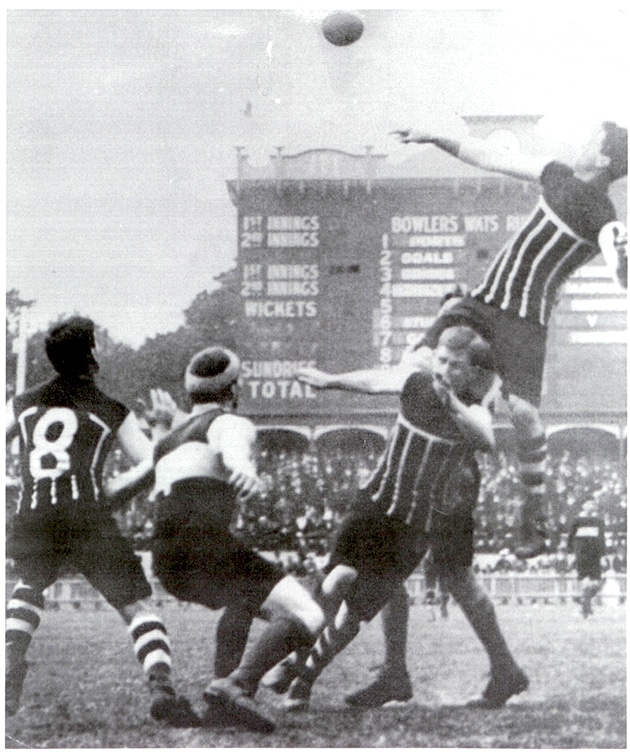
Football Game at the Adelaide Oval - the ground in 1973 still had the old stands and the 1911 scoreboard seen here.
Football Game at the Adelaide Oval – the ground in 1973 still had the old stands and the 1911 scoreboard seen here.

⬅ See all events from 25 August

Spread the word on your favourite platform!

1992: The First Victim of the Snowtown Bodies in Barrels Killers

In August 1992, John Justin Bunting bashed the first of what would become twelve murder victims to death with a hammer at his home in Salisbury North, north of Adelaide. Bunting, a former abattoir worker filled with deep hatred, led a cell of killers that included Robert Joe Wagner and James Vlassakis, operating across South Australia between 1992 and 1999.

The murders became known as the Snowtown or Bodies in Barrels case after eight of the twelve victims were found sealed in acid-filled barrels inside an abandoned bank vault in Snowtown, 140 kilometres north of Adelaide. The trial was among the longest and most publicised in Australian legal history, ending with Bunting and Wagner convicted of multiple murders and Vlassakis, who confessed to four killings and testified for the Crown, receiving a lesser sentence.

Rusty metal barrels
Rusty metal barrels

⬅ See all events from 16 August

Spread the word on your favourite platform!

1843: Hanged Outside Adelaide Gaol for the Port Lincoln Station Murders of 1842

In March 1842, Elizabeth Stubbs and a man named Biddle were killed at a remote pastoral station near Port Lincoln, South Australia. The killings came amid a period of violent conflict between colonists and local people in the region. The man later convicted of the murder of Stubbs had also been involved in an armed raid on a neighbouring station, where a group drove off the owner under threat of spears and clubs before taking goods and dispersing into the scrub.

Convicted at the Criminal Sessions, he was hanged on a drop erected at the entrance to Adelaide Gaol on 1 August 1843, at the age of around 25. Mounted police under Captain Tolmer kept the ground. In the days before his death he received the attention of German missionaries, one of whom remained with him until the final preparations. A colonial account noted he showed no outward fear, with observers recording a belief that death by hanging would bring him reborn into a new life.

Hanged Outside <a href='https://darkstories.com.au/adelaide-true-crime-tour/' target='_blank' rel='noopener noreferrer'>Adelaide</a> Gaol for the Port Lincoln Station Murders of 1842″ style=”max-width:50%; height:auto; display:block; margin:16px auto;”/></p>
<p style=⬅ See all events from 1 August

Spread the word on your favourite platform!

In Loving Memory: The ‘I Do’ That Never Came

On the evening of February 23, 1929, Constable Jack Holman had finished his shift. His duty officially ended at 11 p.m., and by all rights, he should have been on his way home—perhaps already picturing the week ahead, when he and his beloved fiancée, Pearl Wilson, were to be married.

But fate had other plans.

At 11:15 p.m., Holman was unexpectedly called back to duty. Alongside two fellow officers, he was dispatched to investigate a reported disturbance on Grenfell Street.

Police Shootout

At the scene, they found an abandoned motorcycle. Playing it safe, the officers proceeded to impound the machine and take it to the City Watchhouse. Holman volunteered to ride it in. The motorcycle, however, was temperamental—refusing to start and forcing the men to push it a distance before it finally roared to life.

Those lost minutes would prove fatal.

As Holman rode off into the night, the delay placed him directly in the path of the very disturbance they’d been sent to check—McGrath and his cronies. Shots rang out. One bullet struck Holman in the stomach. Gravely wounded, he still managed to rise and chase his assailant nearly 50 yards before collapsing on the road.

He died within the hour.

Holman had served just two years in the police force. Described as a courteous and capable officer with every promise of advancement, his death sent shockwaves through South Australia. Thousands attended his funeral. Every department of the South Australian Police Force was represented. Yet amid the sea of uniforms the most broken heart belonged to Pearl Wilson.

They were to be married within days.

Grenfell St Adelaide

Pearl’s grief lingered long after the headlines faded. On the first anniversary of Holman’s death, she placed a tender tribute In Memoriam:

“In loving memory of Jack, who passed away February 23rd, 1929.
Loved in life, cherished in death,
A beautiful memory is all we have left.”

By the third anniversary, the tribute had become more formal:

“In memory of Constable Jack, who died on the 24th of February 1929.
You live with us in memories still.
Not just today, but always will.
Inserted by Pearl and Wilson family.”

Gone was the intimacy of “Jack.” Now, he was “Constable Jack.” The message came not just from Pearl, but from “Pearl” AND the “Wilson family.” A subtle shift—yet perhaps a telling one. Had she remarried? Perhaps this was her way of saying one final goodbye? We can only speculate. History leaves no answers for this.

As for McGrath, he was found guilty and sentenced to death. The sentence was commuted to life imprisonment, and he was released after serving just 13 years.

But Jack Holman never got the years he was owed. And Pearl’s life was changed irrevocably. Their story ended just when it was meant to begin.

Discuss On Substack

To uncover more Adelaide Crime History, consider booking tickets to Adelaide’s True Crime Tour here @ https://darkstories.com.au/adelaide-true-crime-tour/.

Spread the word on your favourite platform!
On This Day in True Crime History
1794·The First Free Settler Murdered in the Colony: Hanged at Sydney for a Parramatta Stabbing
1826·The Gun That Misfired Twice: Three Bushrangers Hanged Outside Sydney
1873·A Tearful Confession in Custody Cracked the Case: Two Men Hanged at Perth Gaol for Eating their Victim
1889·He Called It an Accident. The Jury Called It Murder: Robert Landells Hanged at Melbourne Gaol
1907·A Doctor Fooled Twice: Martha Rendell and the Second Child to Die of Diphtheria
2002·Shot Dead in His Own Bed: A Melbourne Gangland Killing Blamed on a Friend
More Crime On This Day →

Subscribe to Dark Stories

True crime stories, dark history and tour news, straight to your inbox.